
Alberta bans aftermarket tint film on the windshield and both front side windows, full stop, with no percentage that makes it legal. Rear side windows and the rear windshield carry no darkness limit, as long as your vehicle has outside mirrors on both sides. A narrow medical exemption exists for front glass, but it only permits clear UV film with a combined visible light transmittance of 50% or more, not dark tint.
TL;DR:
- Installing aftermarket tint on the windshield or front side windows is prohibited unless you hold a medical exemption for clear UV film with at least 50% VLT.
- Rear side and rear windshield tinting have no darkness limits if the vehicle has outside mirrors on both sides, but violations often depend on proper mirror setup.
- Medical exemptions are only granted for documented health conditions, requiring a physician’s letter and official permit, not for personal preferences or comfort.
- Officers may measure VLT on the spot, and disputes over darkness usually revolve around mirror requirements rather than tint percentage alone.
- Working with experienced, licensed installers who provide written VLT documentation helps ensure compliance and avoid costly rework.
Alberta’s rules trip people up because most tint guides talk in percentages, and Alberta’s law doesn’t. The Vehicle Equipment Regulation (Alta Reg 122/2009) governs window film here, and section 70(1) doesn’t set a numeric darkness ceiling for front glass. It bans installing, replacing, or covering the windshield or either front side window with any transparent, translucent, or opaque material, period.
That’s a categorical prohibition, not a threshold. Compare that to provinces that allow numeric VLT bands or a small windshield strip, and Alberta stands apart. Neighboring rules elsewhere in Canada set percentage limits, which is likely why so many Alberta drivers assume a similar number applies here. It doesn’t.
Sections 71 through 74 of the same regulation cover related glazing and mirror standards, including the requirement for functioning outside mirrors when rear visibility is obstructed. The only place a real percentage shows up in Alberta’s tint framework is inside the medical exemption process, where permit holders can install clear UV film rated at 50% VLT or higher. That figure is a permit condition, according to legal commentary from Recording Law, not a general legal limit any driver can point to.
Break it down by window and the confusion mostly disappears.
Miss that mirror requirement and even a compliant rear tint job can become a problem during a roadside check.
Alberta’s exemption exists for genuine medical need, not comfort preferences. Qualifying conditions tend to involve documented photosensitivity disorders, certain skin conditions, or eye diseases where a physician can point to a specific diagnosis. Common complaints like migraines or general light sensitivity typically aren’t enough without supporting documentation, according to Alberta’s own exemption guidance.
Passengers are rarely approved, since they can simply sit in the rear seats where tint is already unrestricted. The exemption is built for drivers who need protection through the windshield or front side glass specifically.
Ask for the reading in writing before you leave the shop.*
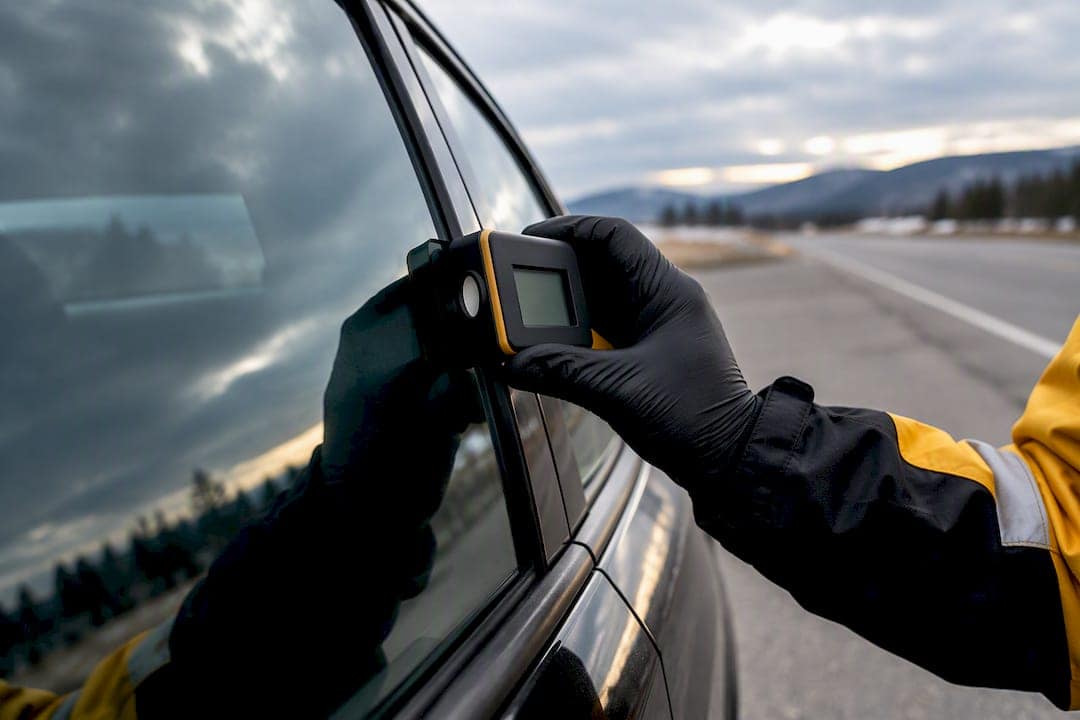
Officers usually start with a visual check. Film that looks noticeably dark on the windshield or front doors is what draws a stop in the first place, since Alberta’s concern is driver visibility in low light and bad weather, a point Alberta.ca raises directly in its exemption guidance. Some services carry a VLT meter to confirm a reading on the spot.
If you’re ever unsure whether your rear film meets the mirror condition, safe removal and a fresh, documented install is usually less costly than a repeat ticket.
The rule of thumb is simple: nothing goes on the windshield or front side windows unless you hold an exemption permit. If UV protection up front matters to you, check your eligibility before you book anything, not after.
A common compliant setup among installer-verified configurations is clear front glass paired with 20% to 50% film on the rear windows, or full limo-dark 5% rear tint, all backed by outside mirrors on both sides. Ask any shop for a combined VLT reading and how it was measured, and get that documentation in writing before you drive off.
Pro Tip: Clean glass matters more than people think once tint is involved. Streaks and residue can distort how a VLT meter reads your film, so a proper streak-free cleaning method before any roadside check is worth the five minutes.
Getting tint law right on paper is one thing. Getting it installed correctly is another. The PPF Company brings over 30 years of combined experience across paint protection film, ceramic coating, and window tinting, serving drivers in Calgary and Winnipeg.
Working with a shop that understands section 70(1) firsthand tends to save drivers from an expensive redo down the road.

People treat Alberta’s tint law like a suggestion because so much online advice quotes percentages that simply don’t apply here. That’s the real risk: not malice, just misinformation from guides written for other provinces or other countries entirely.
The mirror requirement gets overlooked constantly, and it’s the detail that actually determines whether your dark rear tint is legal or a ticket waiting to happen. Get documentation from whoever installs your film. Verify anything borderline against the official exemption page or a licensed installer before you commit, rather than trusting a forum post.
Drivers in Calgary and Winnipeg can get tint installed with proper documentation that supports compliance if questioned roadside. Unlike some shops that provide verbal percentage estimates, some installers understand section 70(1) and provide written combined VLT readings for your records.
Services include window tinting, clear UV film options for drivers pursuing an exemption, and ceramic coating for additional UV protection. Every installation comes with clear warranty and aftercare guidance, so discoloration or bubbling doesn’t sneak up on you years later. If you’re in Calgary or Winnipeg and want your tint or exemption film handled by knowledgeable installers, visit The PPF Company or check out the Calgary window tinting page to book a consultation.
Not on the windshield or front side windows, regardless of the percentage, since Alberta’s law is a flat ban on aftermarket film there under section 70(1). On rear side windows and the rear windshield, 20% is fine as long as your vehicle has outside mirrors on both sides.
The percentage refers to visible light transmission, so a lower number lets in less light and produces a darker appearance.
It depends entirely on the province and which window it’s on.
Yes. Lower VLT numbers always mean darker tint, whether you’re comparing rear windows in Alberta or shopping for clear UV film under a medical exemption.
You need documented medical evidence from a physician showing a qualifying condition, then you submit that documentation with an application and fee to the Registrar through Alberta’s official exemption process.