
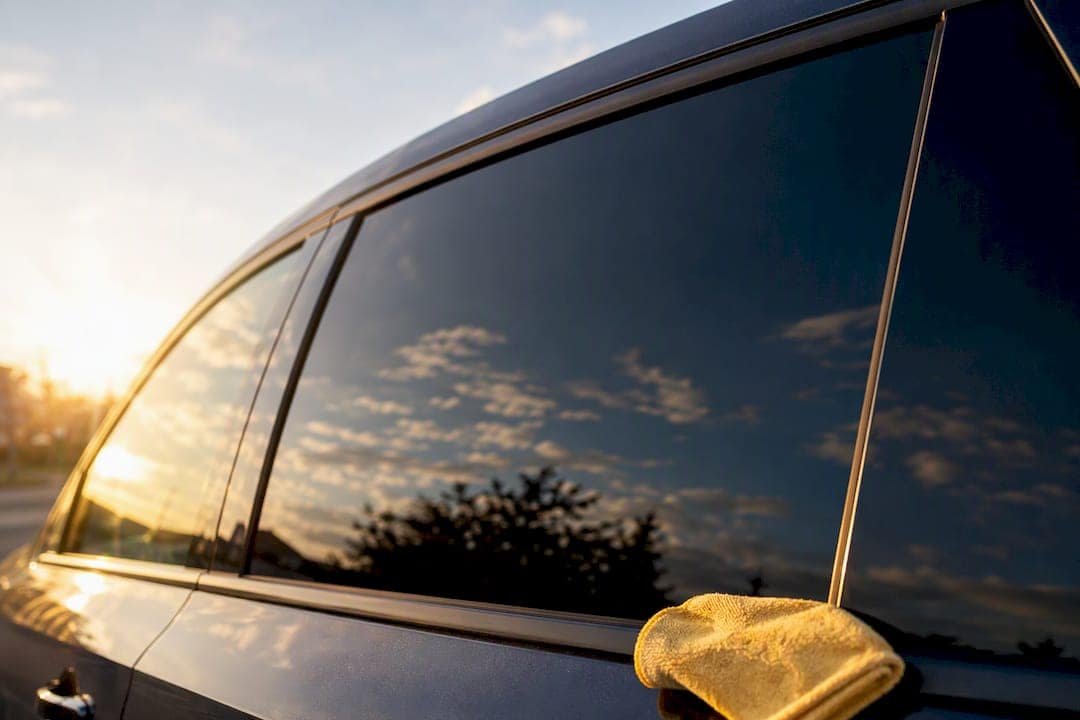
Yes, window tinting is worth it for most drivers: it blocks up to 99% of UV rays, cuts cabin heat, kills glare, and adds privacy that also deters break-ins. The catch is legality. Tint too dark and you risk a ticket, a failed inspection, or reduced visibility at night, so checking your local visible light transmission (VLT) rules before you book an install matters as much as picking the film itself.
TL;DR:
- Films with high total solar energy rejection and VLT compliance provide optimal heat and UV protection without compromising visibility.
- Lighter VLT options are recommended for frequent night driving or drivers with reduced night vision to ensure safety and legal compliance.
- Ceramic films offer strong UV and heat rejection without interfering with electronics, while dyed and metallic options have trade-offs in fading and signal interference.
- Professional installation with documented VLT readings and warranties ensures a long-lasting, legally compliant tint with clean edges.
- Proper aftercare, including avoiding car washes with hard brushes and using ammonia-free cleaners, extends the lifespan of quality ceramic films beyond a decade.
The core case for tinting comes down to five things drivers notice within the first week of driving a tinted car.
Fast fact: High-performance ceramic films are marketed with UV rejection near 99%, one of the strongest protection claims in the automotive film category.
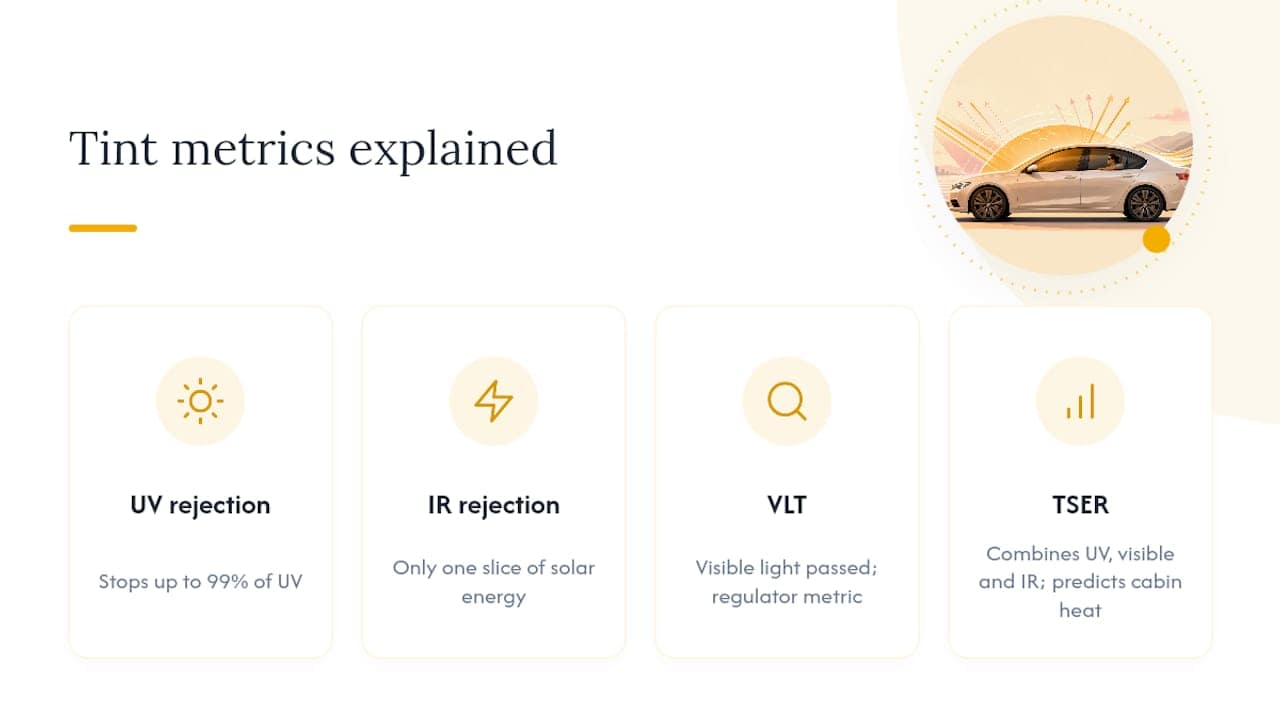
Manufacturers throw around a handful of metrics, and they don’t all mean the same thing. UV rejection measures how much ultraviolet radiation the film stops, and top-tier films claim figures near 99%.
That IR number sounds definitive, but it’s incomplete. Infrared is only one slice of the sun’s energy hitting your windshield; visible light and UV carry heat too. Total solar energy rejection (TSER) accounts for all three, which is why TSER is the more reliable metric for predicting cabin heat reduction. Finally, VLT (visible light transmission) tells you how much light passes through, which is the number regulators care about. A film can boast a huge IR figure and still leave you baking if its TSER is mediocre, so ask installers for the TSER spec, not just the headline IR percentage.
Tint cuts glare, but it also cuts light, and that tradeoff needs honest treatment. Darker films reduce the amount of ambient light reaching your eyes at dusk, dawn, and at night, which can slow your reaction to pedestrians, cyclists, or debris in low-contrast conditions.
During the day, the calculus flips. Reduced glare from direct sun and wet-road reflection actually improves visibility and comfort on long drives, and tinted rear glass cuts headlight glare from tailgaters. The tradeoff is per-driver: someone who does a lot of night highway driving or lives somewhere with long winter darkness should lean lighter, not darker.
Pro Tip: Ask your installer to show you a demo panel in both daylight and under a streetlight before you commit to a percentage. What looks fine in the shop can feel noticeably darker at night on the road.
Not all film is built the same, and the type you choose changes what benefits you actually get.
Performance claims vary by manufacturer and by how dark the tint level runs, so treat any single percentage as a starting point for comparison, not a guarantee.
Pricing swings based on film type, vehicle size, and how many windows you’re covering.
DIY kits exist and can save money upfront, but bubbling, uneven edges, and voided manufacturer warranties are common complaints. A professional install is worth the premium when you want a documented warranty, correct legal VLT compliance, and clean edge work around trim and antennas. Before hiring anyone, ask for their warranty terms in writing, request proof of VLT testing on the film they plan to use, and ask how they handle curved or tinted-from-factory rear glass.
VLT measures the percentage of visible light that passes through your window and film combined, tested with a light meter. A 35% VLT film lets through more light, and looks noticeably lighter, than a 20% VLT film, since a lower percentage always means a darker window.
Rules on allowable VLT differ by province and state, and they often set separate limits for front side windows, rear side windows, and the windshield. Checking your local window tint laws before installation avoids fines, failed inspections, and the cost of stripping non-compliant film off later.
Fresh tint needs time to bond properly. Installers recommend keeping windows rolled up for three to five days so the adhesive cures fully without water or friction disrupting it.
Pro Tip: Skip automatic car washes with hard brushes for the first month. A soft-cloth hand wash protects fresh film edges far better.
Premium vehicles, curved rear glass, and factory-tinted windows all raise the difficulty of a clean install, and that’s exactly where a specialist earns their fee. A quality job shows in the details: tight edge work with no lifting corners, a documented VLT reading before and after, a written warranty, and clear aftercare instructions handed to you at pickup. That documentation matters more than most buyers realize, since warranty terms and installer skill tend to drive long-term satisfaction more than brand names on a spec sheet. With more than 30 years of combined installation experience, our team treats VLT documentation and edge finishing as standard, not upsells.

The PPF Company brings the same standard we apply to paint protection film to window tinting: precise fitment, documented VLT readings, and a warranty you get in writing, not just a verbal promise. If glare, heat, and UV exposure have been bothering you on every drive, our Calgary window tinting service uses ceramic film chosen specifically for signal-free performance and long-term clarity, backed by aftercare guidance so the film actually lasts as long as it’s rated to. Drivers weighing tint against other protection options often pair it with ceramic coating or ask us about interior protection for stone and trim surfaces at the same visit.
Get a quote through our window tinting page, tell us your vehicle and priorities (heat, privacy, or resale protection), and we’ll walk you through film options, legal VLT limits for your area, and what our warranty actually covers before you commit to anything.
20% VLT is darker than 35% VLT.
For most drivers, yes: tint delivers UV protection, cooler cabins, less glare, and added privacy. The main condition is picking a VLT level that’s legal in your area and light enough for safe night driving.
Home window tinting offers similar UV blocking and heat reduction benefits as automotive tint, though film thickness, adhesive type, and local building codes differ from vehicle applications.
Quality ceramic film often lasts a decade or more with proper care, while cheaper dyed film can fade or discolor within a few years depending on sun exposure and cleaning habits.
Well-installed, legally compliant tint tends to support resale value by protecting interior surfaces from fading, while poorly installed or overly dark, non-compliant tint can hurt a sale or require removal before it closes.