
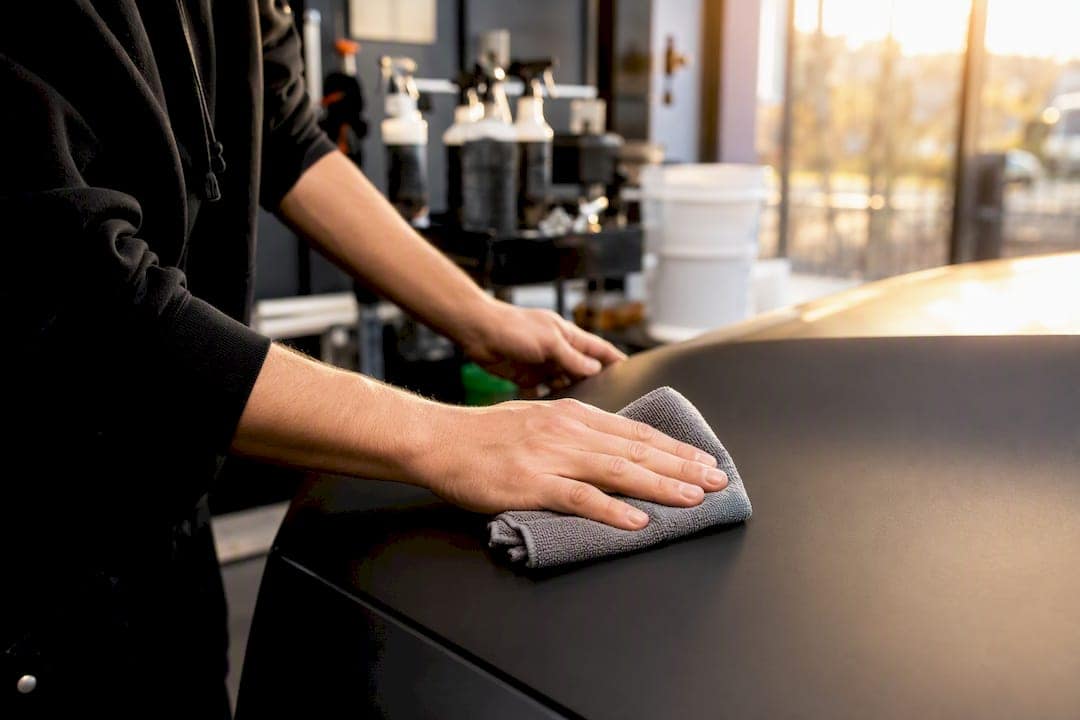
The simplest way to preserve a vinyl wrap is to hand-wash it with a pH-neutral shampoo, remove bird droppings, sap, or fuel the moment they land, and stay away from brush washes, wax, and solvents. Do that consistently and the wrap will look sharp for years. Skip washing for the first 24 to 48 hours of cure time, or using the wrong product on a matte finish, and you can undo months of good habits in one afternoon.
TL;DR:
- Using wrap-safe cleaners and avoiding abrasive tools or wax on matte finishes helps prevent permanent damage and prolongs the wrap’s appearance.
- Frequent, gentle hand-washing with two buckets, and immediate removal of contaminants like sap and droppings, are key to maintaining the wrap for 5 to 7 years.
- Parking in shaded or covered areas significantly slows UV-related deterioration, especially for darker or matte wraps, extending their lifespan.
- Addressing small lift edges or scratches promptly with professional repairs can prevent costly replacements and preserve the wrap’s integrity.
- Applying ceramic coatings or paint protection film after the initial 30 days can aid cleaning and UV resistance but do not prevent mechanical damage or seam lift.
Before the deeper routines, here’s the cheat sheet you can tape inside the glove box. Most wrap damage traces back to one of these getting ignored.
Do:
Don’t:
Emergency spot fix: for a stubborn contaminant with no wrap-safe cleaner on hand, a diluted isopropyl alcohol mix (roughly 1:1 with water) can work on gloss and satin wraps, but manufacturers caution on concentration and recommend testing first. Rinse thoroughly afterward.
Wash frequency depends more on what the car drives through than on a fixed calendar. A commuter car in a dry climate can go two weeks between washes. A vehicle parked under trees or driven through pollen season needs weekly attention, since sap and pollen bond to the film faster than road grime does.
The two-bucket method is non-negotiable regardless of frequency:
Air-drying under direct sun causes water spots that etch into the film’s texture, especially on darker colors. A leaf blower on a cool setting works well for door jambs, mirror housings, and other tight spots a towel can’t reach cleanly.
Pro Tip: Grab a fresh microfiber towel for each major panel instead of reusing one across the whole car. A towel that’s already picked up grit from the rocker panels will scratch the hood the moment you use it there.
Bird droppings are the most corrosive everyday threat to a wrap. The uric acid inside them can etch through a clear coat in hours during hot weather, and vinyl film isn’t immune to that chemistry either.
The fix is always soak first, wipe second:
For any isolated stain that won’t budge, a diluted isopropyl alcohol solution can help, though it is a spot treatment, not a routine cleaner. Cast vinyl wraps typically last 5 to 7 years with proper care, and how quickly you address contaminants is one of the biggest swing factors in whether a wrap hits that range or falls well short of it.
Touchless car washes are conditionally fine. Brush washes are not, and this is where most avoidable wrap damage actually happens.
Rotating brushes flex against panel edges and door seams with enough force to catch a lifted corner and peel it further. Even a wrap installed perfectly can develop a snagged edge after a few passes through a brush tunnel. Touchless systems skip the mechanical contact entirely, relying on high-pressure water and chemical pre-soaks, but you still need to ask the attendant whether those chemicals are wrap-safe. Some touchless facilities use degreasers or acid-based wheel cleaners that overspray onto body panels.
If you’re using a pressure washer at home:
These figures come from KPMF’s aftercare guidelines for vinyl wrapping systems, and they hold up whether you’re washing a fresh wrap or one that’s a year old.
Pro Tip: After any wash, whether hand or automatic, do a quick edge check the next day in good light. Early lift shows up as a faint gray line along a seam before it’s visible as a full peel, and catching it then means a five-minute fix instead of a panel replacement.
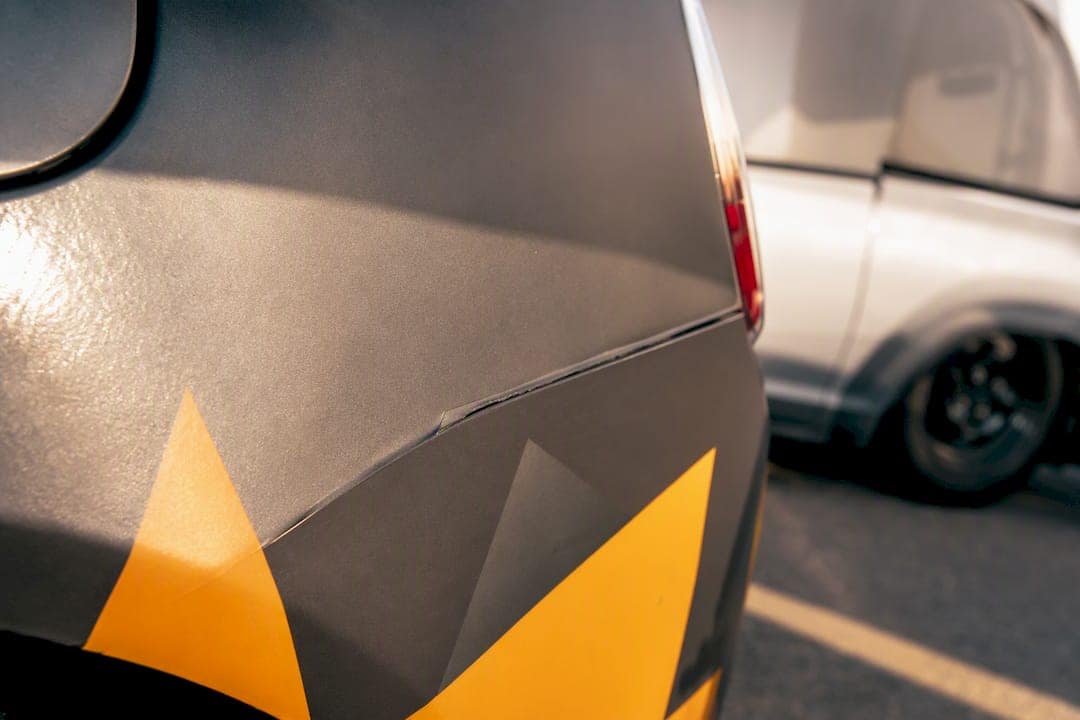
Yes, and treating them identically is the fastest way to ruin a matte finish permanently. A wrap is a film, not paint, and habits carried over from paint care can actively damage it.
The mistake happens most often with detailers who default to what works on clear coat. A wax job that looks great on a painted hood will glaze a matte hood into permanent semi-gloss patches within one application.
The cure window matters more than most new wrap owners realize, because the adhesive is still setting for the first day or two after install.
Both can extend a wrap’s practical lifespan, but they solve different problems, and neither is a substitute for the basics.
A coating makes a wrap easier to keep clean and more resistant to UV fade. It does nothing to stop the mechanical stress that causes edge lift in the first place. If a seam is failing because of a bad install or a door that rubs against it, no amount of ceramic protection fixes that.
Coatings and PPF work best as an addition to good washing habits, not a replacement for them. Skipping hand-washing because “the coating handles it” is how staining creeps back in within a season. The PPF Company’s ceramic coating services and paint protection film installations are typically paired together for exactly this reason: one manages the everyday grime, the other manages the impacts.
Stock your detailing kit with a short, specific list rather than grabbing whatever’s on the shelf at a general auto parts store.
Always test a new product on a hidden panel, like inside the trunk lid or behind a mirror, before using it across the whole vehicle. A product that’s fine on one wrap film can react differently on another depending on the manufacturer’s laminate.
Not every flaw needs a professional visit, but knowing which ones do saves you from turning a small issue into an expensive one.
Usually fixable without full replacement:
Signs of irreversible damage:
If you spot anything questionable, photograph it before touching it, avoid any home fix that involves adhesive removers or heat guns, and contact your installer while the issue is still within a warranty window. A quarterly walk-around inspection, checking every seam and edge under good light, catches most problems while they’re still a five-minute repair instead of a panel swap.
The wraps that make it past the seven-year mark share a pattern: consistent low-effort habits rather than occasional deep cleans. Washing weekly with the right products matters more over a five-year span than any single “perfect” detail session.
Keep an eye on high-friction zones specifically. Wheel arches, rocker panels, and anywhere fabric or bags repeatedly brush against the film wear faster than flat body panels. A quick wipe-down after loading cargo prevents the slow abrasion that shows up as dulling months later.

Reapply a quick detail spray or wrap-safe sealant every few months if you’re not running a full ceramic coating. This adds a thin sacrificial layer that takes the brunt of minor environmental exposure instead of the film itself.
Address small issues the day you notice them. A loose edge that gets re-adhered within a week is a non-event. The same edge left alone through a month of temperature swings and car washes often peels back several more inches, turning a minor fix into a partial re-wrap.
Finally, track when the wrap was installed and set a calendar reminder to schedule a professional inspection every 12 to 18 months. Installers catch early adhesive breakdown and UV fading patterns that are hard to see from a casual glance, especially on darker colors where fading shows up as a subtle shift rather than an obvious change.
Sun exposure does more damage to a vinyl wrap over time than almost any washing mistake. UV rays break down the vinyl’s plasticizers, the compounds that keep the film flexible, which is what eventually causes shrinkage, cracking, and color fade at the edges first.
Covered parking, whether that’s a garage, a carport, or a shaded lot, cuts UV exposure dramatically and is the single biggest lever you have over long-term appearance retention. A car parked outdoors year-round in direct sun will show noticeable fading years before an identical wrap kept in a garage.
If covered parking isn’t available, a breathable car cover designed for wrapped vehicles helps, though it introduces its own risk: trapped moisture underneath a cover in humid conditions can encourage staining if the car wasn’t fully dry before covering it. Never cover a wrap that’s still wet.
Parking away from trees avoids two problems at once: sap and bird droppings, both of which do their worst damage the longer they sit uncleaned. If shaded parking under a tree is your only option, plan on more frequent contaminant checks rather than skipping shade altogether, since the UV protection trade-off is often worth the extra maintenance.
Humidity, salt, and airborne pollution each stress a wrap differently, and knowing which threat applies to your area changes how you should prioritize care.

High humidity slows drying time and increases the odds of water spotting if you don’t dry panels immediately after a wash. It also creates more favorable conditions for mold or mildew to develop in gaps around mirrors and trim if moisture sits trapped for days.
Road salt in winter climates is one of the more corrosive everyday exposures a wrap faces. Salt residue left on the film for extended periods can work into edges and seams, and rinsing within 48 hours of exposure to slush or salted roads meaningfully reduces that risk compared to letting it sit until a scheduled wash day.
Industrial pollution and heavy vehicle exhaust in urban driving leave a fine particulate film that’s more abrasive than it looks. Wiping a dry panel to remove this grit without rinsing first is a common way small scratches accumulate on a wrap that otherwise looks well cared for.
None of these factors are avoidable if you live and drive in a place where they occur, but each has a direct countermeasure: rinse sooner after salt exposure, dry faster in humid conditions, and never skip the pre-rinse step regardless of how light the dust looks.
A light scuff on a wrap behaves differently than a scratch in paint, and that difference should guide how you handle it. Vinyl film doesn’t have a clear coat to buff, so aggressive polishing techniques that work on paint will do nothing productive here and can make things worse.
For light surface scuffs that haven’t cut through the film, a wrap-safe quick detailer and a soft microfiber cloth applied with gentle circular motion often minimizes the mark’s visibility. This works best on gloss finishes, where the surface has some flexibility to self-level.
For a scratch that’s gone through to the adhesive layer or exposed the panel underneath, don’t attempt a home fix with tape or adhesive patches. That approach almost always creates a visible seam and can trap moisture underneath, accelerating lift. A localized panel patch, where an installer replaces just the affected section rather than the entire panel, is usually the more cost-effective route and keeps the repair invisible if color-matched correctly.
Small nicks near edges deserve faster attention than the same nick mid-panel, since edges are already the most vulnerable point for peeling to start. What looks cosmetic today can become a structural weak point within a season if left unaddressed.
Most wrap failures aren’t caused by cheap material or bad installation. They’re caused by owners applying paint-care habits to a film that plays by different rules. A wax job that took ten minutes on a matte hood can undo a $2,000 install permanently, and there’s no professional fix for glazed matte texture once wax has bonded to it.
The pattern worth noticing: wraps that survive to the 6 or 7 year mark almost always belong to owners who treat the first month differently than the rest of the vehicle’s life. They wait out the cure window, they check edges obsessively for the first few weeks, and then they settle into a boring, repeatable wash routine. Boring is the goal. A wrap that gets attention only when it looks dirty is a wrap that’s already accumulating damage between washes.
The other underappreciated factor is how fast owners react to small problems. A lifted corner reported within days is a five-minute fix during a routine visit. The same lift ignored for two months, run through a few brush washes, often requires a full panel replacement. Time is the enemy here, not effort.
The PPF Company gives you a direct line to the people who can catch a lifting edge before it becomes a replacement, something a bottle of quick detailer can’t do on its own. With over 30 years of combined installer experience across Calgary and Winnipeg, the team handles wrap inspections, panel-level repairs, and ceramic coating applications timed correctly around the cure window discussed above.
If your wrap is showing early edge lift, needs a ceramic refresh, or you’re weighing whether high-impact zones deserve a layer of paint protection film on top, The PPF Company’s team can walk you through the right combination for your vehicle and your climate. Book an inspection through The PPF Company’s Calgary car wrap services or check availability for Winnipeg wrap and coating services to get a quote before small issues turn into a bigger repair bill.
Touchless car washes are generally safe if the facility uses wrap-friendly chemicals, but brush-style washes should be avoided since rotating brushes can catch and lift panel edges and seams.
Wraps require more careful maintenance than paint, since abrasive pads, wax on matte finishes, and brush washes can cause visible or permanent damage that paint would tolerate. They also have a finite lifespan, typically 5 to 7 years for cast vinyl with proper care, compared to paint that can last the life of the vehicle.
Dish soap isn’t recommended for regular use because it’s formulated to strip oils and can be too harsh or too alkaline for wrap film over repeated washes. Stick with a pH-neutral automotive shampoo designed for wraps instead.
Cast vinyl wraps typically last 5 to 7 years with proper care, and covered parking plus a ceramic coating refresh can push that range higher. Neglected contaminants, brush washes, and sun exposure without shade shorten it considerably.
Weekly to biweekly hand-washing works for most conditions, though vehicles exposed to heavy pollen, tree sap, or winter road salt need weekly attention to prevent staining and film degradation.