
For most owners who want invisible, long-term protection against lower-body chips and scrapes, paint protection film on the rocker panels is the right call. Reach for rigid rocker guards instead only if you want visible off-road armor or need to hide existing cosmetic damage. If the panels already show rust, stop and read the section on handling corrosion before you book anything, then use the checklist further down to vet a shop.
TL;DR:
- Paint protection film on rocker panels prevents chips and corrosion, especially in winter conditions, and preserves factory paint for higher resale value.
- Thicker films (up to 10 mil) offer more impact resistance but may be less flexible on curved surfaces, while self-healing topcoats help maintain a clean appearance over time.
- Professional installation ensures proper prep, precise fitting, and longer-lasting results, whereas DIY work risks bubbling, edge lift, and improper sealing.
- Rust must be fully removed and treated before applying any protective film, as trapping moisture accelerates corrosion under the covering.
- Warranty coverage varies; insist on written guarantees including specifics like yellowing, edge lift, and material failure, and verify the film’s datasheet claims before proceeding.
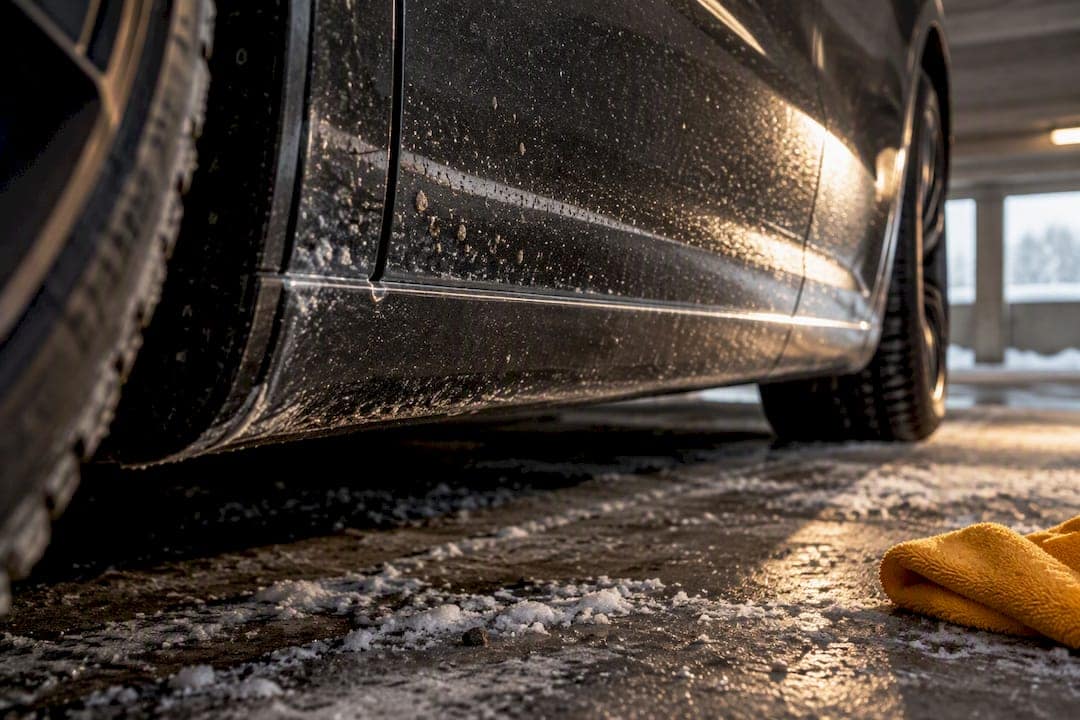
Rocker panels are the structural strips running along the bottom of your car between the front and rear wheel wells, and they sit directly in the splash zone of every tire on the road. Their position makes them one of the most vulnerable areas of the body for chips, gravel pitting, and road salt corrosion, especially on vehicles driven through winter conditions.
Paint protection film is a clear, urethane based material with a self-healing topcoat, applied directly over the factory paint. It absorbs impacts that would otherwise chip the finish, and minor scuffs disappear on their own with a little heat, whether from the sun or a heat gun. PPF gets used across several impact-prone zones, not just rockers, and it’s worth knowing the full map before you decide how much of your car to cover.
Common coverage areas include:
Installers pull film from certified distributors and cut it to match these zones, which is standard practice across the PPF industry.
The upside is straightforward: film absorbs stone chips, resists road salt, and shrugs off the abrasion that would otherwise eat through clear coat within a couple of winters. Because it’s optically clear, it preserves the factory paint underneath, which matters at resale time. A car with intact factory paint on the rockers avoids the repaint flags that hurt used-car appraisals.
Quick stat: quality film brands like 3M’s Scotchgard Pro Series advertise multi-year warranty coverage alongside self-healing topcoats and low orange-peel clarity, which gives buyers a real benchmark to hold installers to.
The limitations matter just as much:
Gloss film on a matte or satin paint job can also shift the finish slightly at the seam line, so ask your installer how they’ll handle that transition before they start cutting.
Not all rolls of PPF are built the same, and the differences show up the first time a rock kicks up off the highway. Thickness is measured in mil (thousandths of an inch), and most rocker-panel film runs between 6 and 10 mil. Thinner film conforms more easily around curves and wheel-well lips, while thicker film survives more direct impact but resists tight contours.
Finish is a genuine choice, not just an upsell:
Self-healing topcoats respond to heat, closing up light swirls and scuffs without polishing. That feature, along with UV and yellowing resistance, is exactly what to check on a manufacturer datasheet before you commit. 3M’s own spec sheet lists these claims directly, and any credible installer should be able to hand you the equivalent for whatever brand they run. Reading up on thickness tradeoffs before your consultation puts you in a better position to ask sharp questions.
Precut kits, laser cut to your exact make and model, fit rocker panels with minimal seams and no guesswork. Universal rolls, sold in widths from roughly 3 to 9 inches, work fine in the hands of an experienced installer but demand more skill to avoid visible seams or bunching around curves.
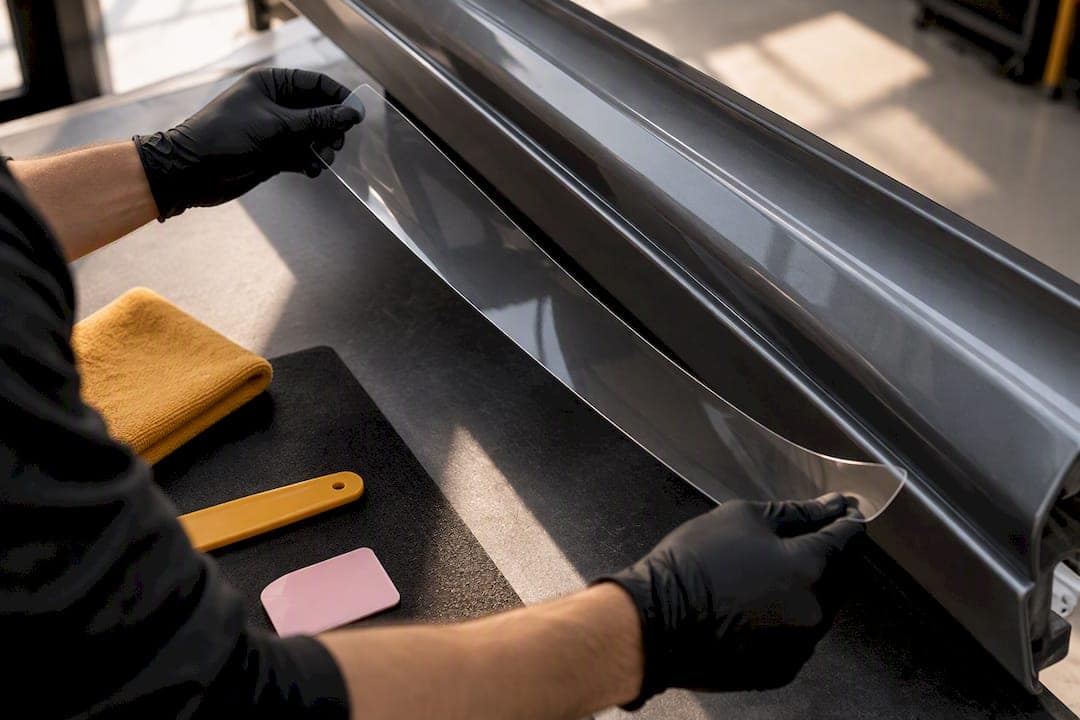
A DIYer needs a heat gun, a quality squeegee, slip solution, a sharp blade, and patience measured in hours, not minutes. Rocker panels curve in three dimensions around wheel wells, which makes them one of the harder panels on a car to wrap cleanly. Expect your first attempt to show at least one visible seam or trapped bubble.
Professionals bring pattern templates cut for your specific vehicle, controlled heat-shrinking around curves, and edge-sealing techniques that keep water from creeping under the film. They also back the job with a written warranty and, ideally, photos of past installs on your exact model.
Pro Tip: If you’re on the fence, do one small panel yourself first, like a fender edge, before committing to rocker panels. It’s a low-stakes way to find out whether you actually enjoy the process or would rather pay someone else to deal with the curves.
A competent shop doesn’t just slap film on dirty paint. The sequence matters, and skipping steps is how bubbles, edge lift, and trapped rust show up six months later.
Most service guidance recommends avoiding a wash for about 24 hours after install, giving the adhesive time to fully bond before it faces water pressure or brush contact.
Good film, properly installed, holds up for years, but how many depends heavily on climate and road conditions. A car driven through salted winter roads in a harsh climate will see film degrade faster than one garaged in a dry region.
Cleaning matters more than most owners expect:
Quick stat: manufacturer datasheets for premium films like 3M’s Pro Series advertise multi-year warranty coverage, which is the benchmark to compare against whatever your installer quotes.
Get warranty terms in writing before the job starts, not after. Confirm whether the warranty covers yellowing, edge lift, and adhesive failure, or just material defects. Following a simple maintenance routine after install stretches the film’s usable life closer to the top end of its range.
Never put film or a rigid cover over active rust. Sealing moisture under a protective layer speeds up corrosion instead of stopping it, since trapped moisture accelerates the very damage you’re trying to prevent.
The correct order of operations:
If rust has eaten through the metal rather than just surface-pitted it, you’re looking at bodywork or panel replacement before any protective film goes anywhere near that section. No film, however good the datasheet, fixes structural corrosion.
A short checklist saves you from a bad install and a warranty that turns out to be worthless. Before you hand over a deposit, get specific answers, not vague reassurances.
Pro Tip: If a shop can’t produce a datasheet or hedges on warranty specifics, that’s your answer. Walk away before you walk into a rushed job with no paper trail to back it up.
Red flags worth remembering: pressure to book same-day without an inspection, no written warranty, and a price that seems too low for the film brand they claim to use. Reading through whether PPF is worth the investment for your specific vehicle before that first phone call helps you negotiate from an informed position.
A team with extensive experience performs installs in Calgary and Winnipeg, using self-healing film technology on curved, high-impact panels. Additional services offered include ceramic coatings, windshield PPF, and window tinting, allowing for a comprehensive protection and comfort upgrade in one visit.
Customers note careful workmanship and clear aftercare instructions as important aspects of the service. Each installation includes warranty terms and care guidance provided clearly upfront, supporting proper protection and maintenance.
Most content on this topic gets fixated on which film brand wins a shootout, and that misses the actual decision point for most owners. The real fork in the road is DIY versus professional, and rigid guard versus flexible film, not which manufacturer’s marketing copy sounds best.
Conventional advice tends to undersell how much installer skill matters compared to film brand. A mediocre install of premium film will lift and bubble faster than a clean install of a mid-tier product. That’s the uncomfortable truth most buying guides skip past because it’s harder to sell than a simple brand recommendation.
Prioritize the installer’s process and paperwork first: datasheets, warranty terms, and photos of curved-panel work specifically. Rocker panels are unforgiving of shortcuts because of their tight curves around wheel wells, which is exactly where a rushed job shows up first. Get that part right, and the film brand becomes a secondary decision, not the primary one.
A pro install gets you tighter seams, properly shrunk edges around wheel-well curves, and a written warranty, which is exactly the combination this guide has argued matters more than brand choice alone. PPF’s Calgary paint protection film packages run from the Basic package at $649 up through Standard at $799 and Deluxe at $1,499, with Standard Fusion and Deluxe Fusion tiers available at custom pricing depending on your vehicle.
If you’re already booking rocker-panel coverage, it’s worth asking about bundling in windshield PPF or a ceramic coating in the same visit, since both address separate wear points that also shorten a car’s showroom look over time. Reach out through the Calgary service page to get a quote based on your specific vehicle and film preference.
3M’s Scotchgard Pro Series verifies self-healing and warranty claims. The Tesla service manual confirms install cautions and cure timing.
The most reliable method is applying paint protection film directly to the rocker panels, since it absorbs chip and abrasion damage while staying invisible against the factory paint. Rigid rocker guards work too, but they’re visible and better suited to off-road use than daily-driver aesthetics.
PPF can’t stop major impacts like curb strikes, doesn’t fix existing rust, and a poor install leads to edge lift within months. Cost also rises quickly if you’re covering large sections of the lower body rather than just the rockers.
Rigid rocker panel covers made from TPO, polycarbonate, or stainless steel do provide real physical protection and often install in under two hours using automotive adhesive. They trade invisibility for impact resistance, which suits off-road vehicles more than show cars.
Never cover active rust with film or a rigid guard, since trapping moisture underneath speeds up corrosion instead of stopping it. Remove the rust, treat the metal with a rust inhibitor, and repaint the section before applying any protective covering.
Pricing depends on the package and vehicle, but The PPF Company’s Calgary packages range from $649 for Basic up to $1,499 for Deluxe, with current pricing for Standard and Fusion tiers listed on the Calgary PPF page. DIY universal roll film costs far less upfront but carries a higher risk of visible seams and edge lift.