
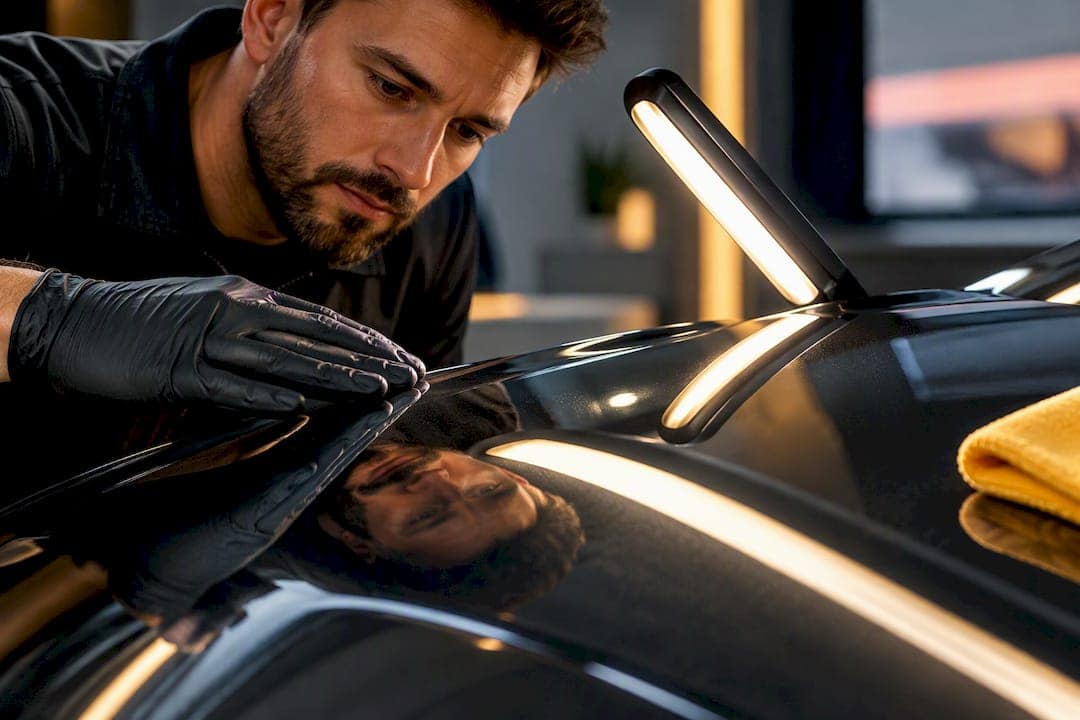
If your paint still beads water in tight, round drops, a maintenance topper is usually enough. If water sheets flat instead of beading, and dirt clings to the hood after a wash, you likely need a full strip and recoat. Start with a quick decontamination wash and a beading check on the hood and roof: that single test tells you which path to take, and if the result is unclear, a professional inspection settles it fast.
TL;DR:
- Water sheeting on horizontal panels indicates the coating has failed, requiring a full strip and recoat, while localized dullness may only need a booster.
- A proper prep, including washing, decontamination, and polishing, is essential before any reapplication to ensure proper bonding and avoid premature failure.
- Applying a booster or a spray sealant is a cost-effective way to restore slickness and extend the life of a coating that still retains beading on vertical surfaces.
- Full reapplication is recommended only when water no longer beads across all panels, contamination is embedded, or previous polish oils interfere with bonding.
- Regular inspections focusing on horizontal panels and professional advice help determine whether partial repairs or full re-coats are necessary over the vehicle’s lifespan.
The clearest diagnostic is water behavior. Pour water on a clean panel: tight beads that roll off mean the coating is intact, while flat sheeting or water that spreads and sits means the hydrophobic layer has broken down. A simple decontamination wash followed by this check, done on the hood, roof, and trunk, will tell you more than a visual scan alone.
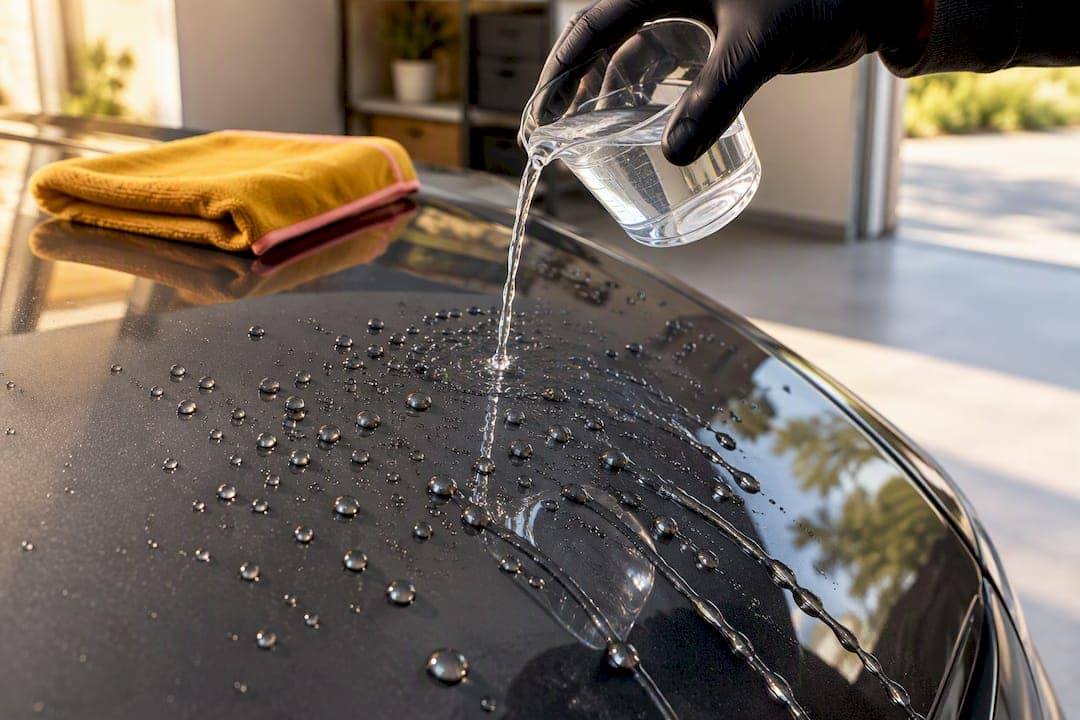
Other cues matter too. Gloss that looks duller than when the coating was fresh, dirt and road film that cling instead of rinsing away, and beading that’s strong on the doors but dead on the hood all point to localized wear rather than total failure.
Realistic lifespans help set expectations. Field data shows pro-applied premium coatings on a garaged car can last 4 to 7 or more years, while DIY 9H kits on outdoor daily drivers often last only 1 to 2 years, since durability depends heavily on installation quality and environment.
Not every dull hood needs a full strip. A maintenance topper, either a spray sealant or a SiO2 booster, sits on top of the existing coating and restores slickness without removing anything underneath. It’s the cheapest, fastest option and the right call when beading has weakened but not disappeared.
Partial panel reapplication targets the areas that fail first: the hood, roof, and trunk lid take the brunt of sun, rain, and road grit. Detailers advise inspecting horizontal panels first; if those panels have lost protection while the doors and fenders still bead well, a targeted recoat on just the worn panels often delivers the best value.
Full reapplication becomes necessary when the coating has failed structurally across the car, when contamination is embedded deep in the surface, or when old polish oils are interfering with adhesion.
Skipping prep is the fastest way to waste a fresh bottle of coating. Before any reapplication, whether partial or full, work through this sequence:
Manufacturer guidance is consistent on one point: residual polish oils or old coating left on the surface cause premature failure, because the new coating bonds to the oil film instead of the paint itself. Clay alone doesn’t remove that oil, which is why a proper IPA wipe matters as much as the clay step.
Pro Tip: Wipe a small test section with a white microfiber towel after your final IPA pass. If it comes back clean, the panel is ready; if it shows any residue, wipe again before coating.
Work one panel or panel section at a time so the coating never flashes before you can level it.
An infrared lamp can speed initial bonding and reduce cure-time variance in cooler shops, though it’s optional and only useful when temperatures are working against you. Nitrile gloves and a respirator or well-ventilated space are worth using, since coating fumes can irritate eyes and airways in an enclosed garage.
A coating’s daily performance depends more on maintenance than on the initial application. Quarterly SiO2 boosters restore hydrophobic performance and can extend a base coating’s functional life by 20 to 40% compared with no maintenance at all, since they rebuild the slick top layer without touching the structural bond underneath.
Boosters restore slickness, they don’t rebuild lost film thickness or abrasion resistance, so a coating that’s structurally worn through won’t respond to another topper no matter how often it’s applied. At roughly $30 per application, four boosters a year run about $120 annually, a fraction of what a full strip and recoat costs, which is why catching wear early with boosters and partial recoats pays off over a three to five year ownership window. Consistent wash cadence and boosting is the single biggest lever a car owner controls.

After years of inspecting coated vehicles, a few patterns hold up consistently: cars kept in a garage and washed by hand every one to two weeks routinely outlast daily drivers washed at tunnel washes, regardless of which coating was applied. Horizontal panels, hood, roof, and trunk, always show wear first, so that’s where our team checks beading before anything else.
A professional inspection earns its cost when paint correction is needed before recoating, when a warranty claim depends on documented surface condition, or when you’re unsure whether sheeting means surface wear or something deeper. Our maintenance guide covers the wash and boost cadence we recommend between visits.

DIY toppers and clay kits handle routine upkeep well, but a full strip, polish, and recoat is labor-intensive work that rewards experience: knowing which panels need correction, how long to flash between coats, and how to avoid the polish-oil failures that shorten a coating’s life. These services cover all three tiers: a maintenance boost, a targeted partial panel recoat, or a full reapplication, on vehicles in select locations.
A typical appointment starts with an inspection of your current coating, a decontamination wash, and an honest estimate of whether polishing is needed before we recoat, or whether a booster will do the job.
Book an inspection through our ceramic coating page and find out which option fits your car before you spend a weekend guessing.
Only after the old coating and any polish oils are fully removed through decontamination and, often, polishing. Applying fresh coating directly over failing residue causes the new layer to bond to that residue instead of the paint, leading to premature delamination.
You need a full reapplication only once the coating has failed structurally, shown by sheeting water and dirt that clings across most panels. Before that point, a booster or partial panel recoat usually restores performance at a fraction of the cost.
Yes, applying a second layer during the same session is common and often recommended by manufacturers to build slightly more film thickness. Reapplying a fresh coat months or years later is different and requires full decontamination first, not just a second coat over the existing layer.
A quarterly SiO2 booster or spray topper can restore hydrophobic performance on a coating that’s dulled but still structurally intact. Boosters can extend a coating’s functional life by 20 to 40%, though they can’t revive a coating that has already worn through completely.