
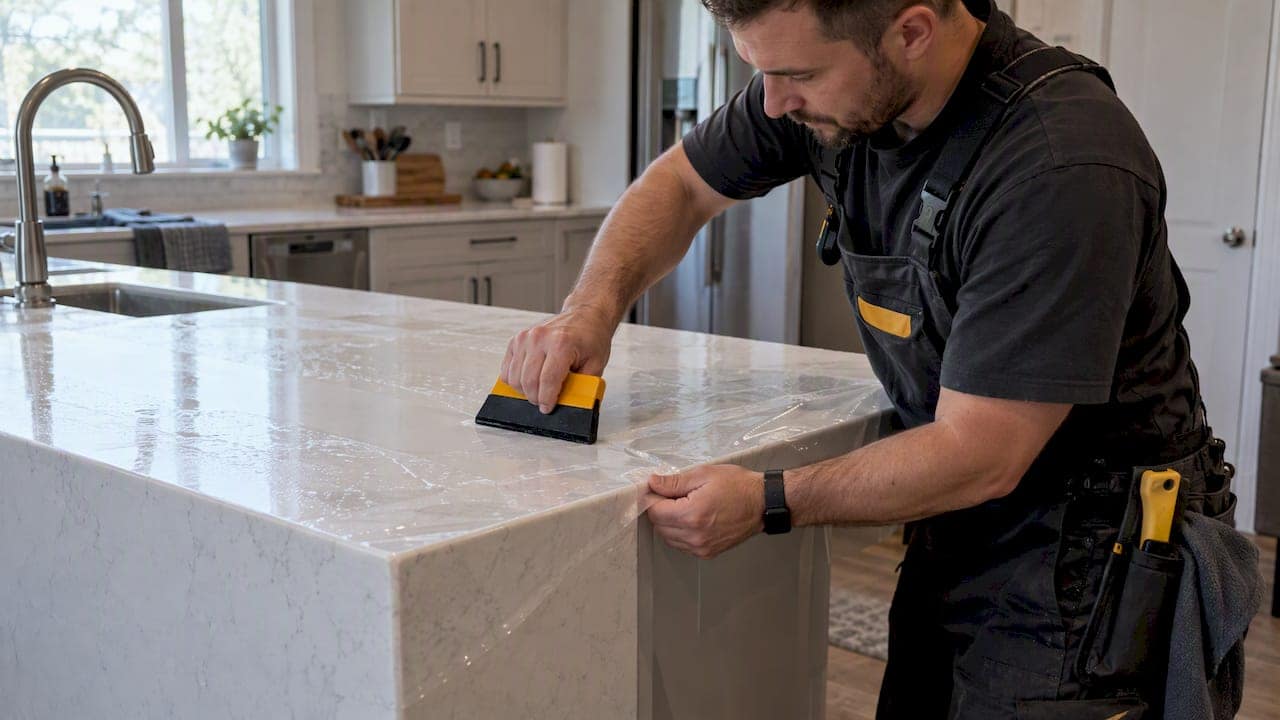
A clear quartz countertop film reduces everyday scratches and keeps spills from soaking into cleanup towels, but it will not replace basic quartz care, and it is not heat or impact proof. Check your slab manufacturer’s warranty guidance before applying anything, and choose a professional installer when you want long-lasting, warranty-safe results.
TL;DR:
- Quartz countertop films are best suited for new installations, high-traffic areas, or temporary protection during renovations; they do not replace regular quartz upkeep.
- Films protect against light scratches and spills but cannot withstand heavy impacts, prolonged heat, or chemicals, which can damage both the film and quartz underneath.
- Proper application requires thorough cleaning, precise measuring, seam sealing, and professional installation to prevent lifting, trapping debris, or warranty issues.
- Choose film finish and thickness based on your quartz surface’s gloss level and daily use intensity, with glossy films for polished surfaces and satin or matte for honed finishes.
- Always verify manufacturer guidance and warranty conditions before applying film, and avoid harsh cleaning products, bleach, or abrasive tools to maintain clarity and lifespan.
Quartz countertop film is a thin, clear polymer sheet applied directly to the surface to reduce abrasion and keep spills from spreading. It sits on top of the stone rather than soaking in, which matters because engineered quartz is nonporous and generally does not need sealing at all. Material guides on sealing quartz note that liquid sealers can actually leave residue or cloudiness on a finish that was never designed to absorb them.
That is the core distinction buyers miss: a sealer tries to change the stone chemically, while film is a removable physical layer you can peel off without altering the quartz underneath.
Film tends to make the most sense in a few specific situations:
Outside those cases, many homeowners find quartz holds up fine on its own, since the material was built to resist daily wear without an added layer.
Film earns its keep on the small stuff. It softens light scratches from knives, pots, and keys dragged across the counter, and it limits how much a spilled glass of wine or coffee actually touches the stone before you wipe it up. For a rental unit or a busy family kitchen, that alone can cut down on wear between deep cleanings.
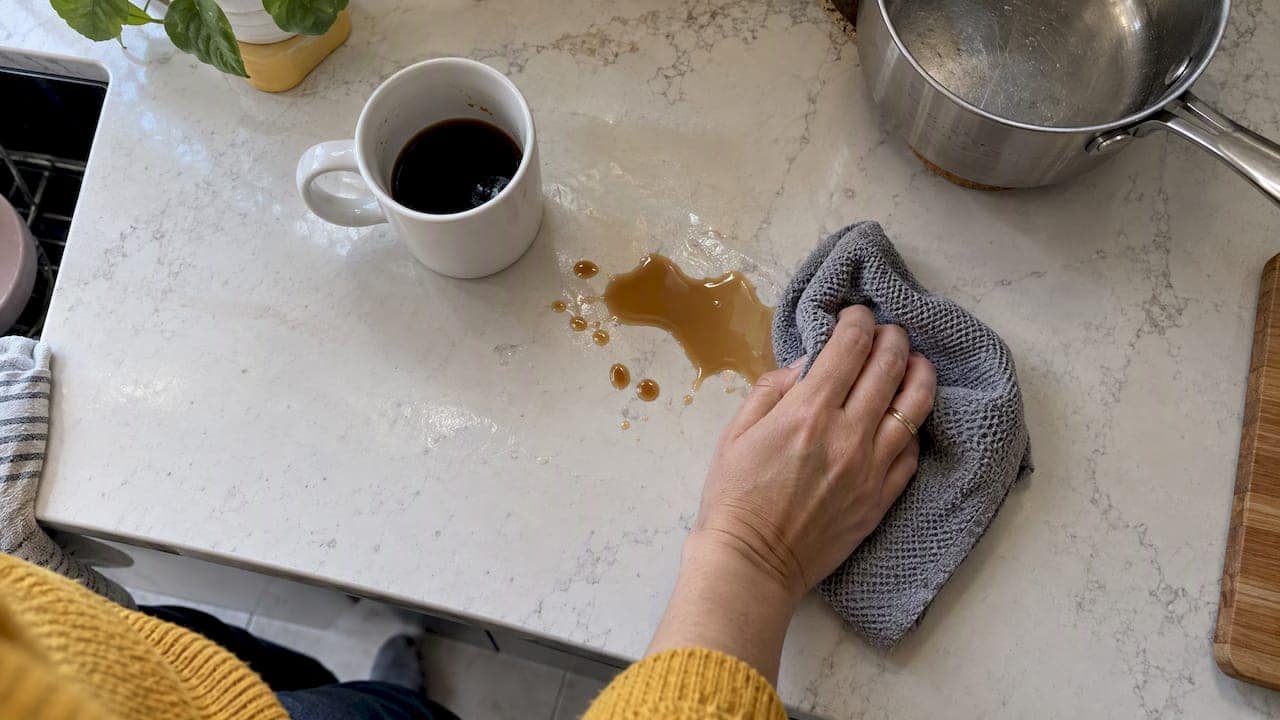
What it will not do is stand in for basic quartz habits. Caesarstone’s care and maintenance guidance recommends using a trivet for hot pots and pans and specifically warns against prolonged direct heat, a rule that applies whether or not a film is on the counter. Heavy impacts, aggressive chemicals, and extended heat exposure can all defeat the film, and in some cases damage the quartz underneath it.
A few failure points show up more than others:
Pro Tip: Always confirm your slab manufacturer’s compatibility guidance before applying any film, since adhesive residue left too long can affect warranty coverage.
The right finish depends on what your quartz already looks like. A glossy film preserves the polished sheen of a high-shine slab, while a satin or matte film suits honed or low-glare quartz better, since a glossy film over a matte surface can look mismatched under kitchen lighting.
Thickness matters too, and it is usually measured in mil:
Finish choice also affects how the counter reads day to day. Glossy films tend to show fingerprints and glare more readily, while satin options hide smudges better but can make seams slightly more visible under angled light.
Installing film follows a fairly consistent sequence, whether a professional or a homeowner does the work:
The steps sound simple, but the details are where DIY attempts tend to go wrong. MSI’s quartz care guidance points out that factory shipping film used during transport is a temporary measure, not a designed protective layer, and the two should never be confused. Getting seams, cutouts, and corners right without trapping debris or leaving air pockets takes practice, and the wrong adhesive or solvent choice can permanently change how the slab looks.
Pro Tip: Before committing to any installation, confirm your slab brand’s care guidance, ask which adhesives and cleaners are approved, and get a clear answer on how the installer handles their workmanship warranty.
A short pre-install checklist helps avoid regrets: know your slab brand’s published care instructions, confirm the film and adhesive are compatible with your warranty, understand how long the film is rated to stay on, and get the installer’s warranty terms in writing. For readers comparing this to automotive-style protective films, the differences between countertop film and other protective films are worth understanding before buying.
Daily care for a filmed countertop is simple on paper. Use a pH-neutral soap, warm water, and a microfiber cloth, then rinse and dry the surface completely. Leaving moisture to air-dry is one of the more common causes of a hazy film surface over time.
A few products should stay out of the cabinet entirely:
PentalQuartz’s fabrication and installation manual specifically cautions against solvents that can change a slab’s appearance during adhesive cleanup, which is a detail easy to overlook when you are just trying to get a sticky residue off the counter. If film has been on longer than recommended, or if residue remains after a careful attempt at removal, a professional installer can remove it without risking the finish. The same caution applies to safe removal techniques used across other types of protective film, where testing and gentle methods matter more than speed.
Countertop film lives or dies at the edges, and that is exactly where professional experience shows. A trained installer plans seam overlap, edge sealing, and corner trimming before the film ever touches the slab, which reduces the lifting and trapped debris that cause most failures.
New kitchen islands, areas around a cooktop, and any high-use prep zone benefit the most from this kind of careful work, since those spots see the heaviest daily stress. A workmanship warranty backed by real installation experience gives homeowners a layer of accountability that a DIY attempt simply cannot offer, especially when the stakes include a slab manufacturer’s own warranty terms.
Protecting a quartz countertop the right way means getting the edges, seams, and adhesive choices right the first time, and that is where a dedicated installer earns the cost. Professional installers apply careful attention to detail to custom countertop protection film installations, backed by care guidance and a workmanship warranty.

A typical project runs in a few clear steps:
If you are ready to get your quartz countertops protected properly, request a quote for countertop film installation and get a clear answer on timeline and workmanship coverage before committing.
Before applying any film, confirm current guidance directly from your slab brand. Review Caesarstone’s care and maintenance manual and the PentalQuartz fabrication and installation manual for cleaning and warranty specifics tied to your exact slab.
There is no single best film for every quartz slab, since the right choice depends on your finish (glossy versus satin) and how much daily wear the surface sees. A glossy film suits polished quartz, while a satin or matte film works better on honed finishes, and either should match guidance from your slab manufacturer.
Most quartz does not need a coating at all, since engineered quartz is nonporous and sealers can leave residue or cloudiness rather than added protection. A removable clear film is generally a safer choice than a liquid coating or sealer for everyday scratch and spill resistance.
Application involves cleaning the surface, precutting the film to match sinks and cutouts, applying it wet or dry depending on the product, then squeegeeing out air bubbles and trimming the edges. Professional installation reduces the risk of trapped debris and lifting at seams, which are the most common points of failure.
Film does not protect against heat, so trivets and hot pads remain necessary even with film applied. Caesarstone’s care guidance specifically recommends a trivet for hot cookware and warns against prolonged direct heat on quartz surfaces.