
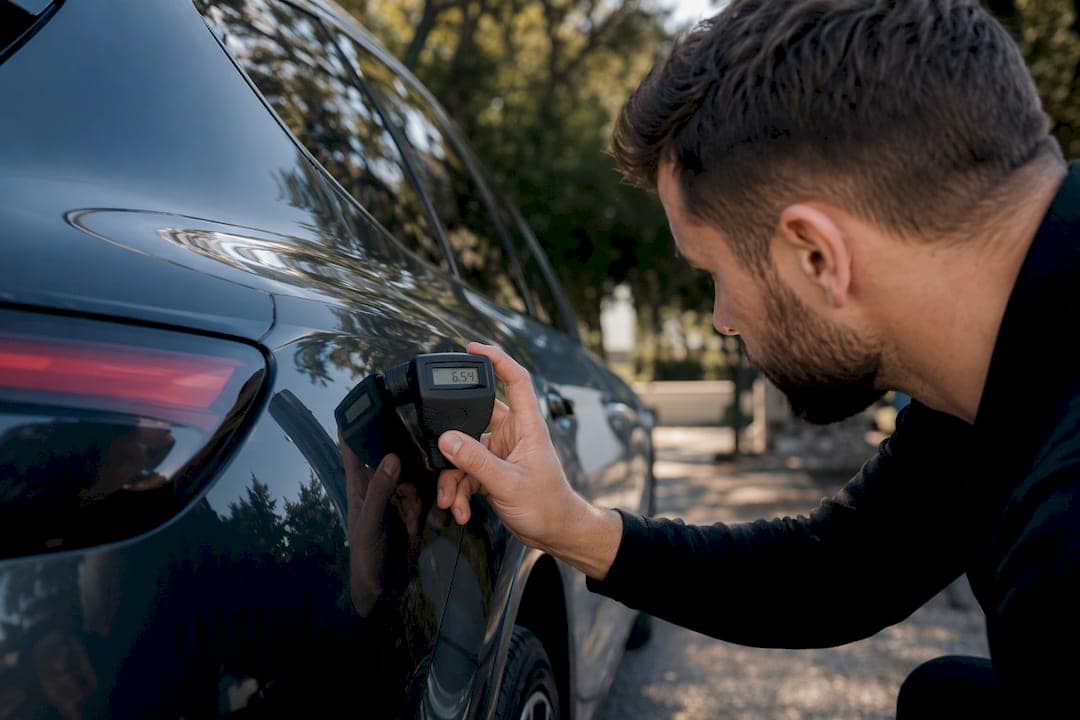
For most drivers, the best overall paint protection film choice is generally a mid-range thickness often cited around 8 mil, because that band balances impact protection, flexibility during install, and long-term optical clarity better than anything thinner or thicker. Go below that and you save money but give up some rock-chip resistance. Go above it and you gain toughness on paper but fight the film during installation, especially around curves.
Here’s the quick math you need before comparing any spec sheet:
The right PPF thickness depends on layer quality and installer skill as much as the mil number, with 8 to 8.5 mil serving as the practical default for most drivers.
| Point | Details |
|---|---|
| Default recommendation | 8 to 8.5 mil (about 203 to 216 microns) balances protection, flexibility, and installability for most vehicles. |
| Conversion basics | 1 mil equals 25.4 microns, so 8 mil works out to roughly 203 microns installed. |
| Thickness isn’t linear | Impact resistance gains from 6.5 to 10 mil don’t scale evenly, and stretching during install lowers effective thickness. |
| Layer breakdown matters more than total mil | TPU core, topcoat chemistry, and adhesion specs on the TDS determine real-world durability and clarity. |
| Panel-specific specs work best | The PPF Company typically installs 8 to 8.5 mil on full-front jobs and 9.5 to 10-plus mil on high-impact truck panels. |
A mil isn’t a typo for millimeter. It’s one-thousandth of an inch, and it’s the unit almost every North American film manufacturer prints on its technical data sheet. Converting is simple: multiply mil by 25.4 to get microns, or divide microns by 25.4 to get back to mil. A film at 8 mil, for instance, works out to roughly 203 microns, or about 0.2 millimeters.
A useful comparison: an 8-mil film is roughly as thick as three or four human hairs stacked together, which sounds thin until you realize that thin layer is what’s standing between a highway pebble and your fender.
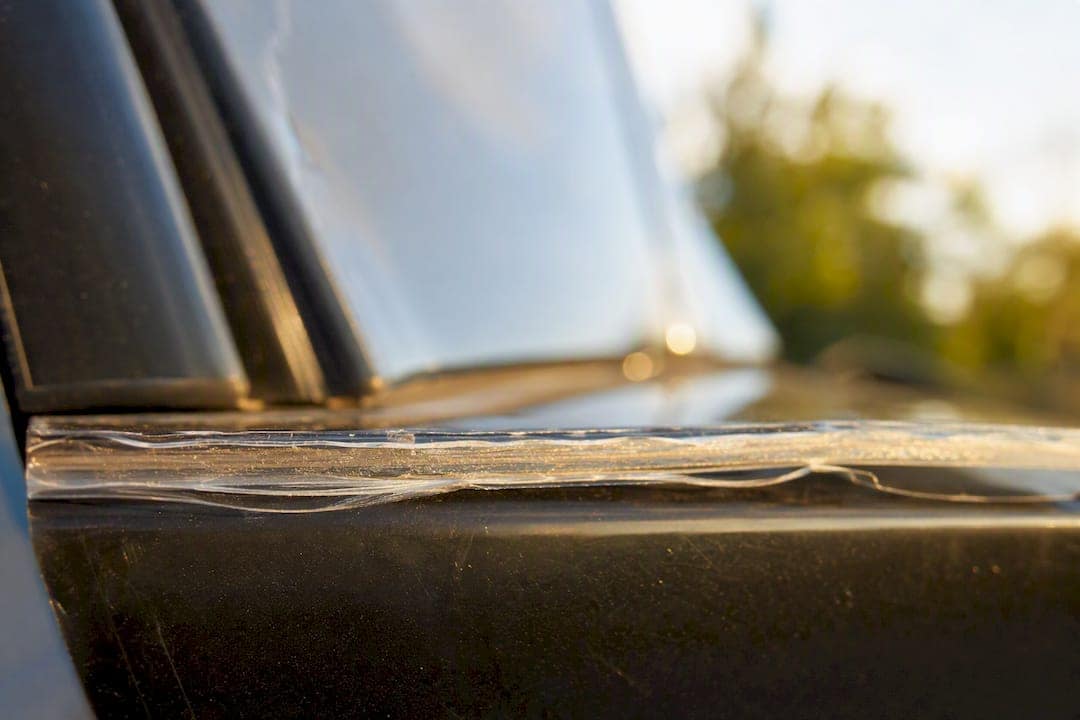
Commercial PPF generally runs from 6.5 mil to 10-plus mil, with 8 mil often cited as the industry standard for balanced performance. One wrinkle worth knowing: some manufacturers quote the thickness of the film alone, while others quote film-plus-adhesive as the installed number. When you’re comparing two products side by side, confirm which figure you’re actually looking at, or you’ll end up comparing apples to a slightly thicker orange.

Thickness isn’t a single dial that makes everything better as you turn it up. It’s a set of tradeoffs, and understanding the mechanics behind each one helps you stop fixating on the biggest number on the spec sheet.
Different thickness bands suit different vehicles and driving habits, and the right call often changes panel by panel rather than car by car.
Panel by panel, it often pays to mix specs rather than run one thickness across the whole car. The hood’s leading edge, front bumper, and side mirrors take the brunt of road debris and justify the thicker end of your chosen range. Rocker panels see less direct impact and can often run a lighter film without sacrificing much real-world protection, which keeps overall cost and install time in check.
Total mil thickness is only half the story. What matters just as much is how that thickness splits between the TPU core, the topcoat, and the adhesive layer, because layer distribution and material chemistry drive self-healing speed, gloss retention, and impact performance independent of the total number.
The numbers to request from any installer or manufacturer: haze percentage, yellowness index (YI), peel adhesion strength, elongation at break, and self-heal time. These are commonly benchmarked against ASTM test standards, which give you a consistent way to compare films from different brands instead of relying on marketing claims.
| Spec Item | What It Tells You |
|---|---|
| Total film + adhesive thickness | The installed thickness, e.g. 3M’s Pro Series lists roughly 7.8 mil (0.20 mm) on its published TDS |
| Haze % | Optical clarity right after install and over time |
| Yellowness Index (YI) | Long-term UV resistance and discoloration risk |
| Peel adhesion | How securely the film bonds and resists lifting at edges |
| Elongation at break | How far the film stretches before tearing, relevant during install |
Picking a spec comes down to five factors: how you drive, what the vehicle is worth, which panels need the most coverage, your budget, and how skilled your installer actually is with heavier films.
Pro Tip: You don’t have to cover the entire car in the thickest film available. Selective coverage on the hood, front bumper, and mirrors at 8.5 to 10 mil, paired with lighter film elsewhere, often protects better than a uniform spec while keeping costs reasonable.
The PPF Company brings more than 30 years of combined installer experience across Calgary and Winnipeg, working directly with self-healing TPU films on daily-driven and show vehicles alike.
The mil number gets all the attention because it’s the easiest thing to put in a headline, but it’s not the number that determines how your car looks in three years. Layer chemistry does that. A well-formulated 7.5-mil film with strong topcoat performance can outlast a poorly formulated 9.5-mil film that yellows early and hazes at the edges. That’s not a fringe opinion; it’s what happens when TPU core quality and topcoat chemistry get skipped in favor of chasing a bigger number.
The install matters just as much as the material. Stretching during installation quietly lowers effective thickness at exactly the curves and edges most exposed to impact, which means two cars with identical 8.5-mil film can end up with meaningfully different real-world protection depending on who installed it. Ask about layer breakdown before you ask about total mil. Ask how the installer handles tight curves before you ask about price. The spec sheet is a starting point, not the final answer, and the technicians who understand that distinction tend to deliver the films that actually hold up.
If there’s one habit worth adopting, it’s this: stop shopping by the single biggest mil number you can find, and start shopping by asking to see the TDS.
The PPF Company installs paint protection film, ceramic coating, window tinting, and vinyl wraps for drivers across Calgary and Winnipeg who want a spec chosen for their actual vehicle, not a one-size-fits-all sheet of film. Most full-front installations run 8 to 8.5 mil, while trucks and off-road vehicles headed for gravel roads or heavy highway miles typically move up to 9.5 to 10-plus mil on the hood, bumper, and mirrors.
Every install pairs film choice with panel-specific advice, so a rocker panel doesn’t get the same treatment as a leading hood edge. If you want a spec recommendation based on your vehicle and how you actually drive it, book a consult through the Calgary or Winnipeg location pages, or find the nearest shop through the full locations list.
For most vehicles, 8 to 8.5 mil (about 203 to 216 microns) offers the best balance of impact protection, installer workability, and optical clarity over time.
Yes, 7.5 mil works well for mixed city and highway driving, offering better protection than 6.5 mil while remaining easier to install than heavier films on curved panels.
200 microns converts to roughly 8 mil, which falls right in the range most manufacturers consider solid, everyday protection for daily-driven vehicles.
3M’s Pro Series lists a film-with-adhesive thickness of roughly 7.8 mil, or 0.20 mm, on its published technical data sheet.
Not necessarily. Layer chemistry, topcoat quality, and installer skill all affect real-world performance, and a well-made thinner film can outperform a poorly formulated thicker one.