
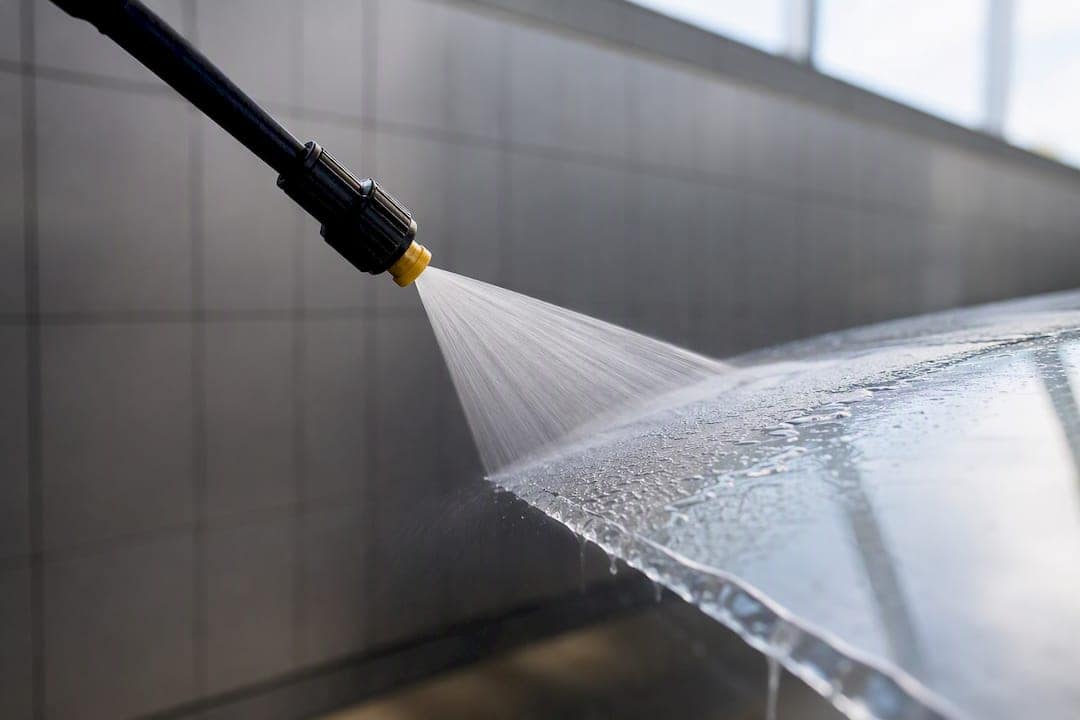
Yes, washing a car with paint protection film is safe, as long as you use the right method. Hand washing is the gold standard, touchless car washes are a solid backup, and brush-based tunnel washes are off the table entirely. Wait out the curing window first, respect the pressure-washer limits below, and your film will hold up for years.
TL;DR:
- Hand washing with a two-bucket method and microfiber mitts provides the safest cleaning method for paint protection film.
- Pressure washers must stay below 1,200 psi with a 40-degree spray pattern and be held at least 12 inches away to avoid damaging seams.
- Use pH-neutral shampoos without wax, petroleum, or abrasives, and avoid clay bars and abrasive polishes for regular PPF maintenance.
- Gently soak and lift contaminants like bird droppings and sap using soft microfiber towels and PPF-safe cleaning products, avoiding scrubbing.
- Wait at least 72 hours, preferably a full week, after installation before washing to prevent early lift or seam damage.
The safest hierarchy is simple: hand wash first, touchless second, brush-based automatic washes never. 3M’s own maintenance guidance backs this ranking directly, and it lines up with what installers see every day in the shop.
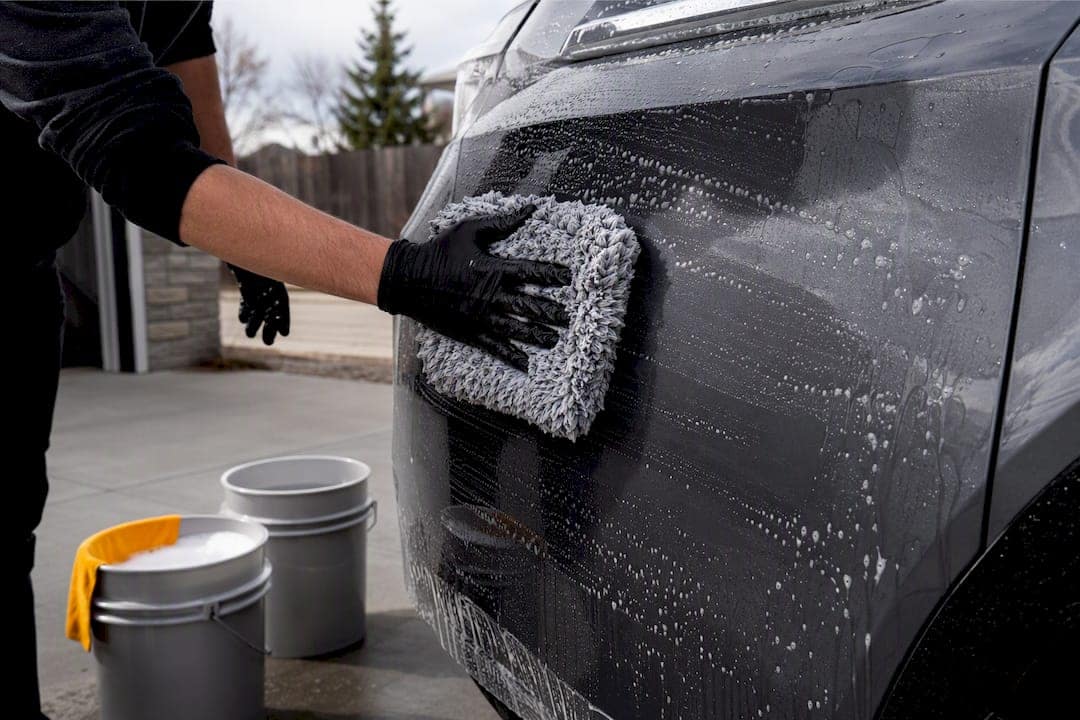
Hand washing wins because you control everything: water temperature, pressure, and contact. The two-bucket method (one bucket for clean suds, one for rinsing your mitt) keeps grit out of your wash media so you’re not dragging sand across the film every pass. Stick to a plush microfiber wash mitt and skip the circular scrubbing motion. Straight, light strokes reduce the chance of trapping debris against an edge or seam.
Touchless car washes are a reasonable substitute when you’re short on time or don’t have a driveway to work in. They skip the physical contact that causes swirl marks, which makes them fine for PPF in general. The catch is what happens at the bay itself: some touchless setups still push hot wax cycles or high-alkaline soap upsells that leave residue behind. Skip those add-ons and stick to the base wash cycle.
Brush and spinning-cloth tunnel washes are the one method to avoid outright. Those brushes accumulate grit from every car ahead of yours, and that grit gets pressed directly into your film with every rotation. The bigger risk is at the edges, where cloth or bristle catches on a seam and starts working it loose.
Pro Tip: Rinse your mitt every single pass through the rinse bucket, not just when it looks dirty. Grit you can’t see is the grit that causes swirl marks under film.
Pressure washers are useful for rinsing off heavy road grime before you even touch the paint, but the numbers matter more than most owners realize. 3M’s installation guidelines set a hard ceiling: a maximum of 1,200 psi (80 bar), a minimum 40-degree spray pattern, and a nozzle held at least 12 inches (30 cm) from the surface.
Angle is where most damage actually happens. 3M’s guidance specifically warns against directing the water stream at 0 to 60 degrees relative to a film edge, since a concentrated jet at that angle can force water underneath the seam and start lifting it from the inside out. Keep the nozzle moving, stay closer to perpendicular against the panel, and never let the spray linger on a seam, bumper edge, or hood gap.
A gusty day compounds the risk, since wind can push a wide fan pattern into a tighter, more concentrated stream right at the moment it crosses an edge. If you’re washing outdoors on a windy day, drop the pressure further or switch to a hand-wash rinse instead.
Edge lifting starts at the seam, not the panel face. That’s why the 40-degree fan pattern and 12-inch distance matter more than the psi number alone.
Stick to a pH-neutral car shampoo with no wax additives and no petroleum distillates. 3M’s product care guide is explicit on this point: alkaline cleaners, acidic cleaners, and anything solvent-based can degrade the film’s topcoat over time, even if it looks fine after one wash.
For regular cleaning, a commercial shampoo works, but check the label for dyes, abrasive polishes, or rubbing compounds, since 3M notes those specifically as things to avoid. Clay bars and abrasive polishing compounds are a DIY no-go entirely. If a panel needs more than soap and water, that’s a job for your installer, not a bottle you found at the auto parts store.
A two-bucket wash and blot-dry approach is worth adopting even if you’ve never had swirl marks before. It’s cheap insurance and takes maybe two extra minutes per wash.
Contaminants like bird droppings, bug splatter, and tree sap need patience, not elbow grease. Scrubbing them off is exactly how you introduce fine scratches into the topcoat.
Bird droppings are the most urgent of the three. Their acidity etches faster than sap or bug residue, so don’t let them sit in direct sun for hours before you address them.
Skip the chamois-drag entirely. Dragging a cloth across film creates shear friction that, according to detailing professionals, can produce micro-tears in the topcoat over repeated washes. A car dryer or leaf blower is the gentlest option since it removes water with zero contact. If you’re blotting by hand, use a high-GSM microfiber towel and press down rather than wipe.
Once the car is dry, run your fingers lightly along seams, hood edges, bumper cups, and door cups. You’re feeling for any spot where the film edge feels loose or catches a fingernail.
If you feel any lifting at all, stop washing that panel and get it looked at before the seam opens further.
Wait a minimum of 72 hours before the first wash. 3M and SunTek both set that 72-hour floor, while some installers, citing conservative shop practice, prefer owners hold off a full 7 days before anything beyond a light rinse. If you spot lifting at any point, stop washing and call your installer rather than trying to fix it yourself.
The numbers are worth repeating because they’re the difference between film that lasts and film that lifts at the seams within a year: 1,200 psi maximum, 40-degree minimum fan pattern, 12 inches minimum nozzle distance, and no spraying directly at edges. Every one of those limits exists because concentrated water pressure at the wrong angle is the single fastest way to force water under a seam.

Installers add a few practical habits on top: keep the nozzle in motion rather than holding it still, blot-dry instead of wiping, and check the first wash closely for micro-lifts you might not notice later. Some also recommend a PPF-safe ceramic boost after the first few washes to restore hydrophobicity, since film loses some of its water-shedding ability over time.
Pro Tip: After your very first post-installation wash, run your hand over every edge while the car is still wet. Lifted film is easier to feel than to see.
Extreme water temperature, hot or cold, adds stress to film that pressure or chemistry alone doesn’t. Very hot water can soften the film’s adhesive layer temporarily, and washing with a stream that’s noticeably hot to the touch raises the odds of pushing water under a seam that’s already slightly vulnerable from a recent installation.
Cold water isn’t dangerous the same way, but it does make the film stiffer and less flexible for a few minutes after contact, which matters mostly if you’re doing any kind of panel work or paying close attention to how the edges lay. In practice, lukewarm to moderately warm water, similar to what you’d use washing any painted car, is the safe middle ground. It loosens dirt and grime effectively without pushing the adhesive toward its softening point.
Where temperature matters most is in winter. Cold film is more brittle at the edges, so an aggressive nozzle angle that would be forgivable in summer becomes riskier in freezing temperatures. If you’re washing outdoors in cold weather, back off the pressure slightly and give the car a few minutes in a heated garage bay before you start, if that option is available. Consistency matters more than any single temperature number. Sudden swings, like a cold rinse followed immediately by a hot-water touchless cycle, are harder on the film’s adhesive bond than any one temperature extreme on its own.
Most quick detailers are fine on PPF, but the ingredient list matters more than the marketing on the bottle. A PPF-safe quick detailer works the same way it does on paint: it adds a light lubricating layer that helps a microfiber glide across the surface without grinding in dust, and it can top off the hydrophobic properties between full washes.
The products to avoid are the same offenders that show up everywhere else in PPF care: anything with high alcohol content, strong solvents, or dyes. Alcohol-heavy detailers can dry out the topcoat faster than plain soap and water would, and dye-based sprays sometimes leave a faint tint on lighter film over repeated use. If a spray is marketed generically as an “all-surface” or “tire and trim” product, treat that as a warning sign rather than a recommendation, since those formulas often lean on stronger solvents than a dedicated paint or film detailer.
Spray-on ceramic boosters designed for PPF are a genuinely useful addition to a maintenance routine. They restore beading and slickness that fades a few months after installation, and applying one every few months keeps water and contaminants from clinging to the surface between washes. Apply any spray product to a cool panel, out of direct sun, and always buff it off with a clean microfiber rather than letting it dry on its own. Letting a detailer bake onto film in the sun is one of the more common ways owners accidentally create water spots or streaking they then blame on the film itself.
Winter is the toughest season for film, mostly because of road salt. Salt residue left on the surface for days at a time can work into any imperfect seam and accelerate lifting, so rinsing the lower panels and rocker areas more frequently during salt season matters more than almost any other single habit. A weekly rinse, even a quick touchless pass, beats letting salt sit for weeks between washes.

Summer brings a different problem: UV exposure and heat. Parking in shade or a garage when possible slows the gradual yellowing and brittleness that comes from constant sun exposure, and it’s a far easier habit to maintain than any product you’d apply after the fact. Spring and fall bring pollen, tree sap, and more bug splatter, all of which call back to the dwell-and-lift method rather than scrubbing.
Regardless of season, the fundamentals don’t change: hand wash when you can, touchless when you can’t, and never let contaminants sit indefinitely. If you’re dealing with heavy winter driving, consider booking a maintenance check before spring to catch any salt-related edge issues before they become a bigger repair.
PPF is a long-term investment in your car’s paint, and the wash routine you settle into in the first month tends to be the one you stick with for years. Getting the installation right the first time matters just as much as the washing habits afterward. The Deluxe, Standard, and Basic packages from The PPF Company are built with self-healing film and applied with the same attention to seam quality that makes the washing rules above actually hold up over time. If you’re still deciding on coverage, The PPF Company’s PPF page outlines options for full-front, track, and partial coverage, and the team can walk you through which package fits your driving conditions and budget.
Hand wash when you can, use a touchless bay when you can’t, and never let a brush near your film. Follow the pressure and angle limits, and check every edge after your first wash. Lifting caught early is a five-minute fix. Lifting ignored becomes a much bigger repair.
Yes, as long as it’s the right kind of car wash. Hand washing is best, and touchless automatic washes are an acceptable alternative, but brush-based or spinning-cloth tunnels should be avoided because the bristles can catch and lift film edges.
Yes, touchless washes are generally fine for PPF since they avoid the physical contact that causes swirl marks or edge catches. Just skip any hot wax or high-alkaline soap upsells offered at the bay, since those chemistries can leave residue on the film’s topcoat.
A pH-neutral car shampoo without wax additives or petroleum distillates is the safest choice for regular washing. 3M’s guidance also recommends avoiding shampoos with dyes, abrasive polishes, or rubbing compounds.
Wait a minimum of 72 hours before the first wash, though some installers recommend waiting a full 7 days as a more conservative approach. This gives the adhesive time to fully bond before it faces water pressure or scrubbing.