
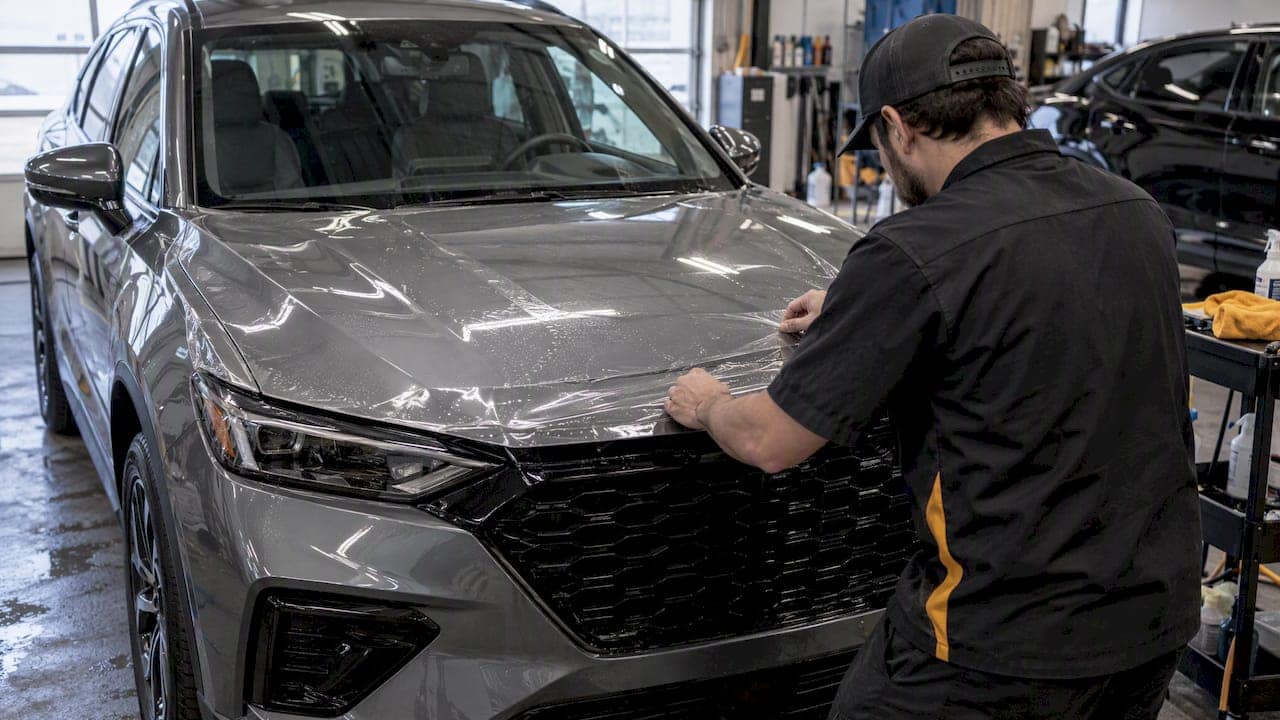
For most new car owners who drive regularly or face road debris, applying paint protection film is a smart move because it stops chips, scratches, and staining before they start. PPF shields factory paint from rock chips, bug etchings, UV fading, and tar or bird dropping stains, and reputable installs come backed by a manufacturer warranty. Drivers who rarely leave the garage or put on minimal highway miles can reasonably skip it or choose partial coverage instead.
TL;DR:
- PPF is most beneficial for drivers with high mileage, especially on highways or gravel roads, as it significantly reduces stone chips and stains.
- Proper installation by certified professionals is crucial, as poor application or removal can damage the factory paint or cause visible edges.
- The cost varies based on coverage area, vehicle size, and film brand, with full wraps costing more but offering better long-term protection.
- Hand or touchless washing is recommended to avoid micro-scratches, and regular edge inspections help maintain appearance and integrity.
- PPF does not void factory warranties when installed correctly, and partial coverage can be a cost-effective alternative for low-mileage or garage-kept cars.
Paint protection film is a clear layer of thermoplastic polyurethane bonded to a vehicle’s painted surfaces. Most modern films include a topcoat engineered to self-heal light swirl marks and fine scratches when exposed to warm water or sunlight, so the surface underneath stays untouched. The film sits on top of the clearcoat like an invisible sacrificial skin: whatever hits it first, the factory paint never sees.
The practical protection covers a specific set of threats that owners actually encounter on the road:
Not every film performs the same way, which is why installer choice matters as much as the product. 3M Canada describes its Scotchgard film as a clear polyurethane layer built to resist stone chips, scratches, bug damage, tar stains, and UV weathering, and notes that the warranty only holds when a certified installer does the work. That detail matters more than most buyers realize: a film is only as good as the hands that apply it, and a warranty tied to certification gives owners a way to verify quality before paying for it.
Weighing the tradeoffs comes down to how the car gets driven and how much the owner wants to spend protecting its finish.
Partial coverage, such as the front bumper, hood, mirrors, and rocker panels, is a common middle ground for owners who want chip protection where it matters most without paying for full-body coverage.

Correctly installed PPF does not damage factory paint. The film bonds to the clearcoat, not the paint itself, and when it is removed by a trained technician using proper heat and technique, it lifts away cleanly. Problems arise almost exclusively from poor installs or poor removal: film applied in dirty conditions traps debris underneath, and film pulled off too quickly or at the wrong temperature can take clearcoat with it.
A few checks protect owners from that outcome:
Pro Tip: Ask any installer how they handle edge trimming around mirrors and door handles, since that detail separates a clean job from a sloppy one.
Pricing depends mainly on coverage area, vehicle size, film brand, and labor time. A partial front-end package costs less than full-body coverage, and larger vehicles take longer to wrap than compact cars. Because quotes vary by shop and region, getting a few estimates for the exact coverage you want is worth the time before committing.
Reputable films carry multi-year warranty windows from the manufacturer, and the Scotchgard Pro Series line highlights self-healing performance and clarity backed by that kind of coverage when installed by a certified shop. Installer-backed warranties add a second layer of assurance beyond the film manufacturer’s own terms.
Preserved paint tends to support resale appeal by keeping the finish free of chips and fading, though it does not change a vehicle’s mechanical condition or odometer reading.
A new car is the ideal candidate for PPF because the paint is factory fresh and has not yet developed the swirl marks or chips that would require paint correction before film goes on. Skipping that correction step keeps cost and risk lower than installing film on a used vehicle with existing wear.
A typical installation follows three stages:
After the appointment, 3M Canada recommends a curing window, commonly about one week, during which owners should avoid washing, waxing, or high-pressure cleaning near the edges to let the adhesive fully bond.
Hand washing or a well-maintained touchless wash is the safer choice for a film-wrapped car. Consumer Reports warns that automatic brush washes can trap grit from previous vehicles and drag it across the finish, creating fine scratches that dull both paint and film over time. AAA recommends regular washing on a consistent schedule and notes that brush-style washes carry more risk to a vehicle’s finish than touchless or hand methods.
Pro Tip: A two-bucket wash method with a separate rinse bucket cuts down on swirl marks far more than a single soapy sponge pass.
Our maintenance guide covers specific product recommendations in more detail, and partner guidance on PPF maintenance routines offers additional washing tips worth reviewing before your first wash.
If you put real miles on a car, especially highway commuting or gravel road exposure, PPF earns its cost quickly by preventing the chips that otherwise show up within the first year. Occasional city drivers with short, low-speed trips get less benefit and might reasonably choose partial coverage on the front bumper and hood instead of paying for the whole car.
Budget matters too: a full wrap is a bigger commitment than most new owners expect, and there is no shame in starting with the high-impact zones first. Post-install support includes clear care instructions and warranty documentation, which matters more once the curing week ends and daily driving resumes.
Finding a shop you trust with a brand-new paint job takes more guesswork than most owners expect, and that is exactly where a straightforward consultation helps. Packages include a range of options such as Deluxe Fusion, Standard Fusion, Deluxe, Standard, and Basic, along with ceramic coating and windshield PPF as complementary options for owners who want fuller protection in one visit.
A consultation walks through coverage options, warranty terms, and post-install care before any film goes on your car. See current packages and book a fitting on the Calgary paint protection film page.
For drivers who put regular miles on their car or face highway debris, PPF is worth the cost because it prevents the chips and stains that otherwise appear within the first year or two. Owners who rarely drive or keep their car garaged most of the time see less return on the investment.
PPF is not strictly necessary, but it addresses a real gap since most factory paint has no chip resistance built in. Skipping it is a reasonable choice for low-mileage or garage-kept vehicles, while partial coverage on the front end offers a middle ground.
The main downsides are upfront cost, the risk of a poor install leaving visible edges or trapped debris, and a required care routine during the curing period. Matte-finish vehicles also need film specifically designed for that texture rather than standard gloss film.
Hand washing or a well-maintained touchless wash is the safer option, since Consumer Reports warns that automatic brush washes can trap grit and cause micro-scratches. A quality install from a certified shop still holds up fine under careful washing once the initial curing period has passed.
A correctly installed PPF does not void a vehicle’s factory warranty, since the film sits on top of the clearcoat without altering the paint underneath. Choosing a certified installer and keeping the paperwork on file avoids any confusion if a warranty question ever comes up.