

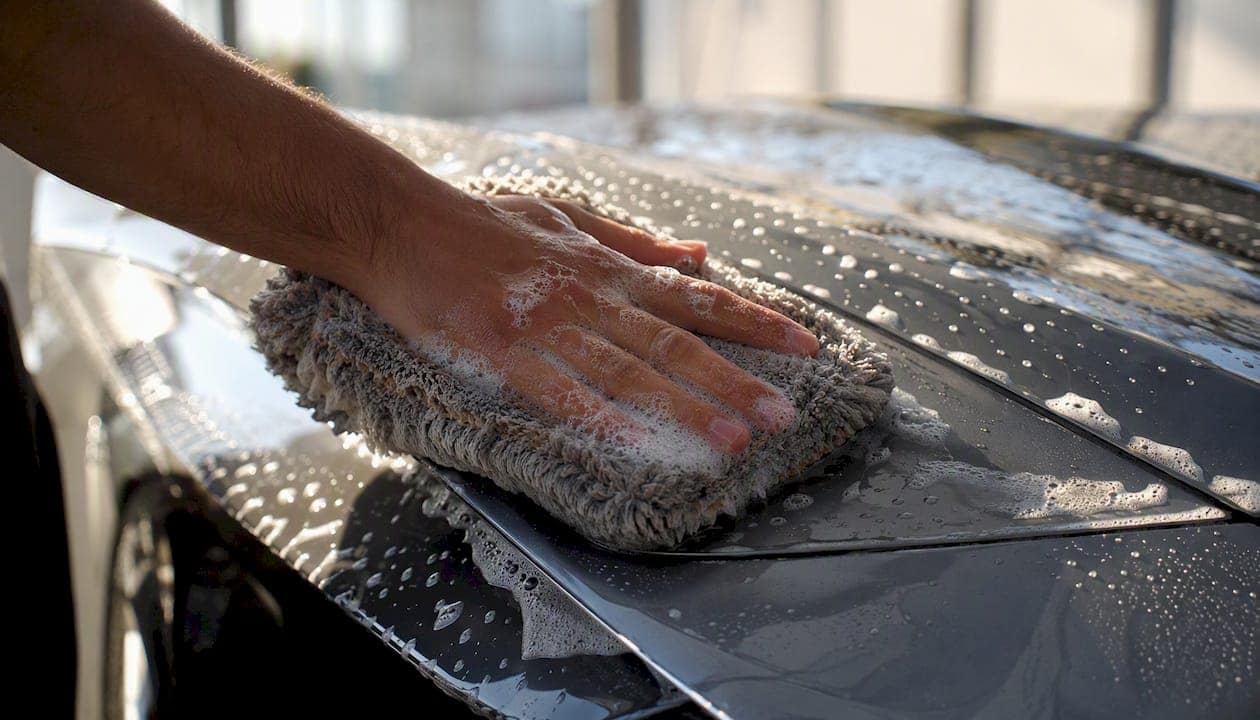
Regular, gentle washing with pH-neutral products, prompt contaminant removal, and scheduled inspections will keep paint protection film clear and protective for years. The core routine is straightforward: wash regularly using the two-bucket method, treat bird droppings and bug splatter within hours, apply a silica-based sealant periodically, and have a professional inspect edges and adhesion regularly. Two things to avoid from day one: automatic brush car washes and abrasive polishes. Both destroy the TPU self-healing top coat faster than road debris ever will.
Quick maintenance schedule:
Quick warnings: Never use an abrasive polish or compound on PPF without installer approval. Never run the car through a brush car wash. According to Ceramic Pro, PPF is not maintenance-free, but correct routine care is far less labor-intensive than repeated paint correction on unprotected paint.
The first 48–72 hours after installation are the most critical period for paint protection film. During this window, the adhesive is still bonding and moisture trapped beneath the film is outgassing. Disturb it too early and you risk edge lift, water pockets, and silvering that no amount of later care can fix.
Standard cure guidance puts the minimum wait at 48–72 hours under ideal temperature and humidity. Thicker 8-mil films and high-humidity climates can push that to 96 hours or more. Many experienced installers recommend waiting the full 7–14 days before the first wash to allow complete outgassing, especially in cooler weather when adhesive curing slows noticeably.
During the cure window, do these:
Avoid these completely:
The single most common early failure is impatience. Owners who wash the car on day two because it looks fine are the ones calling about edge lift on day ten. The adhesive needs time, not just hours — give it the full window your installer recommends, and the film will bond cleanly and last years longer.
Pro Tip: Cold weather slows adhesive curing significantly. If your installation happened in winter or in a shop that was below 65°F, add at least 24 hours to the standard cure window before doing anything to the film.
If you notice persistent large bubbles, significant edge lifting, or silvering after the full cure period, contact your installer rather than attempting any fix yourself. These are adhesive issues, not surface issues, and DIY attempts usually make them worse.
The single most important rule for washing a PPF car is this: minimize mechanical pressure and use pH-neutral chemistry every time. Wash every one to two weeks, or more often if the car is exposed to heavy road debris, bird activity, or industrial fallout.
Step-by-step wash routine:
Equipment checklist:
Pro Tip: Work in the shade and use lukewarm water. Hot water on a warm film surface can temporarily activate the self-healing layer, which is harmless, but working in direct sun causes shampoo to dry before you rinse it, leaving residue that bonds to the film surface.
According to Buffalo Car Care, pressure-washer technique matters more than absolute PSI. Nozzle angle, tip width, and distance are what determine whether water wedges under film edges — not the machine’s power setting.
SWISSVAX is direct on this point: PPF is a distinct elastic material (TPU) that behaves differently from clear coat. Treating it like paint is the most common mistake owners make, and it accelerates yellowing and destroys the self-healing layer faster than any road hazard.
Do these:
Never do these:
The automatic car wash question comes up constantly. Touchless automatic washes are generally acceptable if the chemistry is mild. Brush car washes are not — the bristles create micro-scratches across the entire film surface and the high-pressure edge spray lifts seams. One brush wash can undo months of careful hand washing.
Red flags that need professional attention immediately:
Modern PPF uses a TPU top coat that responds to heat. Light swirl marks and fine scratches from normal washing or contact disappear when the film warms up, either from sunlight or a low-heat source like a heat gun held at a safe distance. This is genuine and useful, but it has clear limits.

Self-healing works reliably on scratches that have not penetrated through the top coat layer. If you can feel a scratch with your fingernail, it is likely too deep for heat activation to fully close. The same applies to scratches near edges or seams, where the film has less material to reflow.
Safe home methods for minor scratch mitigation:
Do not attempt these without installer approval:
Pro Tip: After a heat-activation session, let the film cool completely before touching it. The top coat is temporarily pliable when warm, and pressing on it while hot can create new distortions.
Visible signs that polishing or heat will not help, and that professional repair or localized replacement is the only option:
Yes, and you should. A properly formulated sealant or ceramic coating over PPF reduces how often contaminants bond to the surface, makes washing faster, and extends the film’s effective life. The key word is “properly formulated” — petroleum waxes and products with abrasive micro-fillers are not compatible.
Product types and their tradeoffs:
Timing and cadence:
| Product type | Application frequency | DIY or pro | Wait after PPF install |
|---|---|---|---|
| Spray SiO2 detailer | After each wash as needed | DIY | After full cure (7–14 days) |
| PPF-specific wax/sealant | Every 3–6 months | DIY | After full cure |
| Professional ceramic coating | Every 2–5 years | Pro only | Minimum 30 days post-install |

A ceramic coating over PPF does not eliminate the need for correct washing technique. It makes the film more forgiving, but brush car washes and abrasive products will still damage a ceramic-coated film. Think of it as reducing maintenance burden, not removing it.
Avoid these over PPF:
For windshield protection film, the same compatibility rules apply — use only PPF-safe sealants and avoid anything with abrasive content.
Inspect your film monthly and after any significant event: a road trip with heavy debris, a hailstorm, a parking lot incident, or a harsh winter. Most problems caught early are inexpensive to fix. The same problems caught at the annual inspection, after months of progression, often require panel replacement.
Monthly self-inspection checklist:
What a professional does during a maintenance visit:
Annual professional inspections are the standard recommendation from experienced installers. Biannual checks make sense for vehicles in harsh climates, high-UV environments, or daily highway driving.
Call a professional when you see:
Consistent, gentle care with pH-neutral products, prompt contaminant removal, and annual professional inspections are the three habits that determine how long paint protection film stays clear and effective.
| Point | Details |
|---|---|
| Cure window is non-negotiable | Wait 48–72 hours minimum before any washing; 7–14 days for full adhesive outgassing as many installers recommend, especially for thicker films or during cold/humid weather. |
| Wash method protects the top coat | Two-bucket method, pH-neutral shampoo, and a soft microfiber mitt prevent micro-marring and edge lift. |
| Contaminants need same-day treatment | Bird droppings, bug splatter, and sap begin bonding within hours; chemical softening before any contact is mandatory. |
| Sealants extend film performance | Apply a PPF-safe SiO2 sealant every 3–6 months; professional ceramic coatings last 2–5 years and reduce cleaning frequency. |
| Ppf provides professional maintenance | The PPF Company offers installation and maintenance services in Calgary and Winnipeg, including ceramic coating and annual inspection packages. |
Most owners treat PPF like it is indestructible once it is on the car. It is not. The film is doing the hard work of absorbing chips and UV, but it needs consistent, correct care to keep doing that work for the full five to ten years it is rated for.
The mistake I see most often is not the brush car wash — owners know that one. It is the slow neglect of edges. Owners wash the panels carefully, apply sealant, do everything right, and then ignore the seams along the hood, doors, and bumper for months. Edges are where adhesive fatigue starts. A small lift at the hood leading edge, left untreated through a winter, becomes a full panel replacement by spring.

The second most common mistake is waiting too long to treat contaminants. A bird dropping left on a dark hood in summer sun for 48 hours can etch through the top coat and into the film body. The self-healing layer cannot fix that. A quick wipe in the parking lot can.
The routine that works is genuinely simple: wash correctly, treat contaminants immediately, inspect edges monthly, and see a professional once a year. That is it. PPF is not high-maintenance — it just requires consistent attention to the right things.
Knowing the right routine is one thing. Having a professional handle the jobs that require real tools and trained hands is another. Edge adhesive reflow, chemical decontamination, topcoat rejuvenation, and ceramic coating application over PPF are not DIY tasks — done incorrectly, they cause the damage they are meant to prevent.
Ppf serves vehicle owners in Calgary and Winnipeg with over 30 years of combined installation and maintenance experience. Services include annual film inspections, adhesive repairs, professional ceramic coating application, and full PPF installation using self-healing film. Maintenance packages protect your warranty and extend film life well beyond what routine home care alone can achieve. Understanding PPF cost and long-term value makes it clear that proper aftercare is the most cost-effective way to protect that investment.
Book a maintenance inspection or get a quote at your nearest Ppf location.
PPF requires regular washing every one to two weeks with a pH-neutral shampoo and soft microfiber mitt, prompt removal of bird droppings and bug splatter, a PPF-safe SiO2 sealant applied every three to six months, and a professional inspection annually to check edges and adhesion.
Yes. PPF is not maintenance-free. Correct routine care is essential to preserve clarity, self-healing performance, and adhesive integrity over the film’s full service life.
No. Ceramic Pro notes that PPF maintenance is generally less labor-intensive than repeated paint correction on unprotected paint. The routine is straightforward: gentle hand washing, same-day contaminant treatment, and periodic sealant application.
Touchless automatic washes are generally acceptable with mild chemistry. Brush car washes are not safe for PPF — the bristles create micro-scratches across the film surface and high-pressure edge spray lifts seams. Hand washing using the two-bucket method is always the preferred approach.
Wait a minimum of 48–72 hours before any washing, and ideally the full 7–14 days that many installers recommend for complete adhesive outgassing. If you have a thicker film or your installation took place in high humidity or cold weather, extend the cure period accordingly.

Calgary
Winnipeg
Calgary
Winnipeg