

The main paint protection film coverage options are partial front, full front, track/extended front, and full vehicle. For most daily drivers, full front hits the best balance of protection and cost. Budget-limited or leased cars often do fine with partial front, while exotics and collector cars justify full vehicle coverage. Whichever tier you pick, installer prep and the manufacturer’s warranty terms matter as much as the coverage map itself.
TL;DR:
- Full front coverage protects most rock chips for daily drivers but may show seams on lighter or glossy paint colors, influencing upgrade choices.
- Installer prep, especially paint correction and decontamination, is more critical to film longevity than the film brand itself.
- Higher driving miles, highway exposure, and light paint colors increase the value of full front or full vehicle coverage over partial kits.
- Replacing PPF is easier on partial front installs, but matching film batches during panel replacements is essential to avoid visible discrepancies.
- Proper installer credentials and documented warranty details, including prep steps, are key to ensuring long-term protection and valid coverage.
Every coverage tier is really just a different answer to the question: how much of the car’s front end takes the hit from road debris, and how far back does that protection need to extend? Here’s how the four common tiers break down panel by panel.
Partial front is the entry point, sometimes called a chip kit. It typically covers the front bumper face, the leading edge of the hood, partial fenders, side mirror caps, and occasionally the headlights. Because the film stops partway across the hood and fenders, you’ll usually see a seam line where the film ends and bare paint resumes. On a dark, textured paint job that line practically disappears. On a pearl white or a glossy premium finish, some owners notice it right away, which is one reason buyers of lighter or premium paint colors often step up to full front instead.
Full front extends the film across the entire hood, both fenders, the full bumper, mirrors, headlights, and often the A-pillars and roof edge. This is the tier that gets closest to a seamless look without wrapping the whole car, and it’s also the package that lines up with where most chips actually land. Full-front coverage protects the panels that take roughly 90% of rock chips in normal driving, which is exactly why it’s the default recommendation for anyone putting real miles on their car.
Track or extended front builds on full front by adding the rocker panels, door cups, A-pillars, and roof edge if they weren’t already included. This tier exists for cars that see more than average exposure: highway commuters logging serious mileage, or literal track cars catching debris kicked up by other vehicles at speed.
Full vehicle covers every painted panel: doors, roof, trunk, pillars, and both bumpers, in addition to everything in the front packages. What it usually excludes is the windshield glass, unpainted trim, and wheels. Windshield protection is a genuinely separate product, using a different film built for glass rather than clear coat, and it’s worth treating as its own line item rather than assuming full vehicle coverage includes it.
A few small-area add-ons show up across every tier and are worth knowing about on their own:
Door edge guards, which stop the chipping that happens every time a door swings into a curb or a shopping cart.
Trunk ledge protection, covering the spot where cargo scrapes paint loading and unloading.
Rocker panel film, guarding against the gravel kickback that hits lower body panels on highway drives.
Headlight protection film, which keeps sandblasting and stone chips from clouding the lens over time.
Windshield protection film, a distinct glass-rated product rather than an extension of your body PPF package.
3M’s PPF Pro Series brochure lays out these same coverage zones and finish options, and it treats full-front and full-vehicle packages as the two most common configurations installers sell, which tracks with what most shops report seeing walk through the door.
Coverage decisions get a lot easier once you stop thinking about film and start thinking about your actual driving pattern. Run through these five questions before you call an installer:
Casual city drivers and leaseholders typically land on partial front. Daily highway commuters and anyone driving a car they plan to keep gravitate toward full front. Off-road drivers, exotic owners, and collectors tend to go with full vehicle or an extended package that includes rockers and pillars. Installer guides commonly map these use cases the same way, and hybrid setups, like full front plus rockers, are common enough that most shops treat them as a standard option rather than a custom request.
Pro Tip: You don’t have to commit to full vehicle on day one. Starting with full front and adding rockers or rear panels later is a normal upgrade path, as long as your installer can match the film batch closely enough that you don’t get a visible tone shift between old and new sections.
PPF isn’t just for brand-new cars, either. Used vehicles can absolutely get PPF installed, but confirm the paint condition first. Film applied over unrepaired chips, swirl marks, or old touch-up paint will trap those flaws under a permanent layer.
Film brand matters less than most people assume. What actually determines how long PPF lasts is what happens before the film ever touches the car. Skilled installers spend more time on paint correction and decontamination than on the actual film application, and for good reason.
Installer preparation, specifically paint correction and decontamination, matters more to long-term performance than the choice between two quality film brands. Poor prep is what causes premature failures, not an inferior roll of film.
On the warranty side, 3M documents a 10-year warranty on its professional-grade Scotchgard Paint Protection Film Pro Series, covering yellowing, bubbling, and cracking, provided an authorized installer handles the job. That authorization detail isn’t fine print you can skip. It’s the difference between a warranty that actually pays out and one that gets denied on a technicality.
Ask your installer about application temperature. 3M’s installation guideline specifies roughly 16 to 30 degrees Celsius as the target range, along with edge sealing to prevent lifting and a post-install inspection to catch any trapped debris before you drive off. If you’re planning to add ceramic coating on top, wait: applying it three to six months after PPF install improves hydrophobic performance and stain resistance compared to coating too early.
Anyone can put “10-year warranty” on a website. What separates a shop worth trusting from one that isn’t is whether they can back that claim up with documentation, not just a sales pitch. The PPF Company’s team brings over 30 years of combined experience with self-healing film technology, and that kind of track record shows up in the details: written warranty paperwork, documented prep steps, and photo examples from actual completed jobs.
Before booking any installer, ask these questions directly:
Pro Tip: Ask to see the film prep station before your appointment, not just the finished cars in the lobby. A shop with a dedicated wash bay, clay bar station, and paint correction setup is telling you something a polished showroom can’t.
Removal difficulty scales roughly with coverage size, but not in a straight line. Partial front kits come off fastest since there’s less surface area and fewer complex curves like mirror caps or headlight housings to work around carefully. Full front and track packages take longer because of the additional panels and the trickier removal points around the A-pillars and roof edge.
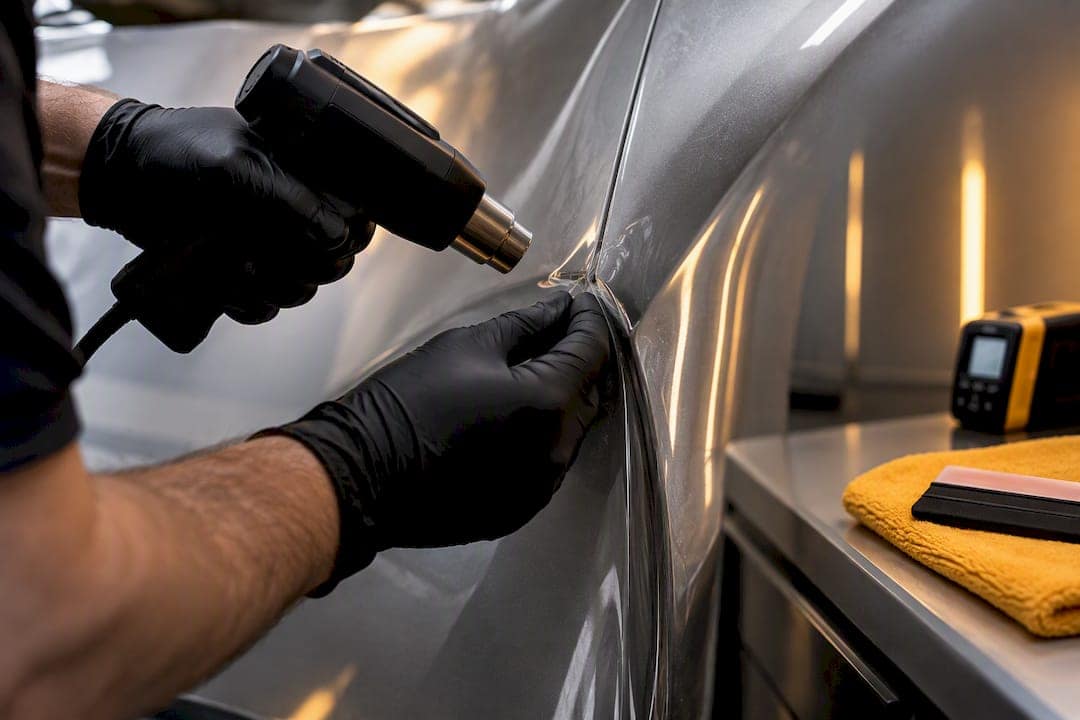
Full vehicle wraps require the most removal time, and this is where installer skill really shows. Heat-assisted removal on properly applied, well-maintained film usually lifts cleanly without damaging the clear coat underneath. Film that was installed over unprepped or unstable paint, or that’s degraded well past its useful life, is far more likely to pull up paint or leave adhesive residue that needs additional correction.
Replacement timing depends on the tier and how the film held up. A partial front kit that’s yellowing or lifting at the seams after several years of sun exposure is a straightforward swap since the coverage area is small. Full vehicle replacement is a bigger project logistically, but the good news is you rarely need to replace the entire car’s film at once. Most owners replace panel by panel as specific sections show wear, particularly the hood and front bumper, which take the brunt of the damage regardless of which tier you originally chose.
One detail worth building into your decision from the start: ask your installer whether they can source a matching film batch for partial replacements down the line. Color and clarity can shift slightly between production runs, and a mismatched patch on adjoining panels is a cosmetic issue nobody wants to discover during a resale inspection.

A car with documented full front or full vehicle PPF coverage tends to show better at resale simply because the paint underneath is protected from years of chip damage. Buyers and dealers doing a pre-purchase inspection notice unblemished hoods and bumpers, and that condition can support a stronger asking price, especially on vehicles where paint quality is part of the appeal.
The insurance side is less dramatic than some sellers imply. PPF isn’t typically treated as a standalone factor that lowers your premium the way an anti-theft device might. What it does is reduce the odds you’ll file a small cosmetic claim for chip damage in the first place, since the film is absorbing hits that would otherwise reach bare paint. Fewer claims filed over time can support a cleaner claims history, which does matter to underwriters even if PPF itself isn’t a line item on your policy.
Where PPF coverage level matters most for resale is on vehicles where paint condition drives a disproportionate share of the sale price: exotics, collector cars, and low-mileage vehicles marketed on condition. On a higher-mileage daily commuter, buyers are weighing mechanical condition and service history more heavily than paint perfection, so the resale bump from full vehicle coverage versus full front tends to be smaller.
Keep your installation paperwork and warranty documentation regardless of which tier you choose. A dated invoice showing professional installation and the manufacturer’s warranty terms gives a future buyer, or an insurance adjuster after an incident, something concrete to evaluate rather than just your word that the film is there.
Sticker price is the easy comparison. Long-term cost-effectiveness is the one that actually matters, and it depends heavily on how many chips your specific car would otherwise accumulate.
Partial front costs the least upfront, but it leaves the rear half of the hood and fenders exposed. If you drive mostly city streets with light debris exposure, that gap might never cost you anything. If you’re regularly on the highway behind trucks and gravel-hauling vehicles, that exposed paint is taking hits that eventually mean touch-up paint, professional paint correction, or in worse cases a partial repaint, any of which can outstrip the money you saved by skipping full front.
Full front sits in the middle and, for most daily drivers, delivers the strongest return relative to cost because it protects the highest-chip-frequency zones without paying for coverage on panels that rarely take damage. The material usage difference is substantial between tiers, with full front typically using several times the film area of a partial kit, which is reflected directly in labor time and price.
Full vehicle coverage costs the most by a wide margin, but it’s the only tier that eliminates repaint risk across the entire car, not just the front end. For a collector car or a vehicle you plan to keep a decade or more, that comprehensive protection can prevent far more expensive corrective work down the line than what you’d spend maintaining a partial or full-front setup and eventually touching up the unprotected panels anyway.
The real cost comparison isn’t tier against tier in isolation. It’s your specific coverage choice against your specific driving exposure, measured over the years you actually plan to own the car.
Coverage tier answers “how much of the car,” but film quality answers “how well does it perform once it’s there,” and the two questions get conflated more often than they should.
Professional-grade films, like the tier used across 3M’s Scotchgard Paint Protection Film Pro Series, are built with multiple layers: a topcoat with self-healing properties that lets minor swirls and light scratches disappear with heat exposure, a polyurethane base for impact absorption, and an adhesive layer engineered for long-term clarity without yellowing. Lower-grade films sold for DIY application often skip the self-healing topcoat entirely, which means every small scuff stays visible permanently instead of smoothing out on a warm day.
Finish options also vary by grade. Gloss finishes are standard and preserve the car’s factory shine, while matte finishes require film specifically engineered to hold a matte texture without developing a glossy sheen at the edges over time, a common failure point with mismatched matte products. If your car already has a matte factory finish or matte wrap, using the wrong film grade here is one of the more expensive mistakes an owner can make, since matte paint has specific care requirements that not every film respects.
Thickness matters too, though it’s a smaller factor than prep quality or film grade. Thicker films offer marginally more impact resistance but can be harder to conform around tight curves like mirror caps, which is another reason installer skill and the specific film chosen need to be evaluated together, not separately.
Most people shopping for PPF start by comparing film brands, then treat coverage tier as an afterthought decided by budget alone. That’s backward. The research consistently points the other direction: installer prep quality and coverage tier matched to actual driving exposure both matter more than which premium film brand ends up on the car.
The conventional advice to “get the best film you can afford” undersells how much a bad installation ruins a good film. A flawless roll of Scotchgard Pro Series applied over unprepped paint with contaminants trapped underneath will bubble regardless of the 10-year warranty printed on the invoice, because that warranty depends on certified installation in the first place.
If I had to rank priorities for someone shopping right now, I’d put them in this order: match coverage tier to your actual mileage and road exposure first, vet the installer’s prep process second, and treat film brand as a distant third consideration. A commuter logging highway miles gets more real protection from full front installed by a meticulous shop than from full vehicle coverage installed sloppily. Coverage tier is a math problem about where rocks hit your car. Installation quality is what determines whether the film actually does its job for the next decade.
Reading about coverage tiers only gets you so far. The tier that’s right for your specific hood shape, paint color, and daily mileage is something worth confirming with someone who’s looked at the car in person. Common packages are often matched to full front coverage, while higher tiers may extend that protection toward full vehicle coverage for owners who want the entire car addressed at once.
A quote visit typically includes a walk-around inspection of your current paint condition, a coverage recommendation based on how and where you drive, an estimated price range for the package that fits, and warranty paperwork spelled out in writing before any film goes on. Scheduling is usually confirmed within a few days of the inspection, not weeks out.
If you’re ready to see which package matches your car, request a quote through The PPF Company’s Calgary paint protection film page and get a coverage recommendation specific to your vehicle rather than a generic tier picked off a price list.
For the manufacturer’s own documentation rather than a shop’s summary of it, 3M publishes its Scotchgard Paint Protection Film warranty terms directly, along with an installation guideline covering prep and application conditions. You can also locate certified installers directly through 3M’s dealer network to confirm authorization status before booking.
PPF coverage refers to which painted panels on your vehicle get protected by a clear polyurethane film, ranging from a small partial front kit to full vehicle wraps. The tier you choose determines both the upfront cost and how much of the car is shielded from chips, scratches, and road debris.
Both are established professional-grade film manufacturers, and the bigger factor in long-term performance is installer prep quality rather than brand alone, since poor decontamination or paint correction causes most film failures regardless of which film is used. 3M backs its Scotchgard Pro Series with a documented 10-year warranty against yellowing, bubbling, and cracking when installed by an authorized installer, which is worth confirming with any shop you’re considering.
Hand washing or touchless automatic car washes are generally safer than brush-style washes, which can lift film edges or introduce fine scratches over time. Waiting a few weeks after installation before any wash, and avoiding abrasive polishes on the film, helps preserve the finish for the life of the warranty.
The main trade-offs are upfront cost and, on partial coverage kits, a visible seam line where the film ends on the hood or fenders. Coverage that’s mismatched to your driving habits, such as choosing partial front for a heavy highway commuter, can also mean paying for touch-ups or correction work later on the unprotected sections.
Full vehicle PPF costs more than front-end packages because it covers every painted panel on the car, including doors, roof, and trunk, which means significantly more film and labor time. Exact pricing depends on vehicle size and film grade, so current package pricing is available directly through The PPF Company’s Calgary location page.