

For countertops that see daily cooking and acidic spills, a professional-grade protection film beats a sealer because it physically blocks liquids and acids from ever touching the stone. Sealers are still worth using on low-traffic marble, like a bathroom vanity, where staining is the main risk rather than etching. Renovators moving furniture or running a kitchen remodel should reach for a thin, temporary film instead of either option, and skip decorative contact paper entirely. Professional installation is usually the better call for permanent film, since edge sealing determines whether it lasts.
TL;DR:
- Protection film is the most effective option for daily-use kitchen marble counters due to its ability to physically block stains, acids, and scratches.
- Professional-grade films are typically 5 mils thick, heat resistant up to 422°F, and require proper edge sealing for optimal longevity.
- Sealers need reapplication every 6 to 12 months and are better suited for low-traffic areas like bathroom vanities, as they do not prevent acid etching.
- Temporary films are ideal during renovation or moving but should be removed within 45 days to avoid adhesive residue or moisture damage.
- Proper surface preparation and sealed edges are critical for durable installation, and DIY repair of existing damage is not achievable with the film.
Marble takes damage in three different ways: staining (liquid soaks into the stone), etching (acid dulls the polish), and scratching. Not every product addresses all three, which is why picking the wrong one leaves a gap in your marble countertop protection plan.
Sealer works fine on stone that rarely meets citrus, wine, or vinegar. Film earns its cost on any counter where cooking happens daily.
Professional-grade films used on marble are typically a few mils thick, built from polyurethane or similar polymer, and are marketed as self-healing against light surface marks. StoneGuard’s Clear film, for instance, claims heat resistance up to roughly 422°F and UV stability, while remaining removable without damaging the polished stone underneath.
The core distinction: film is a physical barrier, sealer is a chemical treatment. DURAFLEX makes this case directly: film stops both staining and etching because nothing touches the marble at all, while sealer only ever slows absorption.
Film won’t undo existing etch marks, chips, or old stains. It protects what’s underneath from new damage, not repair what’s already there.
What to check before signing off on an installer’s quote:
Pro Tip: A warranty that only mentions “manufacturer defects” without naming bubbling or yellowing specifically is worth a second look. Those are the two failures homeowners actually run into.
Installation quality matters as much as the film itself. Edges need heat sealing to keep moisture and crumbs from working underneath, and a rushed job without proper edge treatment is the most common reason film fails early.
Impregnating sealers work by soaking into the stone’s pores, creating resistance to liquid absorption from the inside out. The Natural Stone Institute is clear on the limits: sealers slow penetration, they do not prevent chemical etching. Splash lemon juice on sealed marble and you’ll still get a dull ring.
Reapplication matters more than most homeowners expect. Guidance from film manufacturers suggests resealing every 6 to 12 months for active kitchen counters, which adds up as a recurring task compared to film’s one-time install.
If your marble already has light etching from years of use, a professional polish paired with sealer can restore some shine, but it won’t make the surface acid-proof going forward.
Renovation and moving days are exactly when temporary protection earns its keep. TapeManBlue’s temporary countertop film runs around 2.5 mils, thinner than permanent installer-grade film, and is built for short service life, up to about 45 days, before clean removal.
Decorative “marble look” contact paper sold for home decor is a different product entirely, meant to change appearance rather than protect stone. These self-adhesive vinyls are often non-breathable, and trapped moisture under the adhesive can cause long-term surface issues on natural stone. Save it for furniture, not countertops.
Start with how the counter actually gets used. A kitchen island that handles daily meal prep, kids’ snacks, and the occasional wine spill needs film. A guest bathroom vanity that sees hand soap and not much else is fine with a good sealer.
Before agreeing to any installation, run through this checklist:
Pro Tip: Get the warranty terms in writing before the installer starts, not after. Verbal promises about “lifetime protection” mean nothing if the paperwork only guarantees one year.
Red flags worth walking away from: an installer who can’t name the film’s thickness, quotes that skip warranty details entirely, or pressure to decide on the spot without a written estimate.
Film and sealer need slightly different care, but both hate the same things: acidic cleaners and abrasive pads. Skip vinegar-based sprays, bleach, and anything labeled “scouring.”
Yellowing or bubbling on film usually signals it’s time for a professional look, not a DIY patch. A regular maintenance routine keeps either option performing the way it’s supposed to for years, not months.
Surface prep decides most outcomes. Dust, grease, or leftover sealer residue under film causes the bubbling homeowners complain about later. Edges get heat sealed by hand, since a cold seam is the first place moisture gets in.
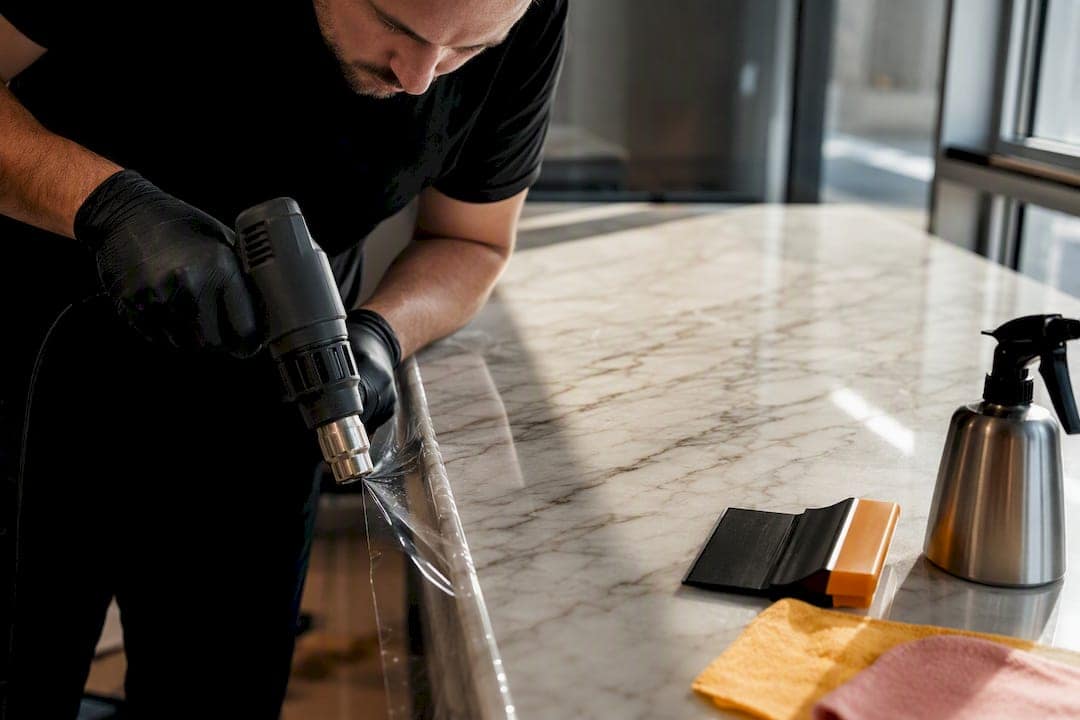
Full coverage takes longer than partial coverage but avoids visible seam lines across the counter. Before an appointment, wipe the surface clean and clear it completely. A prepped surface is the single biggest factor in how long the film lasts.

Sealer has its place, and we’re not going to pretend otherwise. On a low-traffic vanity, spending on film is overkill. But the pattern with kitchen counters is consistent: the surfaces that see daily acid exposure are the ones that come back damaged after a year or two of “just resealing it.”
Film changes that math because it removes the guesswork. You’re not tracking a resealing calendar or hoping nobody leaves a lemon wedge on the counter overnight. The stone underneath stays exactly as it was installed, which is the whole point of protecting it in the first place. If your marble sees real daily use, film is worth the upfront installation.
The PPF Company is the alternative to guessing which sealer schedule will actually hold up. Where a bottle of impregnating sealer asks you to remember a reapplication date every six to twelve months, professional film installation gives you one appointment and years of coverage without the maintenance calendar.

Our installers handle surface prep, film application, and edge sealing so seams don’t lift and bubbling doesn’t show up six months later. Coverage extends across multiple locations for both automotive paint protection film and stone surface protection, using the same attention to heat sealing and edge treatment that keeps film performing over time. If your kitchen counter sees daily cooking and you’re tired of resealing, request a quote through our Cochrane service page and we’ll walk you through installer-grade options that fit your marble and your usage.
For daily-use kitchen counters, a professional-grade protection film around 5 mils thick offers the strongest defense because it physically blocks stains, etching, and light scratches. For low-use surfaces, a quality impregnating sealer reapplied every 6 to 12 months is usually sufficient.
Yes. Film creates a nonporous physical barrier between the stone and whatever touches it, which stops both staining and etching where sealers cannot. It won’t repair existing damage, but it prevents new damage from occurring.
Look for a high-grade impregnating sealer designed for polished marble, applied on a 6 to 12 month cycle for actively used surfaces. Sealers slow liquid absorption well but don’t prevent acid etching, so they suit low-traffic areas better than busy kitchens.
Avoid acidic cleaners, bleach, and abrasive scouring pads, since these accelerate etching and dull the polish. Also skip decorative self-adhesive contact paper marketed for a “marble look,” as non-breathable vinyl can trap moisture against the stone and cause long-term surface issues.