
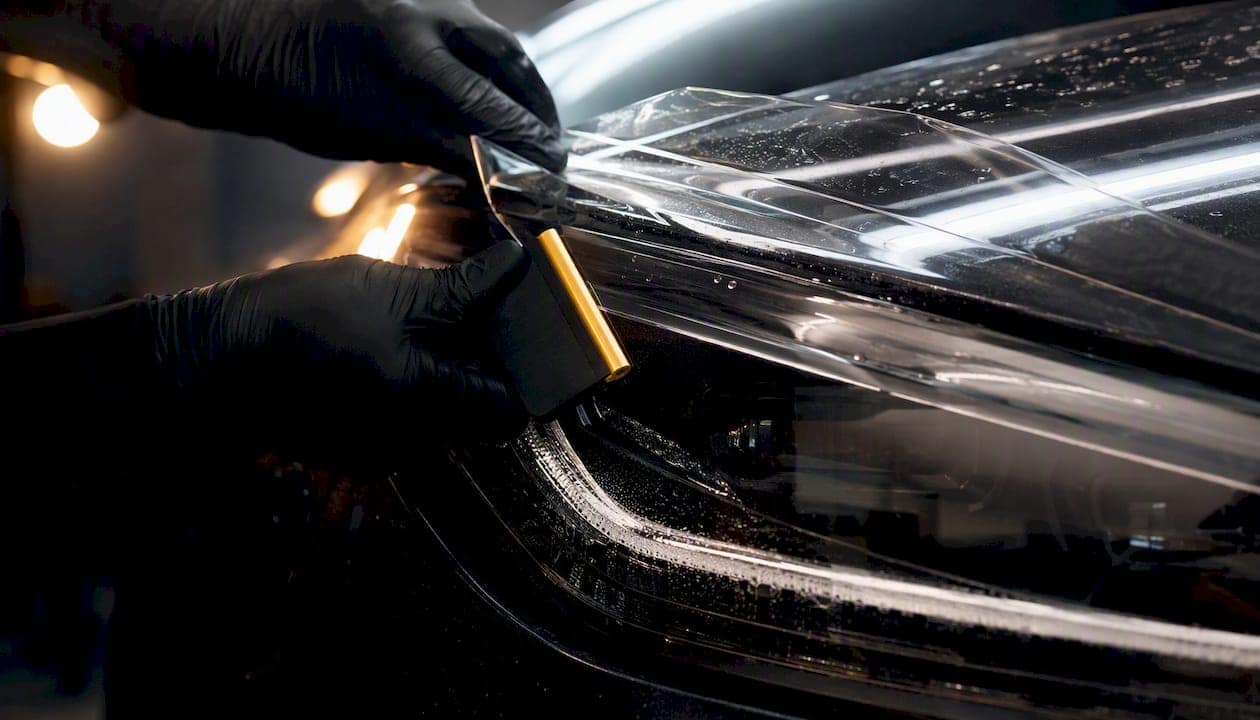
Yes, headlight protection film is worth installing on lenses in good condition. It guards against rock chips, UV oxidation, and the pitting that clouds lenses over time, and a properly installed clear film keeps light output essentially unchanged. The one catch: apply it to new or restored lenses, not hazy ones, and let a professional handle curved housings.
TL;DR:
- Clear headlight protection film with UV inhibitors maintains near full light transmission and prevents yellowing, pitting, and scratches when properly installed by professionals.
- The film effectively shields against rock chips, UV damage, insect etching, and minor scratches, significantly extending headlight lifespan and resale value.
- Installation should only occur on new or restored lenses, as applying over hazy or damaged surfaces traps imperfections and is ineffective.
- Tinted or smoked films reduce light output and may violate local vehicle lighting laws; choose clear film for maximum visibility and compliance.
- Proper maintenance includes gentle cleaning with pH-neutral products and regular checks for edge lift or hazing, while DIY installation risks poor fit and future damage.
Headlight protection film is a thin sheet of thermoplastic polyurethane (TPU), the same base material used in automotive paint protection film, cut and shaped to fit over a headlight lens. A urethane topcoat sits on top, formulated with a self-healing layer that shrugs off light swirl marks and UV inhibitors that block the wavelengths responsible for lens yellowing.
The engineering goal is narrow and specific: stay invisible. Manufacturers design headlight-grade PPF to preserve close to full light transmission, and testing on professionally installed clear film shows 99%+ light transmission is achievable when the fit and cure are done correctly. That number matters more than any other spec on the product page, since a film that dims your beam pattern defeats the purpose of installing it.
This is a different product than tint film or ceramic coating, and the confusion trips up a lot of buyers:
Buyers who confuse tint and PPF often end up disappointed. Tint changes how your headlights look. PPF changes how long they stay clear.
The value of headlight film comes down to four separate threats, and each one has a distinct cost if left unaddressed.
Multiple installer accounts also note that a properly applied film can be removed cleanly, leaving the lens in near-original condition underneath. That matters if you plan to sell the car or refresh the film down the road. You’re not locking yourself into anything permanent.
If clarity and light output matter to you, clear PPF is the only sensible choice, and it’s what installers recommend by default. Tinted or smoked headlight films exist and plenty of enthusiasts like the look, but they come with two real trade-offs worth understanding before you commit.
The practical advice here is simple: buy a film explicitly rated for headlight use, confirm it’s sold and supported in your market, and skip anything marketed primarily as a styling product if protection is your actual goal. If you want the tinted look, at least go into it knowing you’re trading some visibility for style, and verify it clears your local equipment rules first.
A professional headlight PPF install follows a sequence that looks simple on paper but punishes shortcuts.
Curved headlight lenses are genuinely more demanding than a flat hood panel. The two failure modes installers see most often are tunneling, where the film lifts slightly off the surface in a channel shape because it wasn’t stretched enough to seat into a contour, and edge lift, where heat cycling over weeks or months peels the film’s border away from the housing. On tightly curved assemblies, some shops use edge sealing and primerless adhesive formulations specifically to resist heat-cycle lifting at the border.
Pro Tip: Ask your installer whether they use precut patterns for your specific vehicle. A pattern cut to your headlight’s exact geometry removes most of the guesswork that causes tunneling on curved lenses.
DIY kits exist and are widely available through retail marketplaces, and they can be a reasonable option for flatter, simpler headlight shapes if you’re comfortable with a heat gun and have done a practice run on scrap film first. On complex, multi-curve lens assemblies, though, a DIY kit raises your odds of a visible seam, a stretched-thin spot that yellows faster, or a peel-and-redo situation that costs more than paying a professional the first time. Read our breakdown of the full installation process if you want the detailed version of what a shop actually does start to finish.
Timing determines whether headlight film protects your investment or just seals in a problem.
A typical install, once the lens is prepped and ready, takes a few hours per pair including cure setup, with full cure sitting a day or two out before the car should get wet.
Pricing for a pair of headlights runs as a standalone service or as an add-on when you’re already booking paint protection film elsewhere on the vehicle, and shops typically price it lower per panel than body PPF because the surface area is small.
Lifespan expectations vary by film quality, climate, and how the car is used and cleaned.
A single new headlight assembly on many modern vehicles costs well into four figures once you add labor. Headlight film priced as a modest add-on to a broader PPF package is the cheaper bet against even one replacement down the road.
For the deeper lifespan math and what specific warranty language to look for, our guide on PPF lifespan backed by warranties and inspections walks through the inspection points that actually extend film life.
Maintenance is where most film failures actually start, not with the installation itself.
Our maintenance guide covers the full routine in more detail, including seasonal checklists that catch small problems before they turn into a full reinstall.
Film isn’t risk-free, and knowing where things go wrong helps you pick a better installer and avoid an expensive redo.
The mitigation checklist is short: pick a film explicitly rated for headlight use, hire an installer with documented headlight experience, and get the warranty terms in writing before the job starts. If you ever need film removed, read up on avoiding paint or coating lift during removal so you know what proper technique looks like.
Experienced installers with many years in the field agree that headlights are one of the areas where installer skill shows up fastest. A poorly stretched film on a curved lens is obvious within a week, not a year.

A few things worth knowing from the install bay: self-healing topcoats genuinely recover from swirl marks after a warm wash or sun exposure, and it’s one of the more satisfying things to show a customer who’s skeptical the film does anything beyond looking clear. Edge finishing technique separates a film job that lasts a decade from one that starts lifting at eighteen months, which is why template selection and precut patterns matter more than most buyers realize going in. Bundling headlight film with a ceramic coating package on the rest of the vehicle is common, since both services get scheduled together and share similar prep steps.
Turnaround on a headlight film job alone is typically same-day, with cure time extending a day or two past that before the car should get washed or see heavy rain.
Not every driver needs the same approach, and matching the decision to how you actually use the car saves both money and regret.
Daily commuters planning to keep a vehicle past the three-year mark get the clearest return. Clear PPF absorbs years of highway grit that would otherwise chip and dull the lens before the car’s even paid off.
Long-term owners and collectors should install film on day one, right after delivery or a lens replacement. Locking in the factory finish from the start means no restoration cycle ever becomes necessary.
Used-car buyers with already-hazy headlights need to restore first and evaluate film afterward, never the reverse. Film over a cloudy lens just seals the problem in place.
Anyone drawn to a tinted or smoked look should treat it as acceptable only when the light reduction is minor and confirmed legal in your area. Style is a fine reason to choose a film, but not at the cost of nighttime visibility or a roadside equipment violation.
Professional installers use precut patterns and controlled heat application to install headlight protection film, a process that helps prevent tunneling and edge lift. It’s a straightforward add-on if you’re already booking a package like Deluxe, Standard, or Basic paint protection film for the rest of the vehicle, and it pairs naturally with a ceramic coating if you want UV protection extended across the whole car.
Installs typically include warranty coverage and care instructions, with a usual same-day turnaround followed by a short cure period. Booking is simple: reach out through the Calgary paint protection film page for a quote, mention your vehicle’s make and model, and get a same-week appointment window. If headlights are hazy, it is advisable to consider restoration before applying film to ensure effective protection.
The best option is optically clear, headlight-rated TPU film with a self-healing topcoat and UV inhibitors, installed by someone experienced with curved lens geometry. Clear film specifically engineered for headlights preserves close to full light transmission, unlike tinted products built for looks rather than protection.
Yes. It physically blocks rock chips and pitting, slows UV-driven yellowing of the polycarbonate lens, and its self-healing topcoat recovers from minor scratches and swirl marks with heat exposure. The protection is mechanical and chemical, not cosmetic.
Vehicle lighting rules vary by province, and darker or smoked headlight films can put your car outside minimum light output requirements. Check Ontario’s specific vehicle equipment regulations before installing a tinted product, since enforcement and thresholds differ from other provinces.
Yes, especially if you plan to keep the vehicle more than a few years or you drive a lot of highway miles where rock chips are common. A modest cost for film is generally cheaper than a headlight replacement or a repeated restoration cycle, and The PPF Company includes it as an add-on to standard PPF packages like Deluxe and Standard.