

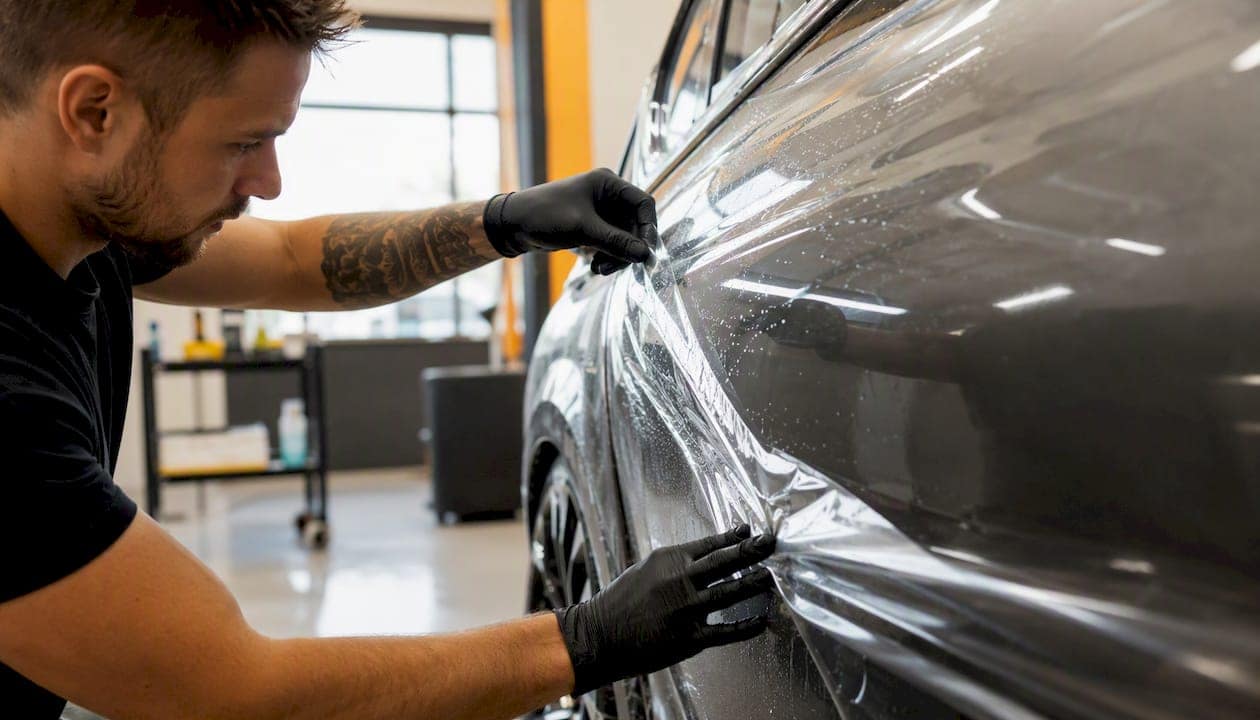
Paint protection film does increase resale value in the right circumstances. A 2026 national dealership survey found dealers believe PPF can add up to 15% to a vehicle’s resale value, with 92% of U.S. dealers saying cars with full-surface PPF applied from new would sell for more. That’s dealer sentiment, not a guaranteed transaction premium, but it’s a strong signal from the people who actually buy and price used cars every day.
Whether PPF increases your car’s value depends on three things:
Up to 15% value retention is the headline figure from the 2026 dealer survey. Treat it as a ceiling for ideal conditions, not a floor you can count on for every car.
PPF increases resale value most reliably on luxury and low-mileage vehicles with full-vehicle coverage, a transferable warranty, and complete installation documentation.
| Point | Details |
|---|---|
| Dealer consensus is strong | 92% of dealers say full-surface PPF vehicles would sell for more, per the 2026 survey. |
| Coverage and warranty are decisive | Full-vehicle PPF with a transferable manufacturer warranty is the minimum for a real resale benefit. |
| Budget cars rarely see ROI | On high-mileage or low-value vehicles, detailing and documentation outperform PPF as resale investments. |
| Documentation is half the value | Installation receipt, warranty card, coverage photos, and installer contact turn PPF into a verifiable asset. |
| Ppf installs with transferable warranties | The PPF Company offers professional installation in Calgary and Winnipeg with manufacturer-backed, transferable coverage. |
Paint protection film is a thermoplastic urethane layer, typically 6–10 mils thick, applied directly over a vehicle’s clearcoat. Its job is to absorb what the road throws at your car before that damage reaches the paint.
The protection works on several levels. The film stops stone chips and gravel from pitting the hood and bumper. Its scratch-resistant surface resists light abrasions from car washes, keys, and brush contact. Higher-grade films include a self-healing topcoat: minor swirl marks and light scratches disappear with heat exposure, either from sunlight or warm water. UV inhibitors in the film also slow color fade and clearcoat oxidation over years of sun exposure.
Why does any of that matter to a buyer? Because the defects PPF prevents are exactly the ones buyers penalize hardest at inspection. Chips on the leading edge of a hood, peeling clearcoat on the roof, or faded paint on sun-exposed panels all trigger lower offers, sometimes by more than the cost of PPF itself. A car that looks genuinely new at 80,000 miles is rare, and buyers know it.
Surfaces typically covered by PPF include:
Pro Tip: Apply PPF on a new or freshly detailed car before the first road miles accumulate. Installing it over existing chips or swirls locks those defects in permanently, and buyers will notice them under the film.
PPF’s resale benefit is real, but it’s concentrated in specific situations. The dealer survey data shows 96% of dealers believe full-surface PPF helps retain value on pre-owned inventory. That consensus points to a clear pattern: PPF works best when the car, the coverage, and the buyer context all align.
Best-case scenarios where PPF tends to translate into a stronger sale:
A transferable warranty matters more than most sellers realize. When a buyer can call the installer, verify the film brand, and transfer the remaining warranty into their name, PPF stops being an aftermarket add-on and becomes a documented protection asset. That’s the difference between a buyer saying “interesting” and a buyer saying “I’ll take it.”
Three questions to run before assuming PPF will help your sale:
If you can answer yes to all three, PPF is a genuine resale asset.
PPF is not a universal value-add. On a high-mileage commuter car with worn interior, faded trim, and a repair history, a $2,000 PPF install is unlikely to recover its cost at sale. Buyers of budget used cars are shopping on price, not protection credentials.
Situations where PPF is unlikely to add monetary value:
Buyer psychology is worth understanding here. Some private buyers, unfamiliar with PPF, assume it was installed to hide prior paint damage. A poorly documented or visually imperfect install feeds that suspicion. The film has to look right and come with paperwork to overcome that instinct.
Pro Tip: Front-bumper-only PPF is a smart cost-saving move for protecting a car you plan to keep. For resale purposes, though, a partial install rarely justifies a higher asking price. If resale is the goal, go full coverage or focus the budget elsewhere.
PPF costs vary by coverage area, film brand, and installer market. Rough ranges:
Regional variation is real. Urban markets with high installer density tend to be more competitive on price; smaller markets may run higher. Film grade also matters: entry-level films carry shorter warranties and are more prone to yellowing, while premium films from established brands typically carry 7–10 year manufacturer warranties.
Lifespan tracks closely with film quality and maintenance. A well-maintained premium film on a garage-kept car can last a decade without significant degradation. Exposed daily drivers in harsh climates may see edge lift or minor yellowing by year six or seven if the film isn’t maintained.
Warranty transferability is the detail most sellers overlook. Some manufacturer warranties transfer to a new owner automatically; others require a formal transfer request within a set window after sale. Know which type you have before listing the car.
Maintenance costs to factor in:
PPF and ceramic coating are often compared as if they’re interchangeable. They’re not. PPF is a physical barrier; ceramic coating is a chemical bond to the paint surface. Each protects differently.
| Protection type | What it stops | Typical lifespan | Cost profile | Maintenance |
|---|---|---|---|---|
| PPF | Chips, scratches, road debris | 7–10+ years | Higher upfront | Low; annual inspection |
| Ceramic coating | UV, chemical stains, light swirls | 2 years | Moderate | Periodic reapplication |
| Professional detailing | Surface contamination, light oxidation | Per session | Low per visit | Ongoing |
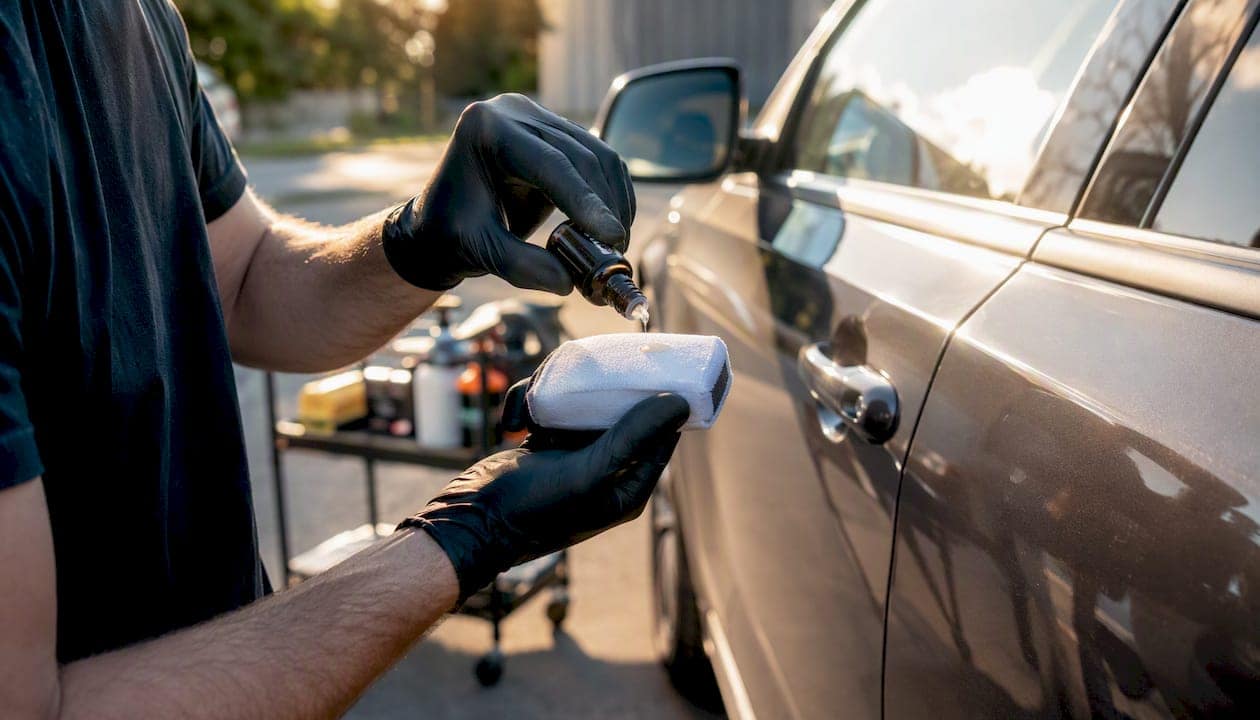
The strongest protection stack for resale is PPF plus a ceramic coating applied over it. The ceramic layer adds hydrophobic properties that make the film easier to clean, reduces surface contamination, and gives the finish a deeper gloss that photographs well in listings. Ceramic coating in Calgary and Winnipeg ceramic coating services can be paired with PPF installation for exactly this reason.
For cars that don’t warrant full PPF, regular paint correction and professional detailing before sale can close much of the gap. Touch-up kits handle isolated chips on unprotected panels. None of these alternatives match PPF’s chip protection, but they’re meaningful complements when budget is the constraint.
Truck owners evaluating PPF alongside other upgrades may find it useful to compare protection investments against other truck upgrades worth considering before committing to a full install.
PPF’s resale benefit is only as strong as the documentation behind it. A buyer who can’t verify the film’s origin, coverage, or warranty status will discount it or ignore it entirely. Paint condition and documented maintenance are among the strongest drivers of buyer confidence and final offers.
Documents and artifacts to gather before listing:
When presenting to a dealer or private buyer, lead with the warranty transfer option. Saying “the film has six years of manufacturer warranty remaining and transfers to you” is more persuasive than any description of what PPF does. Appraisers at dealerships respond to verifiable documentation; private buyers respond to the confidence it signals.
Pro Tip: Photograph each PPF-covered panel individually and label them clearly (e.g., “full hood,” “driver fender”). Store these with your maintenance records. A buyer who can see exactly what’s covered is far less likely to discount the film’s value.

A bad PPF install doesn’t just fail to add value. It can actively reduce it by raising questions about paint condition and installer competence.
Common installation and long-term issues to watch for:
Long-term, damaged or neglected PPF creates a specific resale problem: the film may protect the paint underneath while looking terrible on the surface. A buyer who sees scuffed, yellowed film has no way to know the paint beneath is perfect without removing the film, which they won’t do before purchase.
To vet an installer before committing:
The strongest available evidence comes from the 2026 national dealership survey, which found:
92% of dealers surveyed say a car with full-surface PPF applied from new would sell for more. That’s not a fringe opinion; it’s the overwhelming consensus of the people pricing used cars daily.
Trade press coverage distributed these findings widely, reinforcing that the dealer community views PPF as a resale signal rather than a cosmetic afterthought.
The important caveat: independent analysis notes the survey measures what dealers believe, not what used-car transaction data actually shows. Dealer sentiment is a leading indicator, not a guarantee. If dealers routinely pay more for PPF-covered trade-ins at scale, a measurable market premium will follow. Right now, the clearest effect is on buyer confidence and time-to-sell rather than a guaranteed price lift.
The honest answer is: it depends on which seller you are.
Luxury or collector car owner, low mileage, full-vehicle PPF with transferable warranty: Yes. The dealer survey consensus, the buyer psychology, and the condition preservation all point the same direction. PPF is likely to help your sale price and will almost certainly help your time-to-sell.
Daily commuter planning a dealer trade-in: Probably not as a resale investment. PPF protects your paint while you own the car, which has real value, but a dealer appraisal rarely returns full cost on aftermarket protection. The KBB trade-in guidance is clear that even perfect-condition vehicles don’t always command full book value because dealers need room to profit on resale.
Budget car owner: Skip it for resale purposes. Spend the money on detailing, minor repairs, and documentation instead.
When PPF likely pays off at resale:
When it probably won’t:
One more thing worth saying: speed of sale often matters as much as final price. A PPF-covered car in documented excellent condition tends to attract serious buyers faster, which has real value even when the price premium is modest.
PPF’s resale case rests on two pillars: the film has to look right, and the buyer has to be able to verify it. A professional install from a shop with over 30 years of combined experience, using premium self-healing film and backed by a manufacturer warranty, satisfies both conditions. An amateur install or a low-grade film satisfies neither.
The installer credential matters because it’s the only thing that makes a warranty transferable in any meaningful sense. A buyer who calls the shop, confirms the film brand, and receives a warranty transfer document has a tangible asset. A buyer who gets a receipt from an uncertified installer has a piece of paper.
Ppf’s team at The PPF Company brings over 30 years of combined experience to every install, using premium self-healing film with manufacturer-backed warranties that transfer to the next owner. That transferability is the detail that turns PPF from a cosmetic upgrade into a documented resale asset.
For Calgary customers, Calgary PPF installation covers everything from front-end packages to full-vehicle wraps, with ceramic coating add-ons available for the strongest possible protection stack. Winnipeg customers can book through the Winnipeg PPF service page. When you reach out, ask specifically about coverage maps, warranty transfer terms, and installer authorization status. Those three questions separate a resale-ready install from one that adds nothing at sale.
PPF can increase resale value, particularly on luxury and low-mileage vehicles with full-vehicle coverage and a transferable warranty. Dealers believe PPF-covered cars would sell for more.
For higher-value vehicles you plan to keep for several years, PPF is worth it both for protection and resale. For budget or high-mileage cars, the cost rarely returns dollar-for-dollar at sale.
Premium PPF films with proper maintenance can last 10 years or more. Most manufacturer warranties run 7–10 years, and lifespan depends heavily on film grade, climate, and upkeep.
Poor installations can yellow, lift at edges, or trap contaminants, which hurts rather than helps resale. Cost is also a factor: full-vehicle coverage typically runs $3,000–$8,000+, and that investment doesn’t always return fully on lower-value vehicles.

Calgary
Winnipeg
Calgary
Winnipeg