
Cured ceramic coatings typically run about 1 to 5 microns thick, roughly a tenth the width of a human hair, whether you’re comparing a consumer bottle kit or a professional-grade system. That thinness is the whole point: coatings protect through chemical hardness and density, not bulk, so no amount of extra product will stop a rock chip. Most vehicles get one or two applied coats, and the difference between the two matters more than most owners assume.
TL;DR:
- Applying more than two coats generally offers diminishing returns, with extra layers mainly increasing the risk of uneven curing and hazing.
- A single coat of ceramic coating typically measures 0.5 to 2 microns, while professional multi-layer systems reach about 3 to 8 microns, which is still far thinner than factory clear coats.
- Thickness alone does not improve impact resistance, as coatings in the 1 to 5 micron range cannot protect against physical impacts like rock chips, which are better handled by paint protection film.
- Many shops use limited measurement tools that cannot reliably verify a coating’s micron-level thickness, so request documented process photos or lab reports for accurate verification.
- Most vehicles achieve optimal results with two coats, which balance durability, gloss, and cost, while additional coats mainly serve marketing claims rather than tangible performance gains.
A single coat of consumer ceramic coating typically cures to somewhere between 0.5 and 2 microns (roughly 0.00002 to 0.00008 inches). Professional-grade systems run a bit thicker per layer, generally landing in the 1 to 5 micron range per coat, with stacked multi-layer applications sometimes reaching a total of 5 to 8 microns.
Those numbers feel abstract until you put them next to something familiar. A human hair averages 70 microns across. Factory clear coat, the layer ceramic coating actually sits on top of, measures 30 to 60 microns thick. Paint protection film measures in the hundreds of microns.
That ratio explains why coatings are marketed for gloss, hydrophobics, and chemical resistance, and almost never for stone-impact protection. There simply isn’t enough mass there to absorb a hit.
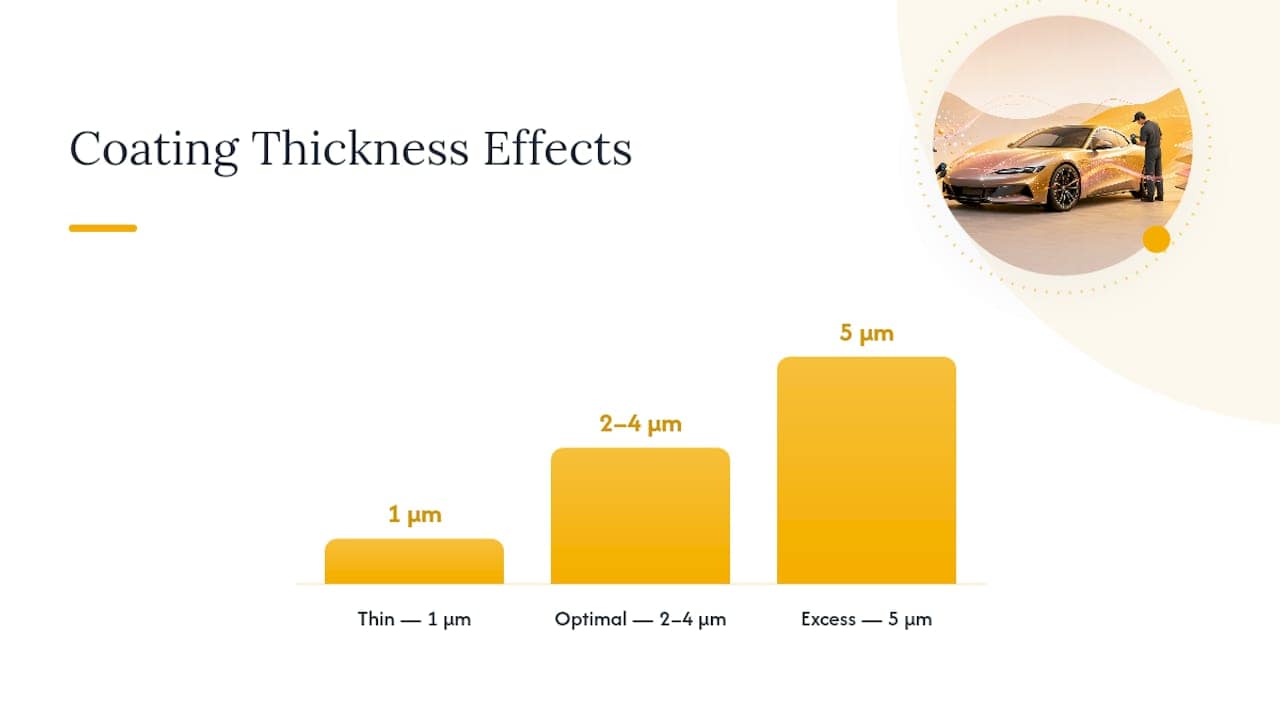
More microns don’t automatically mean more protection. What matters is how densely the silica or silicon carbide network crosslinks as it cures, since that density drives hardness, gloss retention, and resistance to bird droppings, bug acid, and UV breakdown. Laboratory testing on SiO2 sol-gel films in the 2 to 4 micron range showed measurably better gloss retention against UV exposure over 24 months compared to uncoated paint. That’s a real, quantified benefit tied to proper film density, not just raw thickness.
Push past the recommended range, though, and you don’t get extra durability. You get problems.
What thickness will never solve is impact resistance. A coating in the 1 to 5 micron range is sacrificial at a microscopic level. It’s built to shed chemical and UV damage, not to cushion a chip from a gravel truck. If rock-chip protection is the goal, that job belongs to PPF, which operates at 30 to 80 times the thickness of a cured ceramic layer.
Layering isn’t additive in a simple sense. Each new coat has to chemically crosslink with the one beneath it, and that crosslinking, not the number of passes, determines how much protection you actually gain. A typical additional layer adds roughly 0.5 to 2 microns, but only if it’s applied inside the correct flash window.
Temperature, humidity, and flash time all affect how a coat levels out before it sets. Too fast a flash and product sits high in some spots. Too slow, and dust or debris gets locked into the film. This is why the same product can look flawless from one installer and streaky from another.
Pro Tip: If a detailer pushes a third or fourth coat as automatically “better protection,” ask what problem it’s actually solving. Beyond two coats, you’re mostly paying for marketing, not microns.
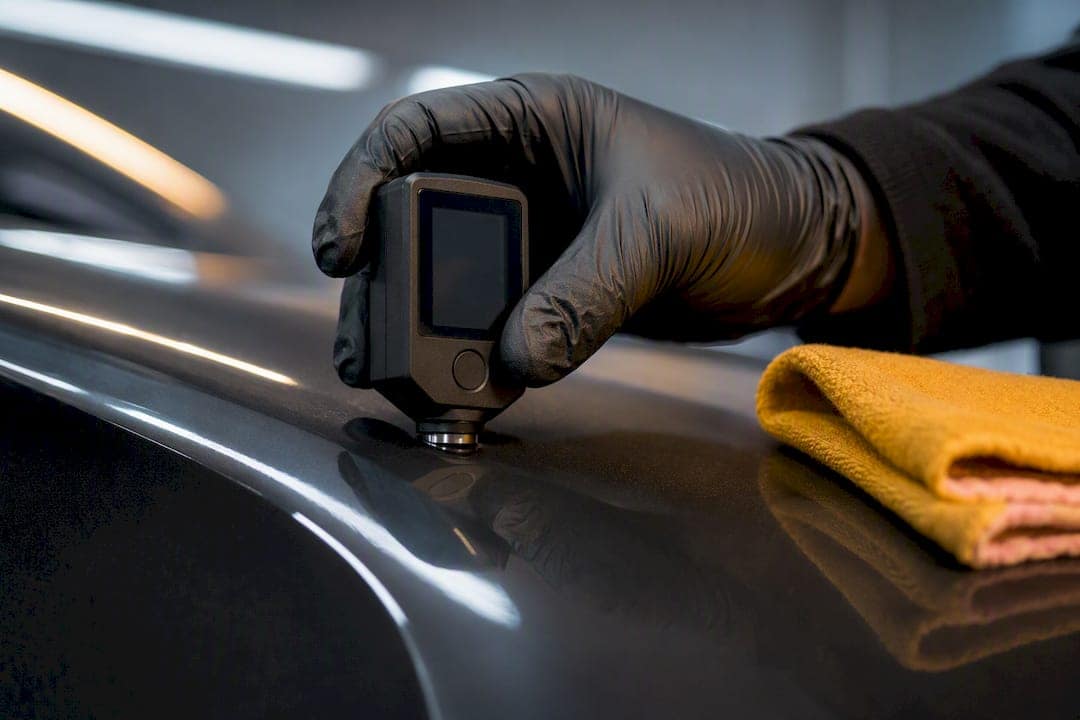
Shops use a few different tools to check cured film thickness, and their accuracy varies more than most owners realize. Handheld magnetic and eddy-current gauges, common on paint-condition tools, are built to measure clear coat and primer, not nanoscale ceramic film. Consumer ultrasonic gauges do better but still often carry a resolution around plus or minus 2 microns.
Most vehicles do best with two coats. It’s the sweet spot between cost and performance, and installer testing consistently shows it outperforms a single coat on durability and gloss without the diminishing returns of a third.
Consumer coatings typically hold up for one to three years; professional systems, applied with proper prep and cure control, commonly last three to five years or longer with periodic boosts and inspections. Stick to pH-neutral wash routines, skip abrasive polishes, and remember that a single aggressive polishing pass can strip 0.5 to 1 micron off a coating that only started at 1 to 2 microns in the first place.
Prep work decides more than the product bottle does. A coating doesn’t fill or hide swirl marks or oxidation. It locks in whatever condition the paint is in when it’s applied, so a rushed or skipped correction step shows up in the final finish for years. The PPF Company brings over 30 years of combined experience in paint protection film and ceramic coating application, using advanced self-healing film technology alongside tailored coating and window tinting solutions built around UV protection and long-term appearance. That kind of process control, temperature, humidity, and flash timing managed deliberately rather than guessed at, is what turns a micron range on a spec sheet into a consistent result on your actual car.

Marketing copy loves to imply that thicker coatings mean tougher armor. The chemistry doesn’t back that up. A properly cured 2 micron layer with good crosslinking will outperform a sloppy 6 micron mess every time, and no coating in the 1 to 5 micron range is ever going to stop a highway rock chip. If impact protection is what you’re after, pair a coating with PPF instead of asking the coating to do a job it was never built for. Chase good prep and correct application. Skip the temptation to chase bigger numbers.
Chasing micron counts on a spec sheet only matters if the application behind it is controlled, and that’s the part most DIY kits and quick-service shops can’t guarantee. The PPF Company approaches ceramic coating the way the chemistry demands: correct prep, managed cure conditions, and a coat count matched to what your paint actually needs rather than what sells more product. Our ceramic coating service is built around that process control, and it’s paired with paint protection film for owners who want real impact resistance alongside the gloss and chemical resistance a coating provides.

If you’re weighing coats, coverage, or whether PPF should come first, book an inspection and get a straight answer on what your vehicle actually needs before you commit to a package.
The micron figures and comparisons in this article draw from published technical explainers on coating measurement and paint layer structure, including EngineerSkill’s micron measurement guide, The Car How’s thickness breakdown, and CeramicInfoSpot’s clear coat comparison.
Abrasive polishes, harsh detergents, and skipping regular maintenance washes are the biggest culprits, since a single aggressive polishing pass can strip 0.5 to 1 micron off a coating that started thin to begin with. Improper curing conditions during application, like high humidity or contamination before the coat sets, can also compromise the film before it ever gets used.
Pricing depends heavily on vehicle size, prep work needed, and the number of coats applied, so it varies by installer and package. The PPF Company’s ceramic coating pricing is available directly on its Calgary service page rather than as a flat published rate.
For a single sedan or coupe, a single bottle is often enough for one full coat when applied efficiently, since cured film only needs to reach 0.5 to 2 microns to do its job. Larger vehicles, SUVs, or a second coat will typically require more product than a single 50ml bottle provides.
The main downside is that it offers no meaningful protection against rock chips or physical impacts, since cured coatings measure only 1 to 5 microns against PPF’s 150 to 250 microns. Coatings also won’t hide existing swirls or paint defects. They lock in whatever condition the paint was in before application, which is why correction work matters more than the coating itself.