
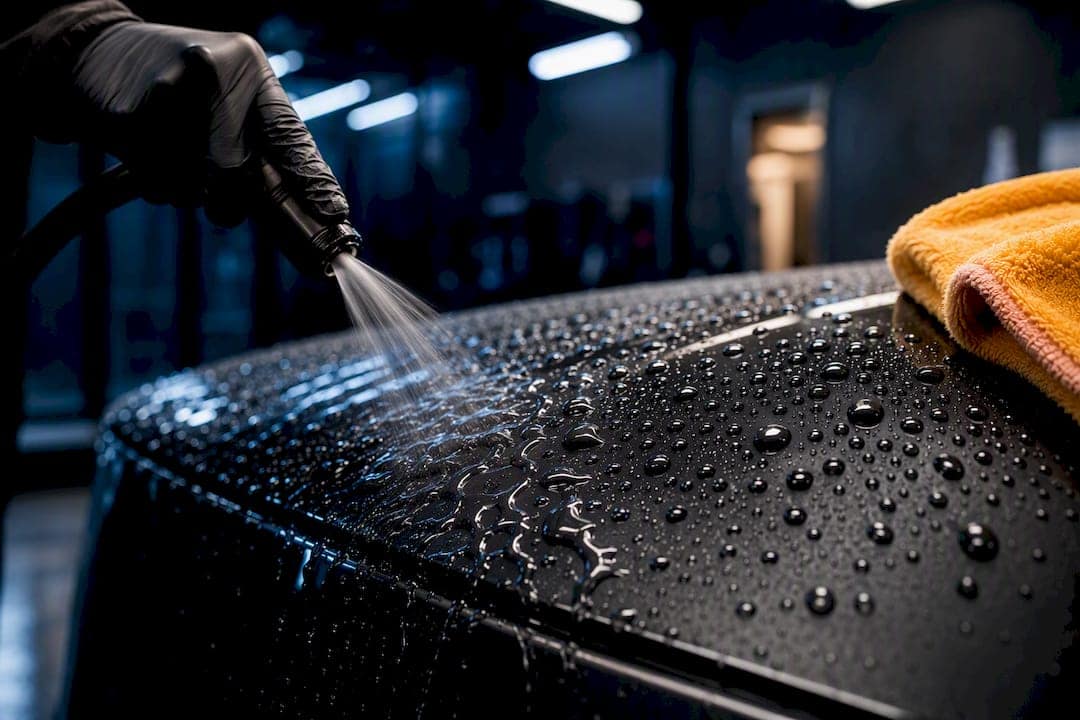
Ceramic coating maintenance means washing every 1 to 2 weeks with a pH-neutral soap and the two-bucket method, running the water-bead test monthly, applying a booster every 3 to 6 months, and booking a full decontamination every 6 to 12 months. Skip automatic brushes, dish soap, and any wash during the first 7 to 14 days after installation. Wipe off bird droppings the moment you spot them, before the acid in the waste has time to etch the surface.
TL;DR:
- Regular weekly washing with pH-neutral soap and the two-bucket method is essential to maintain coating performance and prevent early deterioration.
- Full decontamination, including iron and tar removers, should occur every 6 to 12 months to restore gloss and remove bonded contaminants that normal washes cannot eliminate.
- The water-bead test is the quickest way to assess coating health, with tight beads indicating a healthy layer and flat sheeting suggesting it needs a booster or decontamination.
- DIY maintenance routines should be complemented by professional inspections and deep cleaning every 6 to 12 months for optimal longevity and early problem detection.
- Automatic brush washes and household detergents significantly reduce coating lifespan, and avoiding them is critical to preserving the hydrophobic layer.
Ceramic coating maintenance is the recurring cycle of washing, spot checks, and periodic decontamination that keeps a coating’s hydrophobic layer intact. Skip it, and even a $1,000 professional application starts sheeting water like bare paint within a year. Detailers who work on coated cars daily tend to agree that “maintenance-free” is a myth; consistent care is the biggest factor separating a coating that hits its rated lifespan from one that fades early.
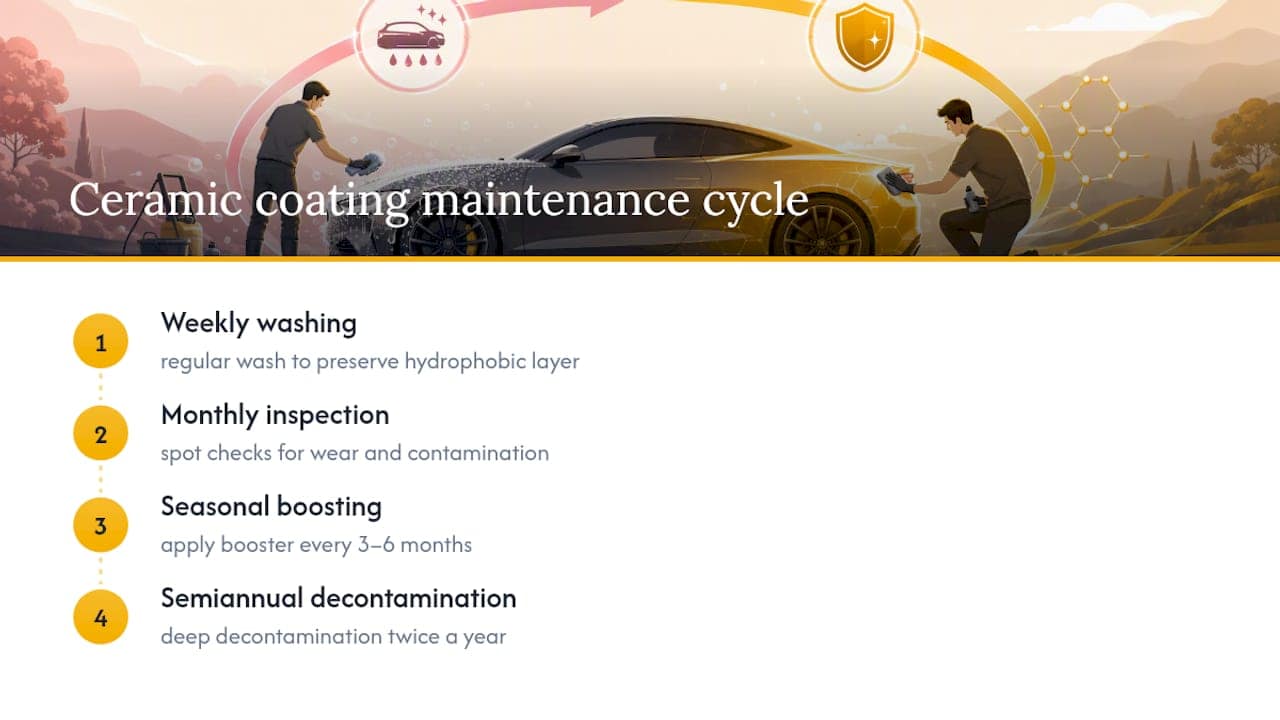
The routine breaks into four layers, each running on a different clock: weekly washing, monthly inspection, seasonal boosting, and semiannual decontamination. Miss one layer and the others start compensating, which is usually when owners notice the paint looking “tired” without knowing why.
Most coating failures aren’t really failures. They’re contamination sitting on top of a coating that’s still structurally fine underneath. A schedule catches that buildup before it hardens into something a wash can’t touch anymore. That’s the core idea behind everything below: cadence matters more than product choice.
Wash coated paint every 1 to 2 weeks under normal conditions, and weekly if you’re driving through salted roads, heavy pollen, or high mileage. Regular hand washing with pH-neutral soap and the two-bucket method is the single biggest lever for preserving how a coating performs over time.
Here’s the routine that actually protects the surface instead of grinding it down:
Automatic car washes with spinning brushes are the fastest way to undo months of care. Brush washes and household detergents drag grit across the surface and strip the top layer with every pass. If you’re washing weekly because of winter grime, a dedicated wash guide for coated cars walks through the panel sequence in more detail.
Drying, not washing, causes most of the swirl marks owners blame on their coating. Dragging a towel across paint grinds any leftover grit into the clear coat underneath, and a rinse-before-contact plus a blotting technique cuts that risk dramatically compared to wiping.
Pro Tip: Keep at least two microfiber towels in rotation per wash. One gets contaminated with grit faster than you’d think, and switching to a second towel halfway through a dry is cheaper than a swirl-mark correction later.

Ceramic boosters and quick detailer sprays aren’t coatings. They’re sacrificial topper layers that refresh the hydrophobic surface without adding real protection of their own. Applying a booster every 3 to 6 months, or monthly if you like seeing tight water beads, keeps performance sharp between the deeper decontamination visits.
Apply boosters the same way every time:
Owners who treat boosters like a monthly ritual (five minutes with a spray bottle after a Sunday wash) tend to go longer between full decontamination cycles.
A full decontamination every 6 to 12 months is where most of a coating’s lost gloss actually comes back. Iron remover, tar remover, and clay together strip bonded contaminants that a normal wash can’t touch, and heavier exposure (winter driving, industrial areas, long highway commutes) pushes that interval down to every 4 to 6 months.
A professional maintenance visit does all of this under shop lighting that reveals thin spots and contamination invisible in a driveway. Those visits typically run 2 to 3 hours and catch problems early enough to fix with a decon instead of a full recoat. That’s the real value of a pro check: it’s not just a wash, it’s an inspection with the tools to act on what it finds.
Magnesium chloride and road salt eat away at hydrophobic performance faster than almost anything else drivers encounter. Rinse the undercarriage and lower panels within a day or two of driving on treated roads, even if a full wash isn’t due yet.
Seasonal shifts like these are exactly why a fixed weekly schedule doesn’t hold up everywhere. General seasonal maintenance guidance backs the same principle: road conditions should dictate frequency more than the calendar does.
The water-bead test is the fastest diagnostic you own. Splash water on the hood; tight, marble-shaped beads that roll off mean the coating is healthy, while flat sheeting or slow-draining puddles mean it’s time for a booster or full decontamination.
Most patchiness resolves with a decon and booster combo. Persistent bare spots or peeling after that point usually mean it’s time to talk to a professional about correction or a partial recoat.
A handful of tools cover almost every maintenance task a coated car needs:
Skip anything labeled with wax, gloss enhancer, or “all-in-one” unless the label specifically says coating-safe. Budget kits cover the basics fine; pro-grade tools mostly buy you speed and slightly gentler mitts, not dramatically different results.
Owners who wash reactively, only when the car looks visibly dirty, are the ones who end up in our shop asking why a coating that should last years is failing at eighteen months. It’s rarely the coating’s fault. It’s the gap between washes letting contamination bond harder than any at-home method can lift.
A scheduled plan turns maintenance into muscle memory instead of a judgment call you make every time, and a professional visit under proper lighting catches the thin spots a driveway inspection never will. That’s the gap most owners underestimate, not the coating’s chemistry, but their own consistency.
Weekly washing and monthly boosters are manageable DIY work. The decontamination cycle, wheel coatings, and the shop-light inspection that catches problems early are where a professional visit earns its keep. The PPF Company runs exactly that kind of maintenance program, built around the same schedule outlined above but with the tools and lighting a driveway can’t match.
Our maintenance visits combine iron and tar decontamination, a fresh booster application, and a full coating inspection, plus dedicated wheel coating protection for the area that takes the worst abuse from brake dust and road salt. If you’re overdue for a decon or just want a professional set of eyes on a coating you installed yourself, book a visit through our ceramic coating services in Calgary or our Winnipeg ceramic coating page to get on the schedule.
Automatic brush car washes, dish soap and household detergents, skipping the 7 to 14 day cure window, and letting bonded contaminants like tar or iron particles sit for months without a decontamination wash all shorten a coating’s lifespan.
It doesn’t eliminate maintenance, it changes what maintenance looks like. Owners still need to wash regularly and decontaminate periodically; skipping that routine leads to the same dullness and water-spotting a coating is supposed to prevent.
A rinse alone removes loose dust but won’t touch bonded grime, tar, or iron particles, so it’s fine between washes but not a substitute for a proper two-bucket wash every 1 to 2 weeks.
Most consumer-grade coatings need a full reapplication every 2 to 5 years depending on the product and how well you maintain it, though many issues that look like failure are actually contamination that a decontamination wash and booster can resolve without a full recoat.