
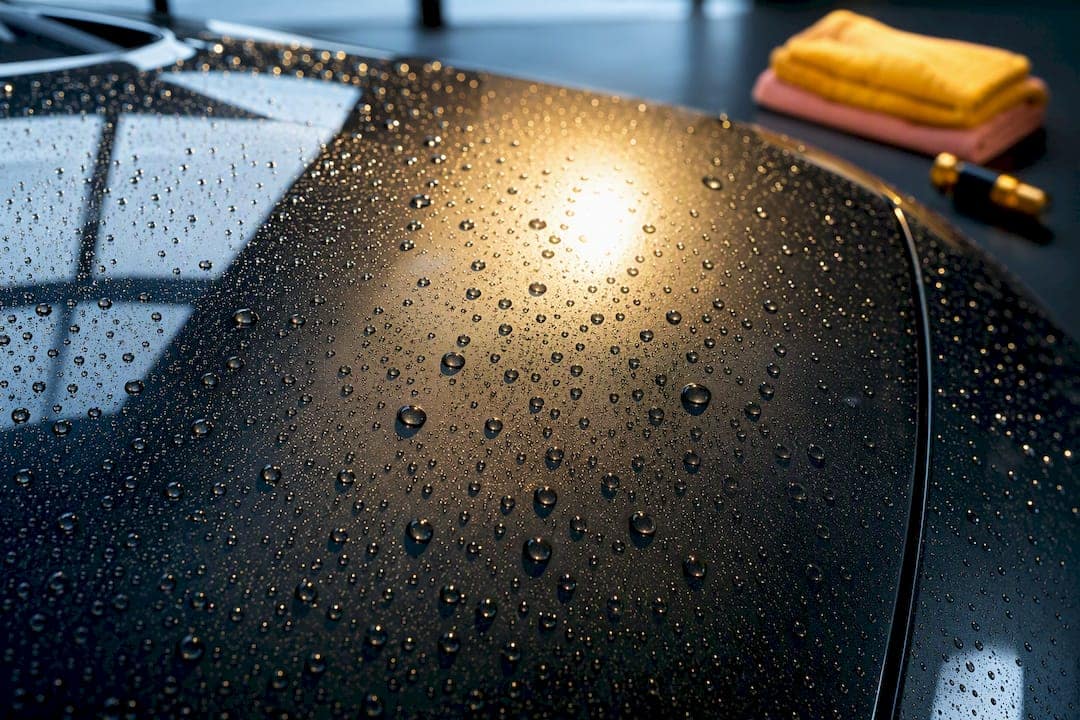
Realistic ceramic coating lifespan runs from a few months for spray toppers to 7 years for premium multi-layer systems, with most owners landing somewhere in between. A consumer DIY kit typically holds up for 1 to 2 years, a professionally applied 9H coating for 2 to 6 years, and flagship pro systems can stretch past 5 years under ideal care. The number on the bottle is a ceiling, not a promise. What you drive through, where you park, and how often you top it off decide where you actually land.
TL;DR:
- Professional ceramic coatings can last between 2 to 7 years, depending on application quality, climate, and maintenance routine, while DIY kits usually last 1 to 2 years.
- Environmental factors like UV exposure, road salt, and washing habits significantly influence coating longevity, often causing real-world results to differ from lab claims.
- Regular maintenance, including washing every 1 to 2 weeks and applying boosters every 3 to 6 months, extends the lifespan and preserves hydrophobic properties.
- Signs of coating wear include poor water beading, increased difficulty in cleaning, and dullness under direct light, with water contact angles below 100 degrees indicating thinning.
- Proper surface preparation and annual inspections are critical, as application quality and maintenance far outweigh the chemical composition in determining coating durability.
Every bottle and every installer quote comes with a year figure attached, and almost none of those figures survive contact with a Canadian winter. Professionally applied coatings can last 2 to 7 years in real-world conditions, while consumer or DIY versions typically manage 1 to 2 years before they stop performing like new. Spray sealants and toppers, often marketed as “ceramic,” rarely clear the six-month mark.
Two cars with the identical coating can age at completely different rates. A garage-kept weekend car that sees a hand wash every other week might still be beading water strong after 5 years. A daily driver parked outside through road salt, bird droppings, and highway grime might need a refresh in half that time, even with the exact same product applied by the exact same installer.
That gap exists because lab durability claims come from accelerated tests, not driveways. Manufacturers extrapolate from controlled UV and abrasion cycles, and the field results depend on prep quality, climate, and wash habits far more than on the chemistry alone. A “9-year” coating applied over a poorly decontaminated hood might fail visually within 18 months.
Here is roughly what determines where you’ll land on the range:
Budget matters as well, and reaching the top end of any coating tier’s lifespan often involves investing in regular aftercare beyond the initial installation cost.
Not all “ceramic coating” means the same thing, and the chemistry behind the label tells you more about expected life than any marketing headline does.
SiO2 spray toppers are the entry point. These are silica-based sprays applied over an existing wax or sealant, and they add gloss and slickness for a few weeks to a few months before they wear off entirely. They’re maintenance products, not protection systems.
Consumer 9H kits are what most DIY buyers apply themselves. These cure to a harder film than a topper and typically hold up for 1 to 2 years with reasonable care. The “9H” rating refers to pencil hardness, not longevity, which is a common point of confusion.
Prosumer 9H and polysilazane coatings sit between DIY and professional-grade. Applied by a detailer with proper prep, these commonly run 2 to 4 years, sometimes longer on a garage-kept vehicle.
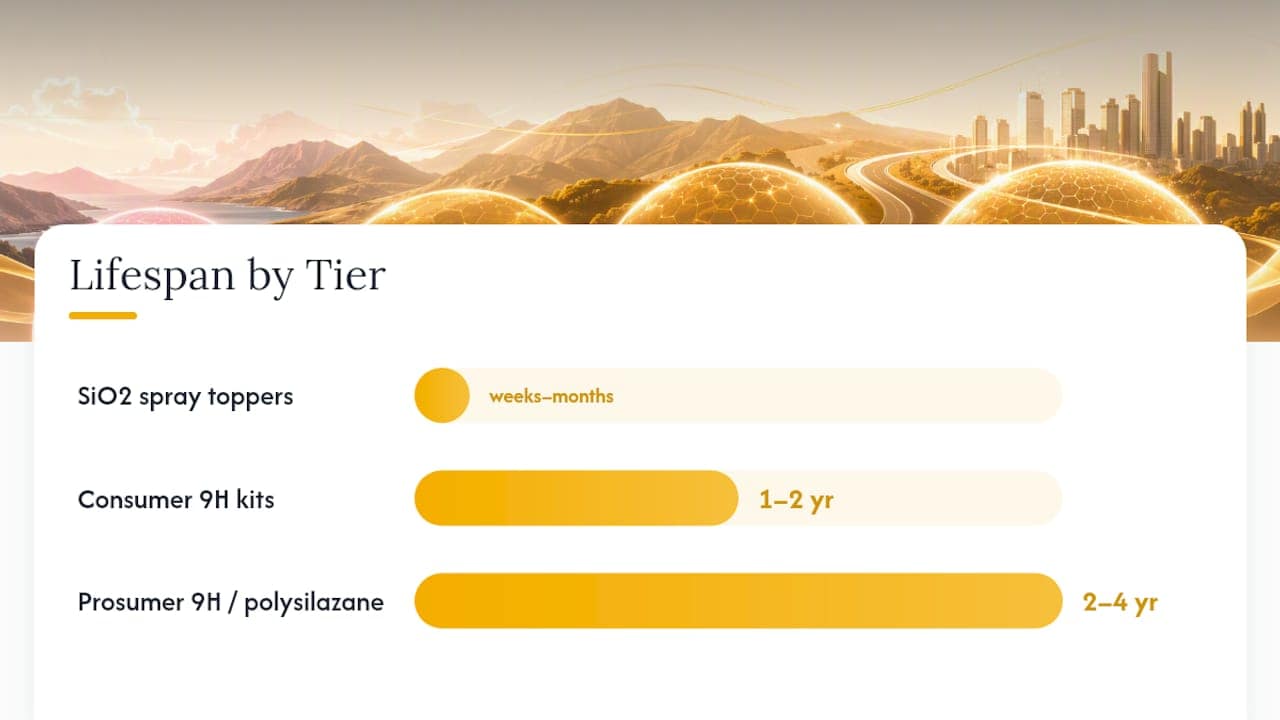
Professional polysiloxane and multi-layer flagship systems are the top tier, often applied in two or three layers by a trained installer. These are the coatings realistically capable of hitting 5 to 7 years when paired with disciplined maintenance.
Failure doesn’t look the same across tiers, either:
Most professional warranties come with fine print worth reading twice: annual inspection requirements. Skip the yearly checkup and many warranty programs consider the coverage void, regardless of how many years were printed on the paperwork.
Coating chemistry sets the ceiling. Everything else in this section decides how close you get to it.
Prep and application quality matter more than the product itself. A coating bonds to bare, polished paint, not to leftover wax, road film, or swirl marks sealed underneath. Installers use a final isopropanol wipe specifically to strip any residue before cure, because oils left on the surface create weak bonding spots that fail early, regardless of how premium the coating is.

Environmental stress accelerates decay in ways that vary wildly by region. UV dose breaks down the resin structure over time, while road salt, bug acid, and industrial fallout chemically attack the surface layer faster than sunlight alone ever would. A coating’s effective life tracks what researchers call total insult, meaning the combined toll of every wash, every UV hour, and every contaminant exposure the paint absorbs.
Wash method and frequency change outcomes dramatically:
Product attributes like SiO2 concentration and topcoat thickness also play a role, since a thicker, well-layered application simply has more material to wear through before it’s gone.
Pro Tip: Watch for reduced water beading before you see any dulling. Diminished hydrophobics is almost always the first warning sign, showing up months before gloss loss becomes visible to the eye.
Ceramic coating maintenance is where most of the “how long does ceramic coating last” gap between marketing and reality gets closed. Left alone, even a premium coating degrades on the low end of its range. Maintained properly, it tends toward the high end.
A workable annual routine looks like this:
Booster products generally run in the low double digits per application, cheap enough that skipping them to save money rarely makes financial sense. Over a 5-year window, two boosters a year plus one annual inspection typically costs a fraction of what a full strip-and-recoat runs, and that math tends to favor consistent maintenance over letting a coating fail and starting from zero.
Professional inspections matter beyond ticking a warranty box. An installer checking annually can catch a thinning spot on a hood or mirror cap while a booster still fixes it, rather than after the underlying layer has already given way. That’s the whole logic behind why so many professional warranty programs require the visit in the first place. Skip it for two or three years running and you’re not just risking the warranty. You’re also more likely to need a full recoat instead of a cheap refresh.
Three signals tend to show up in a predictable order, and catching them early is what separates a $50 booster fix from a $500 recoat.
You can check coating health with two simple tests. Splash water on the hood and watch the bead: contact angles above 100 degrees usually indicate a healthy hydrophobic layer, while flatter beading closer to 85 degrees signals the surface has thinned significantly. An isopropanol wipe test on a small panel section can also isolate whether it’s just the top hydrophobic layer that’s worn (booster territory) or the structural coating underneath that’s gone (recoat territory).
If beading is weak but the panel still feels smooth and slick to the touch, a booster usually solves it. If the surface feels rough, contaminants won’t rinse clean anymore, or gloss has visibly dropped across multiple panels, you’re looking at a strip-and-recoat rather than a quick refresh.
The honest comparison isn’t really about who can apply a coating. It’s about who can apply it in a way that holds up.
DIY kits let you skip labor costs, and a careful, patient owner working in a clean garage can get a genuinely good result. The risk is prep. Miss a decontamination step or apply too thick a layer and you get streaking, uneven cure, or a coating that fails in patches within months rather than years.
Rough Canadian price bands by tier:
Professional installation offers benefits such as consistent application, warranty tied to installation quality, and risk mitigation in case of issues. These warranties generally require annual inspections and adherence to maintenance schedules to remain valid, and should be considered ongoing service agreements rather than one-time guarantees.
Ceramic coating and PPF solve different problems, and the strongest setups use both rather than picking one.
Ceramic coating handles chemical resistance, UV protection, and gloss. It does very little against a rock chip or a deep scratch. PPF handles the impact and abrasion side, physically absorbing hits that would otherwise chip bare clear coat. Pairing them means the film takes the mechanical damage while the coating on top keeps everything easier to clean and better looking.
A practical setup for most owners:
Maintenance stays largely the same either way. The two-bucket wash and booster schedule that protects bare ceramic coating protects a ceramic topcoat over film just as well.
The bottle claims get all the attention, but prep and maintenance decide outcomes more than any resin formula does. Two identical coatings from the same batch, applied by the same hand, will age at completely different rates depending on whether the owner washes with a clean mitt every two weeks or lets the car sit dirty for months at a time. That’s not a minor variable. It’s the whole game.
The PPF Company’s installers see this pattern repeatedly across Calgary and Winnipeg vehicles: the coatings that hit the high end of their expected range almost never belong to the owner who spent the most on the product. They belong to the owner who showed up for the annual inspection and didn’t skip the booster schedule. If you’re deciding between protection approaches, weigh the maintenance commitment as heavily as the price tag. A cheaper coating maintained properly will often outlast an expensive one that gets ignored.
Getting the lifespan ranges above in real life starts with proper prep and the right product tier for how you actually drive and park, which is exactly where a professional application earns its cost over a DIY kit. Ceramic coating professional applications combine proper surface prep and layering to influence coating longevity, and ideally come with maintenance plans and inspection schedules to help keep warranties valid.
If your paint is already showing dulled gloss or weak beading, or you’re planning ahead for a new vehicle, book a ceramic coating consultation in Calgary or check ceramic coating availability in Winnipeg to get a quote and an inspection schedule tailored to your driving habits.
Replacement timing depends on tier: consumer coatings typically need reapplication every 1 to 2 years, while professional coatings can last 2 to 7 years with regular boosters and annual inspections.
It offers no protection against rock chips, scratches, or deep abrasion, and it requires ongoing maintenance (boosters and inspections) to actually reach its advertised lifespan rather than fading well short of it.
Premium multi-layer professional systems marketed with 5 to 7 year lifespans typically run $1,000 to $3,000 or more, depending on paint correction and the number of layers applied.
Ten-year claims are lab extrapolations rather than field guarantees, since durability numbers come from accelerated testing that doesn’t fully account for salt, contaminants, or wash habits. A well-maintained premium coating can still deliver excellent value even if it needs a booster or partial refresh well before the decade mark.