
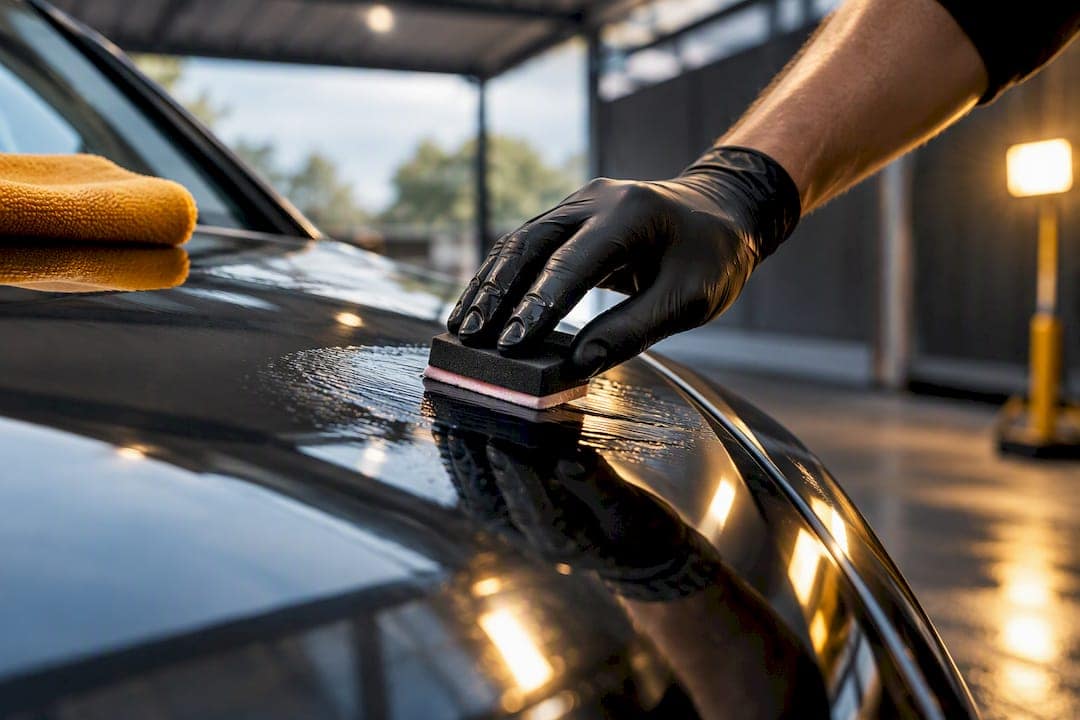
Yes, you can apply ceramic coating to a vinyl wrap, and for most owners who plan to keep the wrap for more than a year, it’s worth doing. The trade-offs are real: coatings can void portions of a wrap warranty, they don’t stop rock chips or scuffs, and you still have to wash the car regularly. What you gain is deeper gloss, easier cleaning, and better resistance to stains and UV fading.
TL;DR:
- Applying ceramic coating is most beneficial for vinyl wraps expected to last over two years, especially in environments with sun exposure, road salt, or frequent dirt contact.
- Manufacturers warn that coatings may void parts of the wrap warranty and can cause visible buildup if not applied carefully, particularly on matte or textured finishes.
- Proper surface preparation, including waiting at least one week after installation and thorough cleaning, is critical to ensure even bonding and prevent hazing or peeling.
- DIY coating attempts often fail due to over-application, reusing cloths, or rushing curing times, making professional installation advisable for complex wraps.
- The coating’s hydrophobic properties typically last a few months and require regular washing and water sheeting checks to determine when reapplication or boosting is necessary.
Coating a vinyl wrap is most worthwhile when the wrap is meant to stay on the car for the long haul, not just for a season. If you’re driving the vehicle daily through varied weather, parking outdoors, or trying to keep a color-change wrap looking fresh for years rather than months, a ceramic layer earns its keep. It adds a slicker surface that sheds water, brake dust, and bird droppings before they etch into the film, and it makes routine washing faster because grime doesn’t cling the same way.
There are situations where coating is unnecessary or even counterproductive. A short-term promotional wrap that will be stripped in a few weeks doesn’t need the investment. The same goes for wraps on vehicles that see constant abrasive contact, like off-road trucks or fleet vehicles that get scraped against branches, gravel, or loading docks. Coating adds gloss and repellence, but it does nothing to stop a scratch from a branch or a scuff from a curb.
Before deciding, weigh a few practical points:
If none of those apply, a wrap alone, cleaned regularly, will hold up fine without the extra step.
Wrap manufacturers have published clear guidance on how coatings interact with their films, and it’s worth reading before you book an appointment or buy a bottle. 3M’s maintenance FAQ for its Protection Wrap Film recommends waiting one week after installation before waxing, and it confirms that products like 3M Ceramic Coating or Ceramic Boost can be used afterward to increase hydrophobicity. The same document, along with 3M’s maintenance FAQ for its 2080 film range, warns that coatings and other aftermarket additions are excluded from certain warranty coverage, meaning the vehicle owner assumes responsibility for how the coating is applied and how it performs.
Coatings can affect warranty coverage. 3M states that coatings or aftermarket additions are excluded from the MCS Warranty for its 2080 film line, which matters if you plan to file a warranty claim later.
Matte and satin wraps require extra caution. Because their surface texture is more delicate and prone to showing streaks or gloss patches, application manufacturers call for smaller work areas on matte finishes than on gloss films.
A few practical notes worth keeping in mind:
Prep work determines whether a coating bonds evenly or ends up patchy, hazy, or peeling within weeks. Manufacturers are specific about timing and process here, and skipping steps is the most common reason coated wraps disappoint.
3M recommends waiting one week after wrap installation before waxing or coating, giving the adhesive time to fully cure and the film time to settle into body contours. Rushing this step risks trapping solvents or moisture under a coating layer.
Once that window has passed, the cleaning sequence matters as much as the wait:
Dust and debris are the enemy of a clean coating job, so working in a controlled, low-dust environment with good lighting makes a visible difference in the final finish. Proper drying between steps prevents water spots from setting into the film before the coating goes on.
One caution from wrap makers: Avery Dennison’s bulletin warns against using hard solvents directly on certain overlaminates, since aggressive chemicals can dull or damage the protective top layer of the film before the coating ever gets a chance to bond.
Pro Tip: Test your isopropyl alcohol mix on an inconspicuous panel first. Some wrap overlaminates react differently to higher concentrations, and a quick spot check saves you from discovering a problem on the hood.
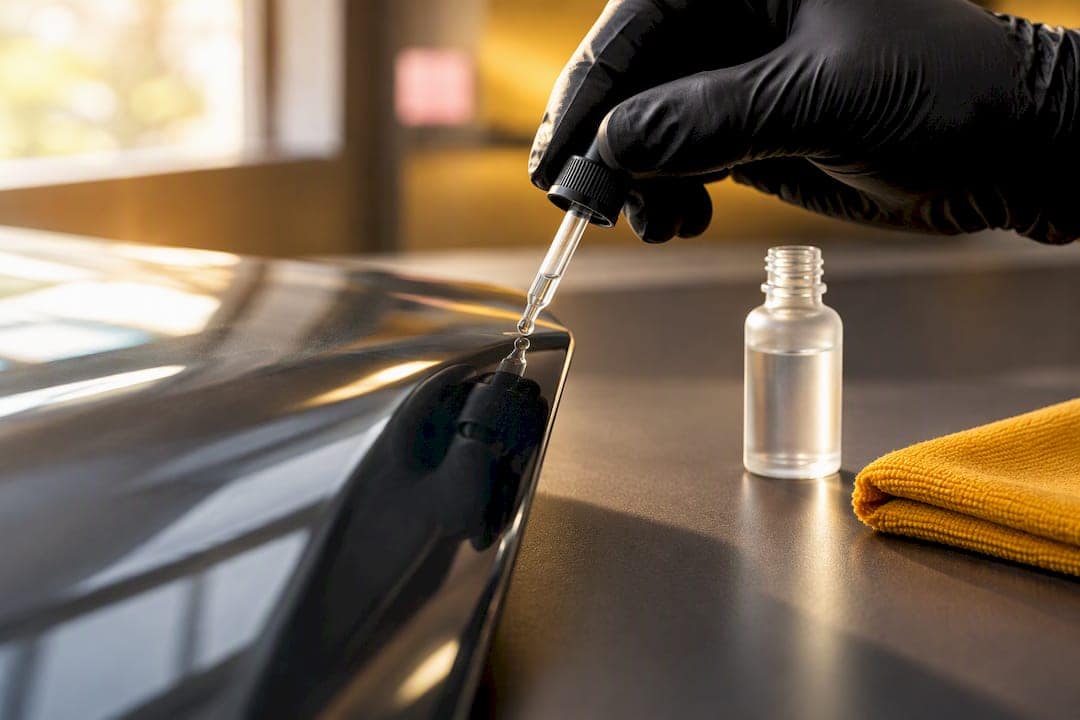
The gap between a professional coating job and a DIY attempt usually comes down to discipline in following the application sequence, not the product itself.
3M’s Ceramic Coating SOP lays out a precise process: apply roughly a moderate number of drops of product to an applicator for each small section about 2-foot by 3-foot, let it dwell for two to five minutes, then level with a clean microfiber before moving to the next section. Matte wraps call for smaller sections about the size of 1-foot by 1-foot because the textured surface shows unevenness faster. The SOP also specifies waiting 30 to 60 minutes between coats and switching to a fresh microfiber for leveling each time, since a cloth loaded with partially cured product will scratch the surface instead of smoothing it.
DIY applications tend to go wrong in a few predictable ways:
If you’re working with a matte finish, a full vehicle wrap, or a film with heavy graphics and seams, hiring a professional installer is the safer route. When vetting a shop, ask what coating product they use on flexible films specifically, how they section the vehicle during application, and how many coats they apply. A shop that can answer those questions in detail is following the same discipline the manufacturer SOPs describe.
A ceramic coating on vinyl typically holds its hydrophobic properties for a period that depends on the product, the driving environment, and how the car is washed, and most coatings need a booster or recoat well before the wrap itself needs replacing. Sun exposure, road salt, and frequent contact with abrasive contaminants all shorten the coating’s effective life faster than gentle, garage-kept driving.
Washing habits do more to extend coating life than almost anything else:
Checking hydrophobic performance is simple: spray water on the surface and watch how tightly it beads. When water starts sheeting instead of beading, that’s the signal to apply a boost product or schedule a recoat, typically every few months depending on driving conditions and product type.
Pro Tip: Run your fingers lightly across a washed panel while it’s still damp. If it feels slightly rough instead of slick, the coating has likely worn thin and a boost application will restore it.
Not every ceramic coating on the market is formulated with vinyl film in mind, and choosing the wrong one can leave you with a coating that cracks, yellows, or delaminates faster than expected.
Coatings generally fall into a few categories. Silica or SiO2-based coatings are the traditional option, built primarily for painted surfaces but often usable on film with the right prep. Hybrid coatings blend silica with other polymers for added flexibility. Purpose-built flexible-film coatings are formulated specifically for PPF and vinyl wrap, designed to move with the film instead of cracking as it flexes over body contours.
When choosing a coating for a wrap, a few attributes matter more than brand reputation:
Always test a hidden section before committing to a full application, and cross-reference the wrap maker’s own compatibility documentation rather than relying on the coating manufacturer’s claims alone.
Applying coating to vinyl wrap without the right process leads to hazing, uneven gloss, or premature peeling, which is why the sequence matters more than the product. With extensive experience in paint protection film, ceramic coating, and vinyl wrap installation, some companies follow manufacturer-aligned prep and application steps to avoid those outcomes. Readers who want more detail on maintaining a coated wrap can review guidance on restoring water beading on a ceramic-coated surface or matte wrap care rules from installers, both of which cover mistakes that show up after a coating job is already done.
For most owners planning to keep a wrap for more than a year, professional coating is the better call: it protects the investment and cuts down on maintenance effort. DIY is fine if you’re using a flexible-film-specific product and following the manufacturer SOP closely, section by section, without cutting corners on dwell time. Whatever route you choose, check your wrap’s warranty terms first and always test a small area before committing.
If you’d rather skip the trial and error, Some providers handle ceramic coating for wrapped vehicles with proper attention to prep and sectioning as manufacturer guidance calls for, to achieve consistent gloss and avoid risks of a rushed DIY attempt.
A typical visit includes a few concrete steps:
Book a ceramic coating appointment in Calgary or check availability in Winnipeg to get a wrap coated the right way from the start.
Yes, ceramic coating can be applied to vinyl wrap once the film has cured, which 3M recommends waiting one week for after installation. It improves water repellency and makes cleaning easier, though it does not protect against physical abrasion.
A flexible-film-specific coating tends to perform best on vinyl because it’s formulated to move with the film instead of cracking as it flexes. Standard silica-based coatings built for paint can work too, but checking chemical compatibility against the wrap manufacturer’s guidance first reduces the risk of hazing or discoloration.
Yes, though decals and printed graphics can react differently to coating chemicals than the base wrap film, so testing a hidden section first is worth the extra step. Seams around decal edges also tend to collect more product during leveling, which can leave visible buildup if not wiped evenly.
Yes, but matte finishes need smaller application sections than gloss wraps because the textured surface shows unevenness more easily. 3M’s SOP calls for roughly 1-foot by 1-foot sections on matte films rather than the larger sections used on gloss surfaces.