

Carbon fiber protection film is a TPU or PET-based paint protection film with a woven carbon-fiber pattern embedded beneath its clear top coat, giving painted panels a genuine carbon-fiber look while shielding them from rock chips and light scratches. It costs more than clear PPF and takes a sharper installation hand, since stretching the material even slightly can warp the visible weave permanently. If you want the look and the protection, hire a professional who has installed patterned film before.
TL;DR:
- Pattern distortion from uneven stretching during installation is permanent because the weave sits beneath the top coat and cannot be realigned.
- TPU films are preferred for patterned PPF due to their greater stretchability, self-healing properties, and UV resistance compared to PET options.
- Proper installation involves careful sectioning, pattern mapping, and controlled heat application to avoid pattern misalignment and ensure a seamless look.
- The typical lifespan of patterned PPF ranges from three to seven years, influenced by quality, maintenance, and exposure to sun and environmental factors.
- Cost factors include film grade, pattern complexity, coverage area, and labor, with premium TPU films and full-vehicle wraps costing significantly more than basic clear PPF.
The carbon-fiber look you see on a hood or mirror cap isn’t paint, and it isn’t a sticker sitting on top of the film. It’s a printed or woven pattern layer sandwiched inside a multi-layer polyurethane film, sealed under a clear, often self-healing top coat. That construction detail matters more than most buyers realize: because the pattern sits below the surface, any distortion during installation becomes part of the finish permanently. There’s no polishing it out.
Two base materials dominate this category, and the difference is not cosmetic.
Most reputable patterned films sold today lean on TPU specifically because TPU handles stretch, self-healing, and long-term UV resistance better than PVC or older PET-based alternatives, which matters even more here than with clear PPF. A clear film that stretches slightly during install is nearly invisible. A patterned film that stretches unevenly shows a visibly warped weave the moment light hits it.
Thickness is the other spec worth knowing before you shop. Patterned films are typically measured in mils (thousandths of an inch), and one widely available product lists a total build of 7.82 mils including its topcoat layer, roughly in line with mainstream clear PPF thickness. Thicker isn’t automatically better. It affects how well the film conforms around body lines, vents, and mirror caps, and installers factor that into which panels they’ll recommend the film for versus where they’ll suggest a smoother clear film instead. Premium PPF lines in general run thicker and are engineered specifically for self-healing performance and long-term optical clarity. The better patterned films borrow directly from that engineering.
Picking a finish is largely a styling decision, but it has real installation and maintenance consequences you should weigh before you commit to a look.
Gloss carbon fiber is the most common request and the easiest to keep looking clean. It mimics a lacquered carbon-fiber hood you’d see on a performance trim package, reflects light the way the surrounding painted panels do, and blends more naturally on a factory-painted car. Swirl marks show up on gloss finishes the same way they would on glossy paint, so wash technique matters.
Matte carbon fiber gives a more aggressive, motorsport-inspired look and hides minor surface marring better than gloss. The tradeoff is that matte top coats are typically less forgiving to correct if they get scuffed, and not every detailer’s polish or wax is safe to use on a matte surface without dulling it further.
Forged carbon patterns use an irregular, marbled fiber layout instead of the uniform woven grid, sometimes with color infused directly into the pattern layer. It reads as more premium and less “aftermarket kit car,” and buyers who want a distinctive look over a factory-standard one tend to gravitate here.
Where you apply the film matters as much as which finish you pick:
Manufacturer product pages like STEK’s DYNOcarbon line market hydrophobic, self-healing top coats specifically for accent panels and full-panel coverage, which tells you where the industry expects these films to earn their keep: high-visibility, high-touch surfaces.
Carbon-fiber patterned PPF protects against the same everyday threats that clear PPF stops: highway rock chips, parking-lot door dings, light key scratches, bug etching, and minor abrasion from car washes or debris kickback. It will not stop a deep gouge from a sharp impact, and it won’t undo damage that’s already reached the clearcoat underneath.
Pro Tip: Ask your installer whether the specific patterned film you’re considering carries a manufacturer self-healing rating tested at a specific temperature range. “Self-healing” without a temperature spec is a marketing word, not a performance figure.
Self-healing top coats work through a heat-reactive polymer that softens and reflows when warmed, whether from direct sun, warm water, or a heat gun. Light swirl marks and fine scratches typically disappear within minutes under warm sun; deeper marks can take longer or may not fully resolve. This isn’t unique to carbon-fiber film. It’s the same top coat chemistry found in premium clear PPF, and PPF broadly is recognized as OEM-approved by nearly every major automaker, a signal of how mainstream the underlying technology has become.
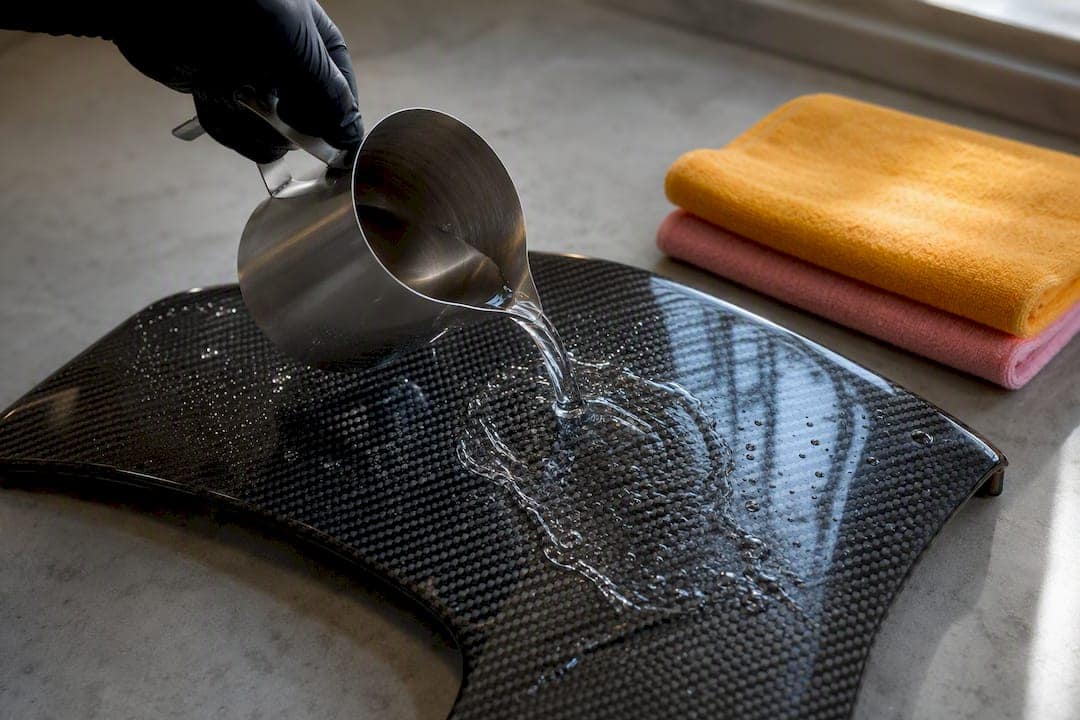
Hydrophobic top coats, common on carbon-fiber patterned products, cause water to bead and roll off rather than sheet and spot, which cuts down on water spotting and makes the film easier to keep clean between washes. Manufacturers frequently pair this with UV-stabilized resins meant to resist yellowing over the film’s life, though real-world performance varies by how much direct sun exposure the panel gets.
The failure modes worth knowing before you buy: edge lift, where corners or trim-line edges start peeling up after months of car washes or winter road salt; delamination, where the pattern layer separates internally from the top coat, which shows up as clouding or bubbling; and water ingress at cut edges, usually a sign of poor edge sealing during install rather than a material defect. All three are far more common with rushed or inexperienced installation than with the film itself failing on its own.

Clear PPF forgives a lot of installer error. Patterned PPF does not, and that single fact should shape how you choose who touches your car.
The core risk is pattern distortion: stretching the film to conform around a curve or body line shifts the visible weave out of alignment, and because the pattern sits beneath the sealed top coat, that distortion is locked in the moment the film cures. There’s no re-stretching it back into place. Experienced patterned-film installers manage this through careful sectioning, cutting the film into panel-specific pieces rather than trying to wrap one continuous sheet over complex curves, and using controlled heat only where the film genuinely needs to relax into a contour.
Here’s roughly how a competent patterned install proceeds:
When you’re vetting an installer, ask to see photos of patterned film specifically, not just clear PPF. A shop with beautiful clear-bra work can still be inexperienced with weave alignment, since it’s a genuinely different skill. Red flags include vague answers about how they handle curved panels, no willingness to show past patterned work, and quotes that don’t specify wet versus dry application method.
A well-installed carbon-fiber patterned film should last three to seven years depending on the film grade, sun exposure, and how it’s cared for, with premium TPU products generally last longer within that range.
Washing routine matters more with patterned film than most owners expect. Stick to pH-neutral car shampoos, and skip abrasive polishing compounds or aggressive clay bar work directly on the film, since these can dull the top coat or accelerate wear at high points in the weave texture. A few practical habits keep the finish sharp for years:
Ceramic coating over patterned PPF is common and generally a reasonable combination for added hydrophobicity and easier cleaning, though it’s worth asking your installer whether it affects the warranty on the film itself. Coating on top of PPF can change surface gloss slightly and complicates warranty claims if the coating requires aggressive removal or polishing down the line, so get that in writing before adding it.
Warranty terms vary by manufacturer, but multi-year coverage against yellowing, cracking, and delamination is standard on premium products, with some clear PPF lines backed for up to ten years on top-tier products and patterned TPU films commonly carrying five-year coverage. What voids that coverage almost always includes improper aftercare (harsh chemicals, abrasive polishing) and self-installation. If a panel starts lifting at the edges or clouding internally within the warranty period, that’s typically when repair or full-panel removal and replacement makes more sense than trying to patch a section, since patched patterned film rarely blends seamlessly with the original run.
Carbon-fiber patterned PPF almost always costs more per square foot than clear PPF, and the gap comes down to three things: material cost, waste, and labor time.
When you’re comparing quotes, look closely at whether pricing is per-panel or bundled into a package, and what’s included beyond the film itself. A quote that seems dramatically cheaper than others is worth a second look; ask whether it includes edge sealing, post-install inspection, and warranty registration, or whether those show up as line-item add-ons later. For a fuller breakdown of how film grade and coverage decisions affect your total, this cost and lifespan guide walks through the tradeoffs in more depth.
Narrowing this decision down to a few concrete checks saves you from an expensive redo. Work through this before you book anything:
Direct questions worth asking out loud during your consultation: “Can I see photos of patterned film you’ve installed, not just clear PPF?” “What’s your warranty on yellowing and edge lift, and what voids it?” “Do you inspect and correct the paint before installing, or install over whatever condition it’s in?” “If the pattern comes out misaligned, do you redo the panel at no charge?”
Red flags to walk away from: an installer who can’t show a single patterned-film example, warranty language so vague it doesn’t name specific failure modes, or a quote that doesn’t specify wet versus dry application. If you’re weighing patterned film against a plainer clear option or a ceramic-only approach for the same panels, this comparison of coverage options breaks down which fits which use case.
Patterned PPF punishes shortcuts in ways clear film simply doesn’t. A slightly rushed heat-forming step on a clear hood might leave a barely visible ripple. The same shortcut on a carbon-weave hood leaves a warped grid pattern that catches light from ten feet away, and there’s no fixing it short of pulling the film and starting over.
The weave has to line up across every seam the eye naturally follows, hood to fender, mirror cap to A-pillar. Get the sectioning wrong and the car looks like it’s wearing a costume instead of a factory option. Get it right and most people assume it came from the factory that way.
Sectioning is the discipline that separates a clean patterned install from a bad one. Rather than trying to stretch one continuous sheet across a curved hood, patterned-film specialists cut the film into panel-appropriate sections and plan where the pattern will visually continue from one piece to the next. Post-heat, the step where edges get re-warmed and bonded after the main install, is where a lot of shops rush, and it’s exactly where edge lift starts months later.
A few practices worth insisting on if you’re booking an install:
With more than 30 years of combined experience across the team, The PPF Company has built its patterned-film process around exactly these pattern-preservation habits, treating self-healing film technology as a specialty rather than a side offering tacked onto standard clear PPF work.
DIY PPF kits exist for clear film, and plenty of patient owners get acceptable results on flat panels. Patterned film is a different animal. The margin for error on weave alignment is thin enough that even experienced DIY wrappers often turn to a professional specifically for carbon-fiber pattern work, saving DIY attempts for simpler clear-film jobs.
The skill gap isn’t really about applying the film. It’s about reading how a specific panel’s curves will pull the weave, sectioning accordingly, and controlling heat precisely enough to conform the material without stretching the pattern out of alignment. That’s earned knowledge, not something you pick up watching one tutorial.
It’s also a warranty question. Manufacturer warranties on premium patterned film typically assume professional installation; a self-install that goes sideways can void coverage before you’ve even enjoyed the look for a season. The PPF Company’s approach, patterned-film experience layered onto standard PPF installation, ceramic coating, and window tinting services, exists specifically because this category of work rewards specialization rather than a generalist wrap job.
If you’ve read this far, you already know the real risk with carbon-fiber patterned film isn’t the material, it’s the install. The PPF Company built its process specifically to avoid the weave-distortion mistakes that ruin an otherwise good film, backed by more than 30 years of combined team experience with self-healing PPF technology.
Beyond patterned PPF installation, the team handles ceramic coatings for added gloss and UV protection, window tinting, and full vinyl wraps, so your hood, roof, and accent panels can get the carbon-fiber look while the rest of the vehicle gets matched protection. Clients consistently point to transparent pricing and attention to detail, particularly around edge sealing and pattern alignment, the two things that separate a clean patterned install from a redo six months later.
If you’re in Calgary or Winnipeg and ready to see what a properly sectioned, properly warrantied patterned install looks like on your car, book a consultation for your patterned PPF project and get a real quote based on your vehicle’s panels, not a generic per-foot estimate.
The technical claims in this guide draw on manufacturer specification pages and general PPF references rather than marketing copy alone.
There’s no single “best” film across every situation. TPU-based products with published self-healing ratings and multi-year warranties, like the film lines referenced from Avery Dennison and Wrapford, generally outperform PET-based alternatives on flexibility, self-healing, and yellowing resistance.
Yes, clear PPF is commonly applied over real carbon-fiber panels and factory carbon-fiber trim to protect the weave and clear coat from chips and swirl marks. This is different from carbon-fiber patterned PPF, which creates the carbon-fiber look on regular painted panels rather than protecting existing carbon-fiber parts.
It’s a paint protection film, typically TPU or PET, with a carbon-fiber weave pattern embedded beneath a clear top coat, giving painted panels a carbon-fiber appearance while adding the same chip and scratch protection as standard clear PPF.
Cost depends heavily on film grade, coverage area, and finish complexity, with carbon-fiber patterned film generally costing more per panel than clear PPF due to added labor for pattern alignment and sectioning. A single accent panel might run a few hundred dollars, while full-vehicle coverage climbs into the thousands; a detailed cost breakdown can help you estimate based on your specific vehicle and coverage goals.